A two-channel file can contain two separate people
A camera may record two microphone feeds into the left and right channels of one audio file. That is useful for editing, but it does not necessarily mean the voices should remain hard left and hard right in the finished video. RØDE’s Wireless GO II documentation provides a clear example: Split routes its transmitters separately, while Merged combines them. Other systems have their own routing rules. Check the manual for the actual receiver and connection rather than assuming a mode label means the same thing on every device.
Identify the channels before the interview
Record a brief spoken identification from each person in turn and listen back through headphones. Watch which meter responds and confirm the camera actually recorded the expected feed. Do this after changing cables, connection type or receiver settings. A receiver display alone cannot establish what reached the file. Keep the test clip with the session and use neutral track names such as “interviewer” and “guest.” If privacy matters, avoid putting unnecessary personal information into filenames that will travel with the project.

Inspect the imported clip instead of trusting its appearance
In the editor, listen to one source channel at a time before cutting the interview. Check for silence, a combined mix, a reduced-level backup or a second microphone hearing the same speaker at a distance. Those cases need different treatment. Two visible waveforms are not enough to identify them. Keep the original file untouched and make channel-interpretation changes within the project or on working copies. Record your mapping so another editor can understand which source feeds each dialogue track.
Make independent dialogue tracks when that is the source
If the recording contains two isolated mono microphones, configure the clip so each feed can be edited and adjusted independently. The command and order of operations vary by application, so use its channel-mapping documentation and test on a short copy first. For a conventional interview mix, place the voices centrally unless the creative brief calls for spatial positioning. Do not simply duplicate the complete stereo clip: that can reproduce both sources twice without giving you the independent control you intended.
Avoid turning the idle microphone into extra room sound
Listen when only one person is speaking. The other microphone may capture a quieter, more distant version of the same voice together with room noise. Leaving both equally loud can change the sound as people take turns. Reduce distracting spill thoughtfully, preserving natural overlaps and continuity rather than applying abrupt silence between every word. Room tone and gentle transitions can help an edit, but they cannot recover words that were never recorded. Make decisions by listening in context, not by deleting everything below a waveform threshold.
Do not collapse genuine stereo by habit
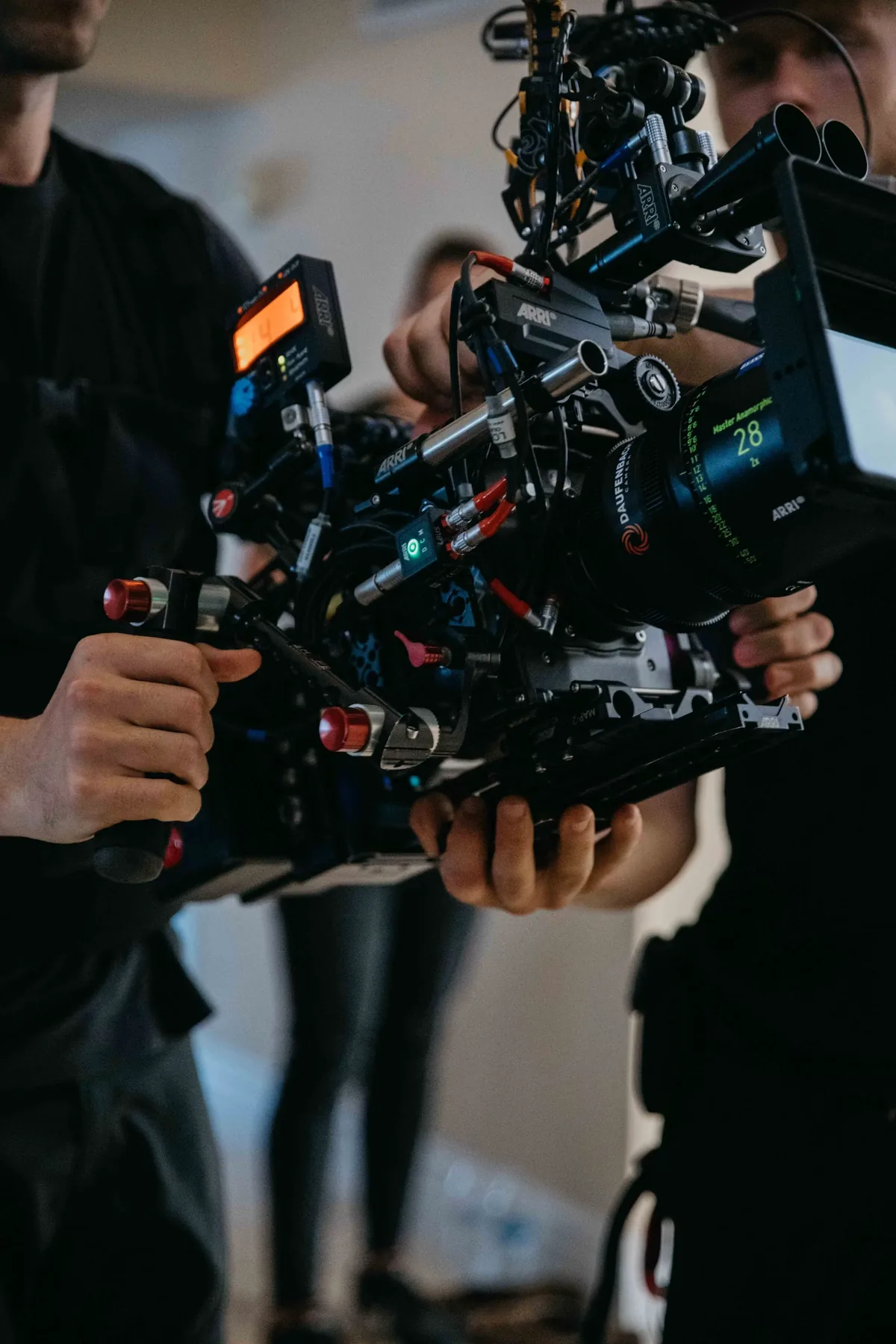
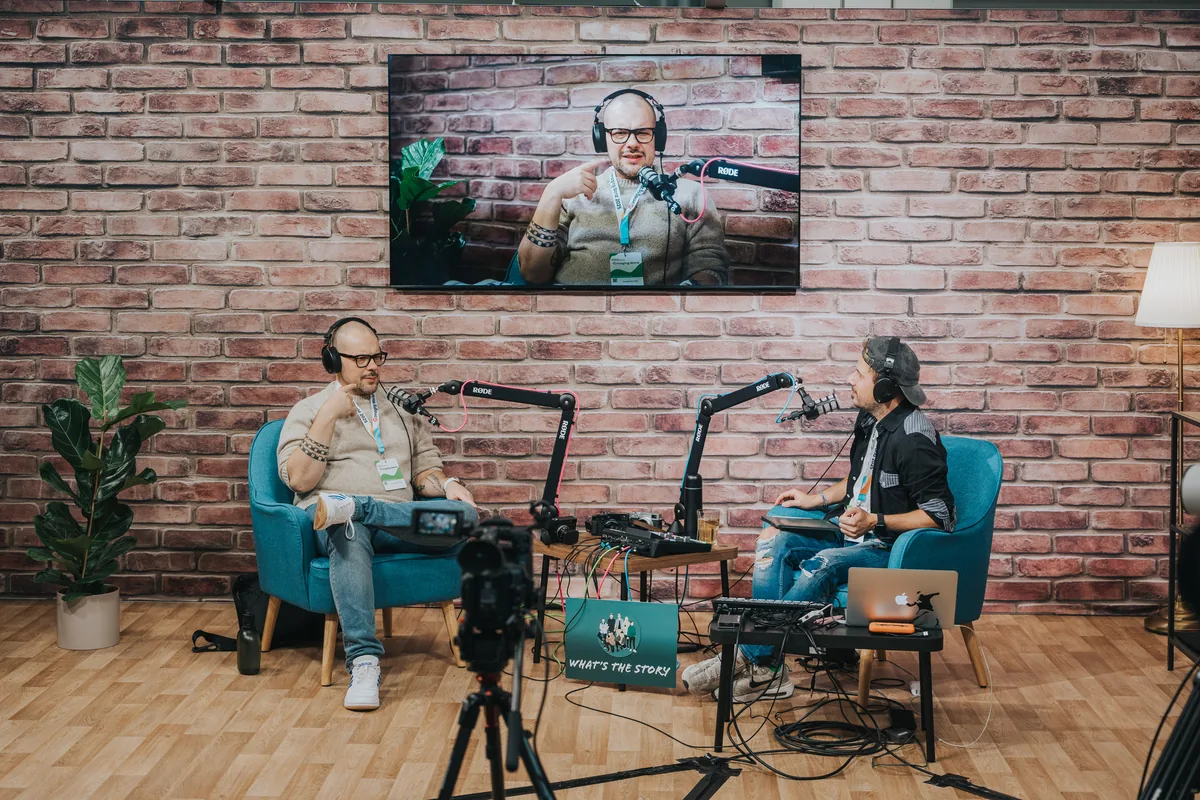
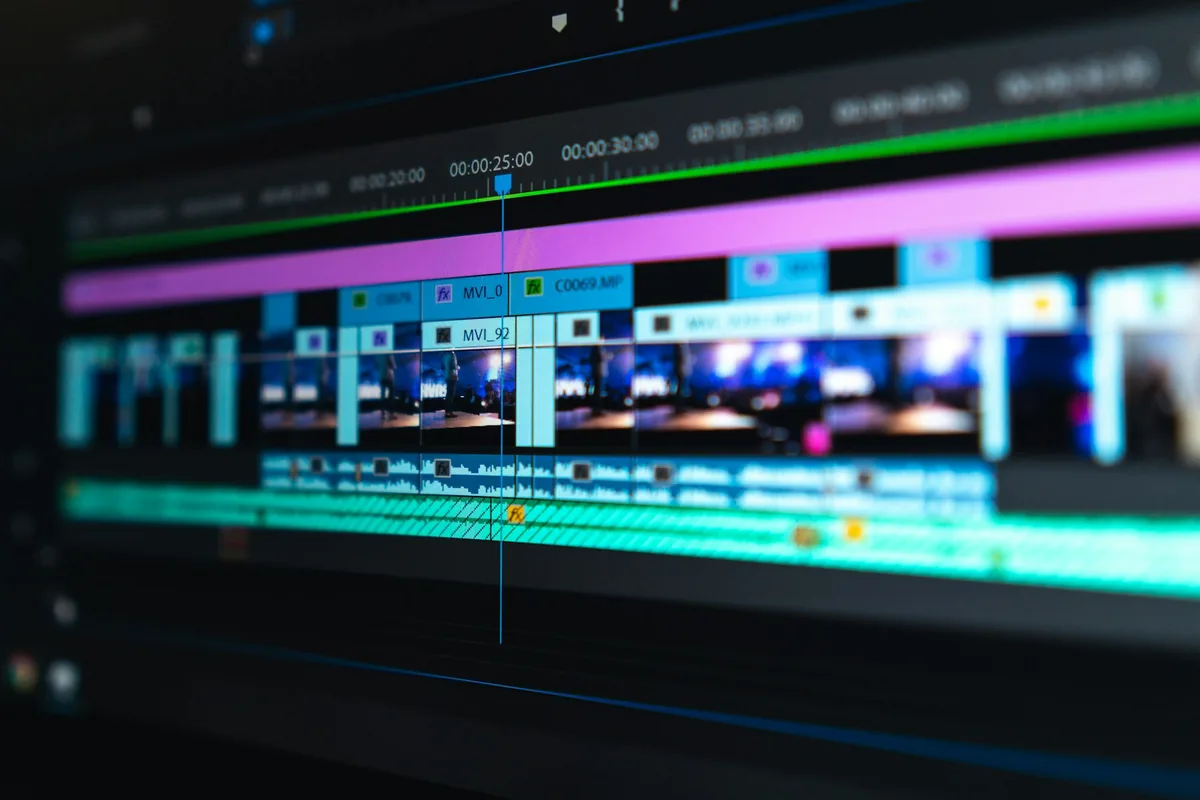
An ambience or music recording made as a stereo pair has a different purpose from two isolated interview microphones. Preserve its intended spatial relationship unless there is a reason to change it. RØDE also describes using separate transmitters for a stereo recording, illustrating why routing alone cannot establish intent. Listen to the recording in stereo and in mono; investigate obvious loss or tonal change rather than assuming that summing channels is always harmless. The accompanying production photographs illustrate recording and editing, not a measured routing or phase demonstration.
Finish with an export test, not only a timeline check
Export a short section containing each speaker, an overlap and a transition. Open that file outside the editor and listen through both headphone channels, then through a mono playback option if available. Confirm that neither voice disappears, jumps unexpectedly to one side or changes level at a cut. Check the complete final export as well. Retain the original recordings and project mapping with the delivery: the useful result is intelligible dialogue and a reproducible edit, not merely two moving meters.