Make the person part of the setup
Before reaching toward someone’s clothing, explain where the microphone will sit and ask permission. Offer to demonstrate the attachment so the person can place it themselves. Agree whether the microphone may be visible and whether a cable or transmitter needs to be concealed. Do not treat an interview subject as an equipment stand. Comfort affects the recording too: a person who keeps adjusting an awkward clip can produce repeated noise and become distracted from the conversation. Leave time for this setup rather than rushing it after the camera is rolling.
Choose a starting position, then listen
Shure describes upper-chest placements above the sternum, with adjustments for shirts, ties and collars. That is a starting point, not a universal measurement. The microphone design, clothing and expected head movement all matter. Position the capsule clear of fabric and other objects, following its own mounting instructions. Record a sentence at normal speaking volume and compare a second sensible position if the sound is muffled or inconsistent. Keep the comparison simple: changing location, gain and processing together makes it difficult to identify the improvement.
Rehearse the gestures that will happen
A quiet subject looking straight ahead is only one part of an interview. Ask for natural head turns, a glance toward the interviewer and an ordinary hand gesture. If the person will walk, stand up or reach for an object, rehearse that action too. Listen for fabric brushing the microphone, jewelry striking it and changes as the mouth turns away. Move the attachment or adjust the wardrobe arrangement with permission. Do not conclude that a clean stationary test proves a moving sequence will remain clean.
Manage cable tension without making a trap
For a small wired capsule connected to a bodypack, RØDE describes a neat cable loop and strain relief to reduce the transmission of movement. Follow the instructions for the particular clip and avoid sharp bends or pulling on connectors. Leave enough freedom for the planned movement while keeping loose cable from catching nearby objects. A self-contained clip-on transmitter has a different arrangement; do not invent a cable step where none exists. Recheck after a jacket is added or removed, because a wardrobe change can undo an otherwise successful setup.
Treat concealment as another test condition
Hiding a microphone can introduce fabric contact and alter the sound. If it does not need to be hidden, a tidy visible placement may be the more dependable choice. Use mounting products intended for the equipment and application; do not assume arbitrary adhesive is suitable for skin or a delicate garment. Ask the person to handle any adjustment beneath clothing. For an inexperienced crew, a clear visible microphone is preferable to an elaborate concealed arrangement that has not been tested or makes the subject uncomfortable.

Check wind and the room separately
A windscreen and a clothing adjustment solve different problems. RØDE recommends suitable wind protection for outdoor use, but the actual combination still needs a test in the location. Indoors, listen for ventilation, nearby conversation and reflections before relying on noise reduction. Move to a quieter position when practical and permitted. Do not silence essential building equipment or interfere with other people to improve a take. Software processing can be useful, but a processed preview is not proof that rubbing or wind damage can be fully repaired later.
Verify which file contains the voice
Confirm the selected input and channel arrangement at the camera or recorder. Record a clearly identified test, stop and play back the saved file. If there is a separate transmitter recording, verify that copy as well. Listen at a sensible level with headphones that let you hear interruptions and distortion. A moving meter only shows that some signal is arriving; it does not establish that the correct speaker is cleanly recorded. For two people, identify each track and check what happens when they speak in turn and overlap.
Repeat the short check when the setup changes
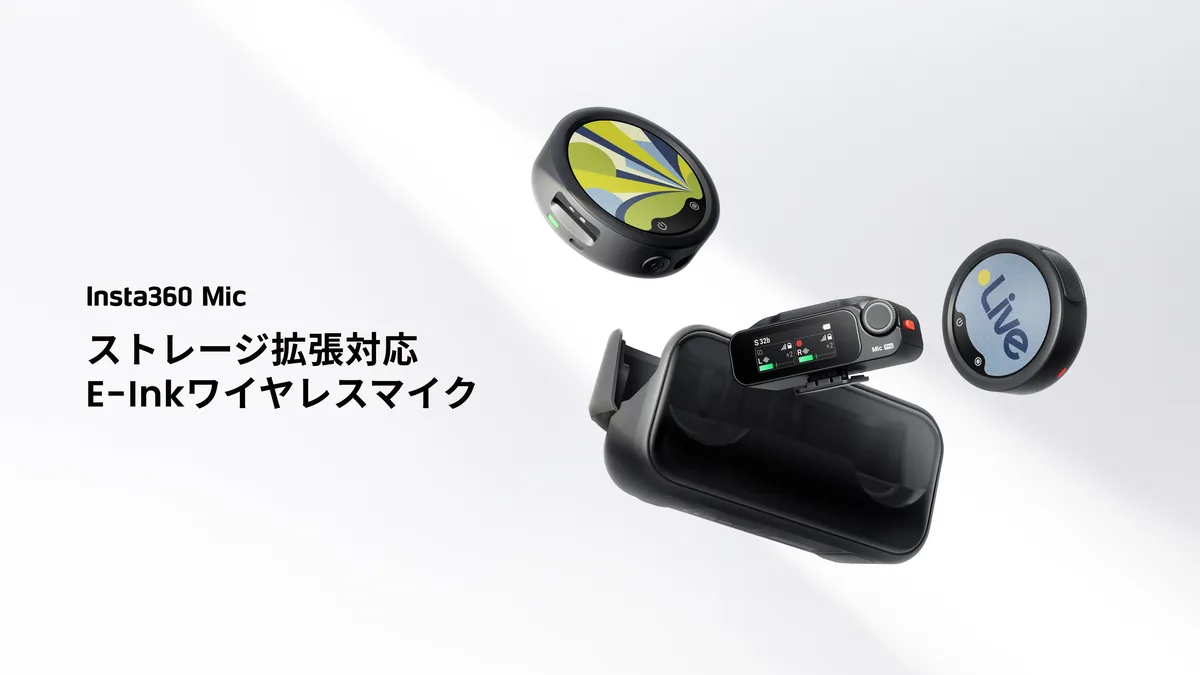
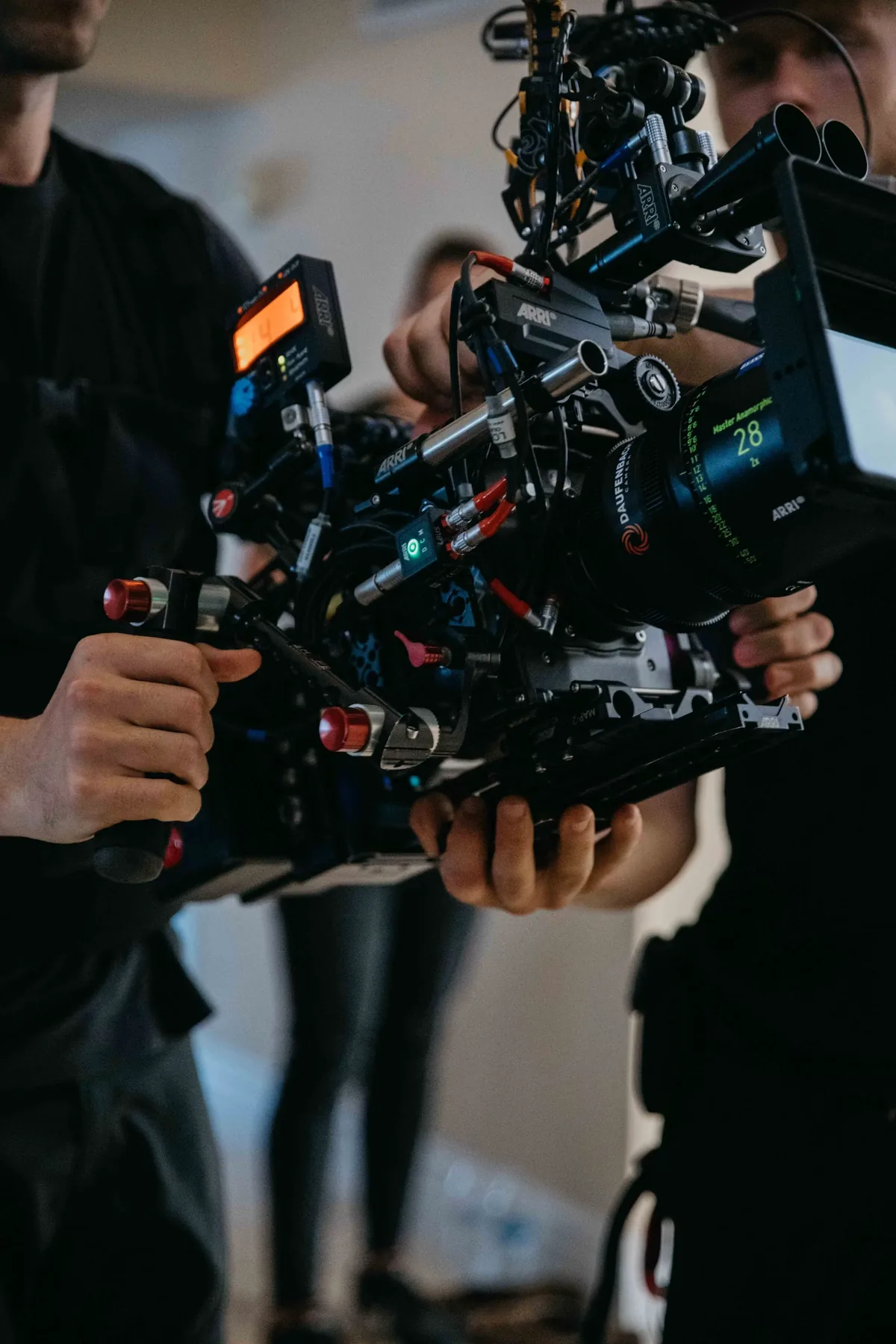
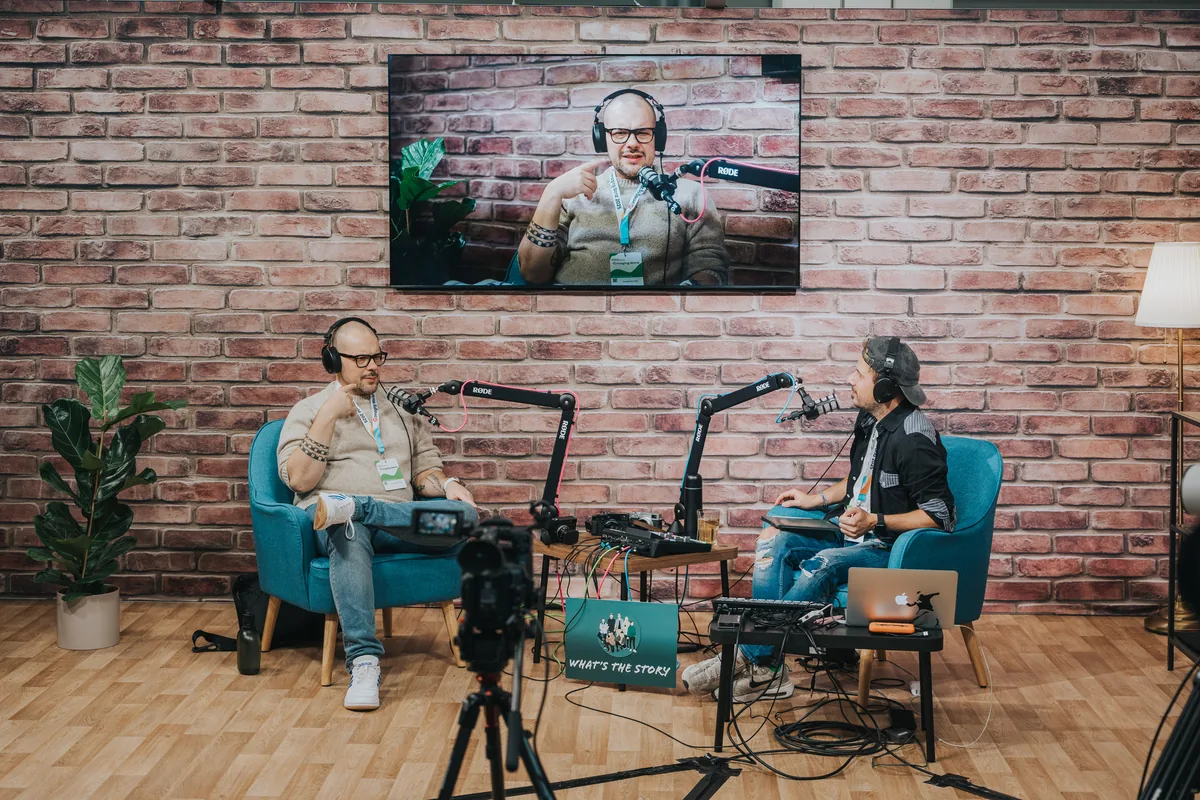
After a battery change, a new location or a wardrobe adjustment, repeat the part of the rehearsal affected by that change. Keep a note of any known problem and record useful room tone before packing away. The images here show manufacturer-staged clip-on microphone use and an archival interview set, not a controlled comparison or a promise that those placements suit every person. The aim is a modest, repeatable habit: confirm comfort, movement, sound and the saved recording before asking someone to give an answer that cannot be recreated.