Plan for variation before it becomes a continuity problem
A liquid effect filter can change during a take as its internal particles move. That variation can be expressive, but two shots may no longer cut together as expected. This sponsored guide proposes a rehearsal and logging method; it is not a hands-on test. The Camera Post and SZ Filters share ownership, and SZ Filters is our sole site sponsor. The product photographs are brand-owned illustrations, not matched before-and-after frames or evidence that a particular result can be reproduced exactly.
Choose a starting point you can describe
Begin with a stationary camera and a short, repeatable action. Set focal length, aperture, exposure and white balance deliberately. Record the camera’s tilt and the position of the light producing the reflections. Then describe how the filter is oriented before each take and how long you wait before calling action. Use the same sequence several times. The goal is a recognizable range of appearances, not an impossible promise that every particle will return to the same coordinate. A spoken take number or written log makes the comparisons much easier to identify later.

Reset the effect without disturbing the rig
Follow the manufacturer’s handling instructions and use a secure, compatible mount. Do not loosen a retaining mechanism simply to rotate an accessory that was not designed to turn in place. Rehearse the adjustment before recording talent. If the action moves the camera or changes its angle, restore those positions as well as the filter. SZ Filters’ liquid-filter support guide explains that tilt and particle behavior affect the movement. Treat that as manufacturer guidance, then observe the particular filter you have instead of assigning an unmeasured settling time to every version.
Record through the useful transition
Roll before the subject begins and keep recording after the action ends. Review when the reflections enter, where they cross the face or object, and when they become less prominent. A visually striking first second may be unusable if it hides the important gesture. Mark a useful interval in your notes rather than selecting a take only from its thumbnail. Try a second reset with the same timing, and compare the whole clips. If the effect varies too much for the intended cut, simplify the lighting or reserve it for a separate insert.
Do not change four variables to rescue one take
A different aperture, focal length, light angle or camera tilt can all change the appearance. If continuity matters, alter one variable at a time and label the new setup. Photograph the rig and light positions for your own reference without presenting those setup pictures as proof of optical performance. Keep a clean take with the filter removed when the brief permits. That alternative can preserve a readable expression or product detail if the effect becomes distracting. Optical effects recorded into an image cannot simply be switched off in the editor.
Check the exact cinema-format arrangement
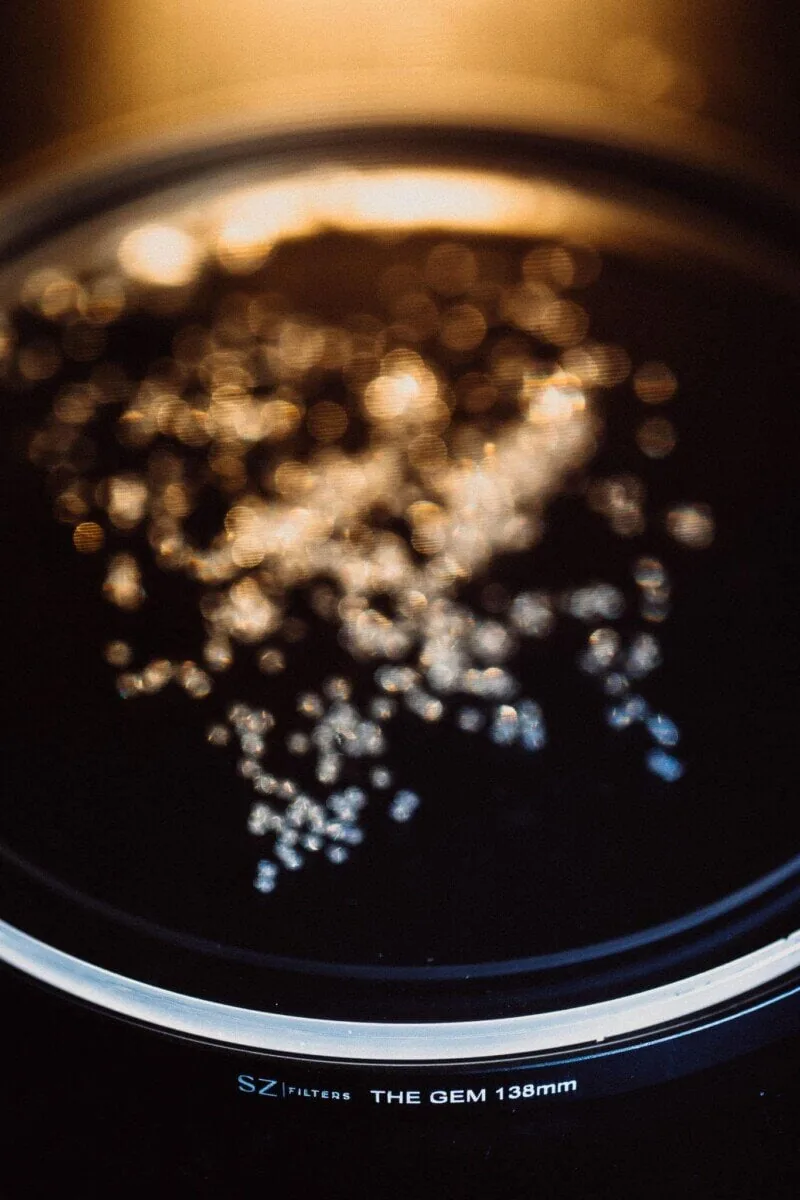
The current Gem 138mm product page lists $599 USD and special-order availability, with a request to confirm pricing and production time before ordering. It describes use with compatible 138mm round trays. That does not establish fit with every matte box, lens or rotating holder; verify the complete assembly. No dated launch announcement is provided on that listing. The brand’s October 26 blog describes work on larger liquid filters, but show footage belongs to its credited third parties and is not reproduced here. Product ownership permission does not automatically license broadcast stills.
Judge the cut, not just the isolated effect
Place two representative takes next to each other in an edit. Watch the subject first, then the transition in reflections, brightness and color. Decide whether the change feels intentional at the final display size. If exact visual matching is essential, use a cleaner setup or a treatment that the production can control more consistently. Keep the chosen clips, setup notes and a clean alternative together. The useful outcome is an effect that supports the sequence while leaving the editor a practical choice—not a claim that a moving liquid pattern can be perfectly repeated.