Choose one scene and one question
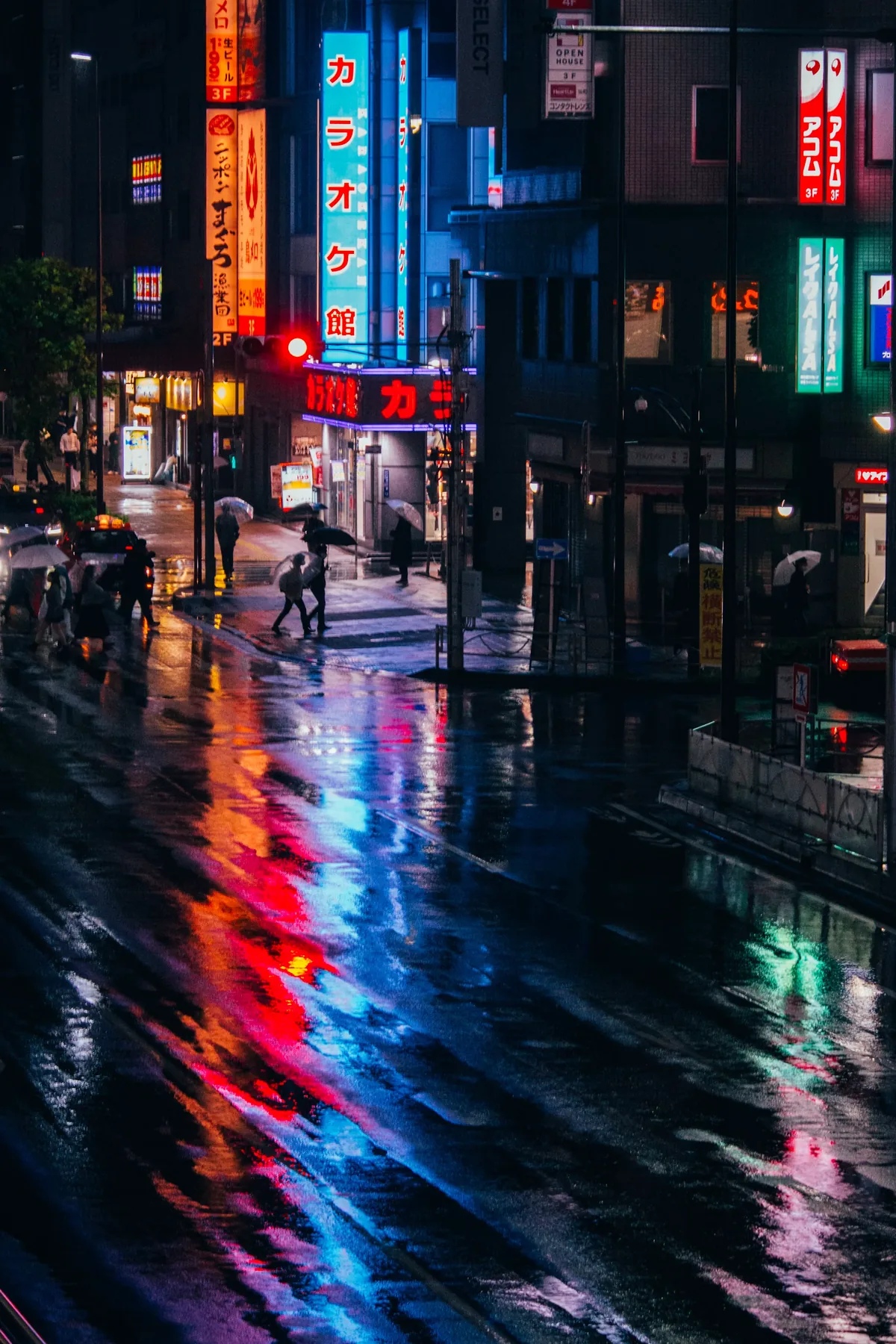
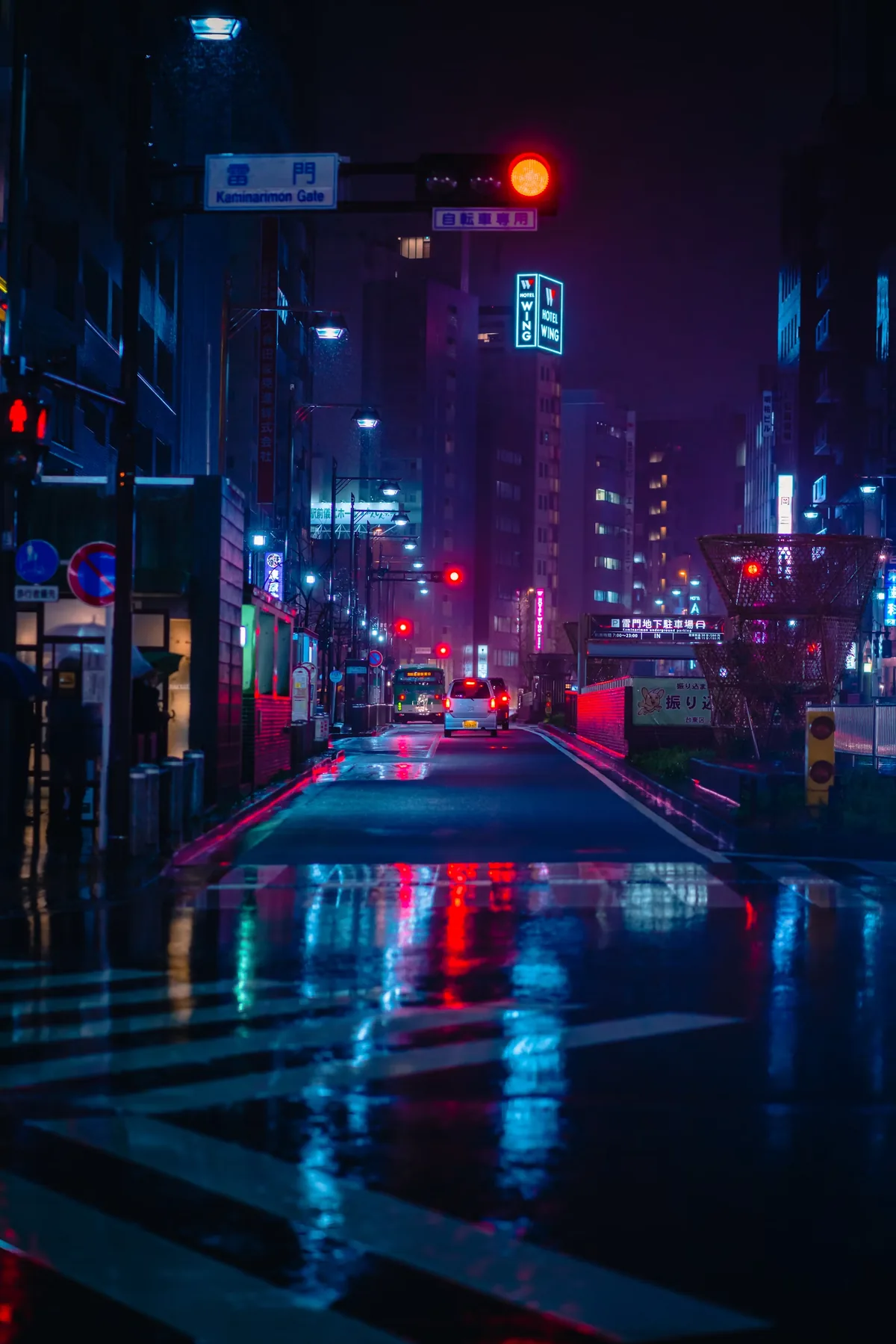
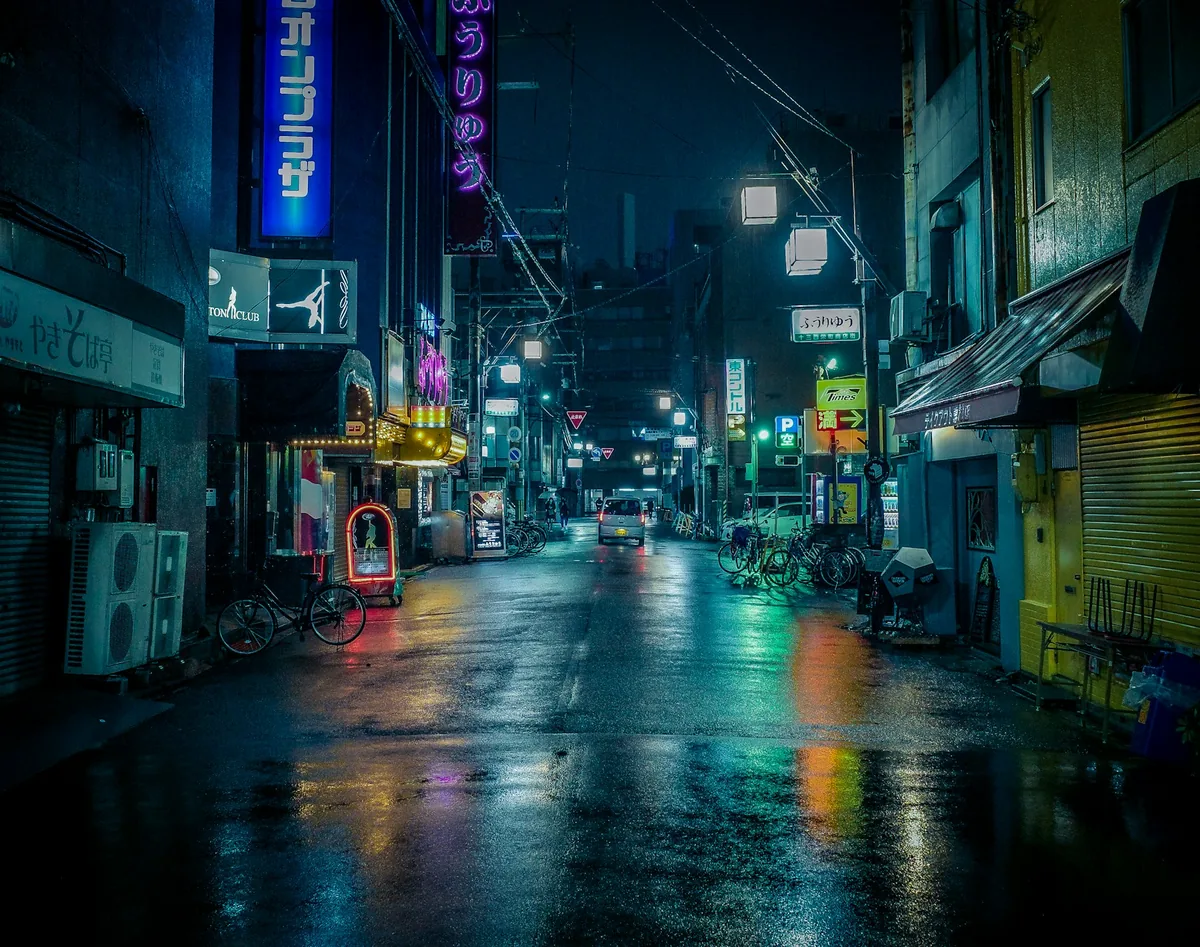
A wet street offers many distractions: reflections, traffic, signs and people moving through different pools of light. For this exercise, choose a safe position away from traffic and a composition containing one colored sign, its reflection and a place where a subject might pass. Do not step into the road to lower the camera. Decide whether your priority is readable lettering, a recognizable person or an abstract streak of movement. The point of three frames is not to collect three attractive accidents; it is to identify which variable changes the result you care about.
Establish a reference frame
For a handheld scene containing a walking person, try 1/125 second as an initial experiment, not a promise of frozen movement. Choose an aperture that gives the subject enough depth of field and an ISO that produces a useful exposure. A moderate wide lens is easier to work with than a tight view when space is limited. Keep white balance fixed for the comparison so an automatic color change does not obscure the exposure difference. Photograph the scene and inspect the recorded image, particularly the sign lettering and any detail you want in the moving subject.
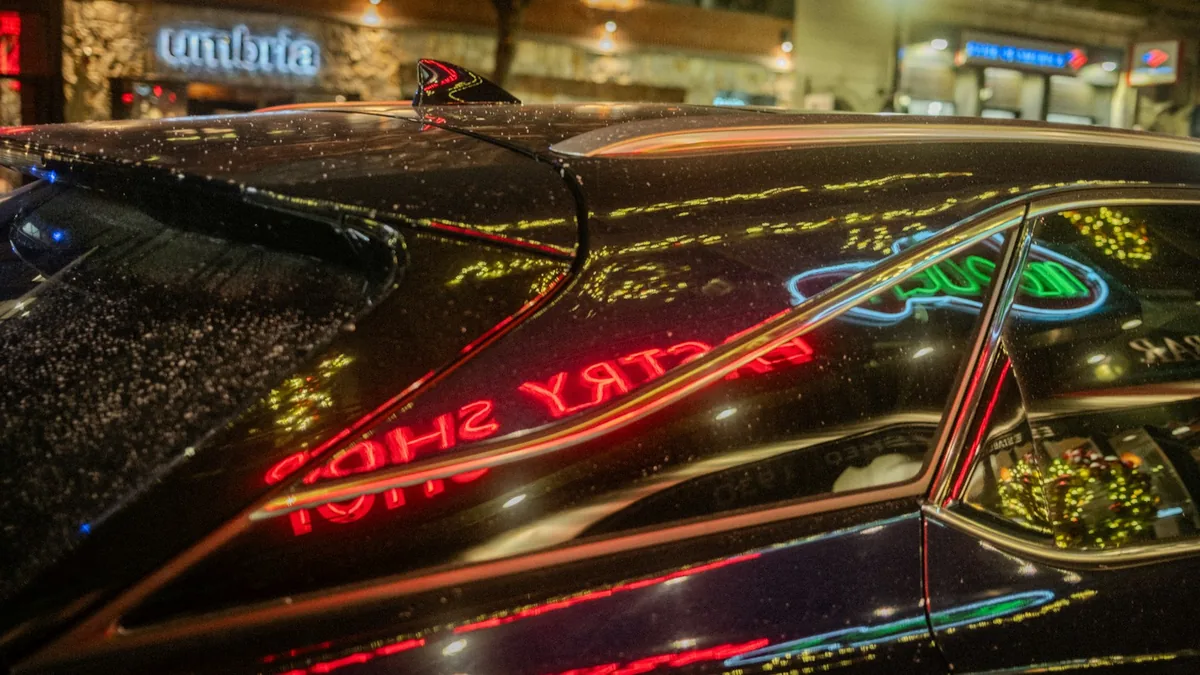
Frame two: protect the color
If the sign becomes a featureless bright patch, make a second frame about one stop darker while keeping shutter speed and aperture fixed, lowering ISO if the camera permits. Otherwise use a controlled exposure adjustment and note which setting changed. Examine individual color-channel warnings or histograms when available, as well as the actual image. A combined brightness graph can conceal a saturated color channel. Do not insist on preserving every tiny lamp at the expense of the subject. Decide which highlight contains meaningful information and whether darker surrounding tones support the scene rather than simply looking underexposed.
Frame three: change the motion
Return to the exposure you preferred, then deliberately try a slower shutter, such as 1/30 second. Offset the added exposure with ISO or aperture as needed and record the tradeoff. This is a different interpretation, not an upgrade. A stationary building may remain recognizable while a person blurs; stabilization cannot stop the person moving. If everything becomes soft, use a stable support where permitted or return to the faster shutter. Keep tripod legs out of pedestrian routes. Review the subject’s face, feet and outline separately from the reflected light before deciding that the blur is intentional and useful.
Distinguish optical flare from lost detail
Rain on the front of a lens can spread a bright sign into a broad glow that changes between frames. Check the glass from shelter and use a clean, dry lens cloth appropriately; keep a second cloth protected. Do not infer weather resistance from the camera’s appearance. Follow its manufacturer’s moisture precautions and stop if the conditions exceed them. If the glow persists with dry glass, compare composition and exposure before blaming focus. Keep the same camera position for the exercise: moving a few inches can change a puddle reflection much more than a small exposure adjustment.
Compare the files, not just the screen
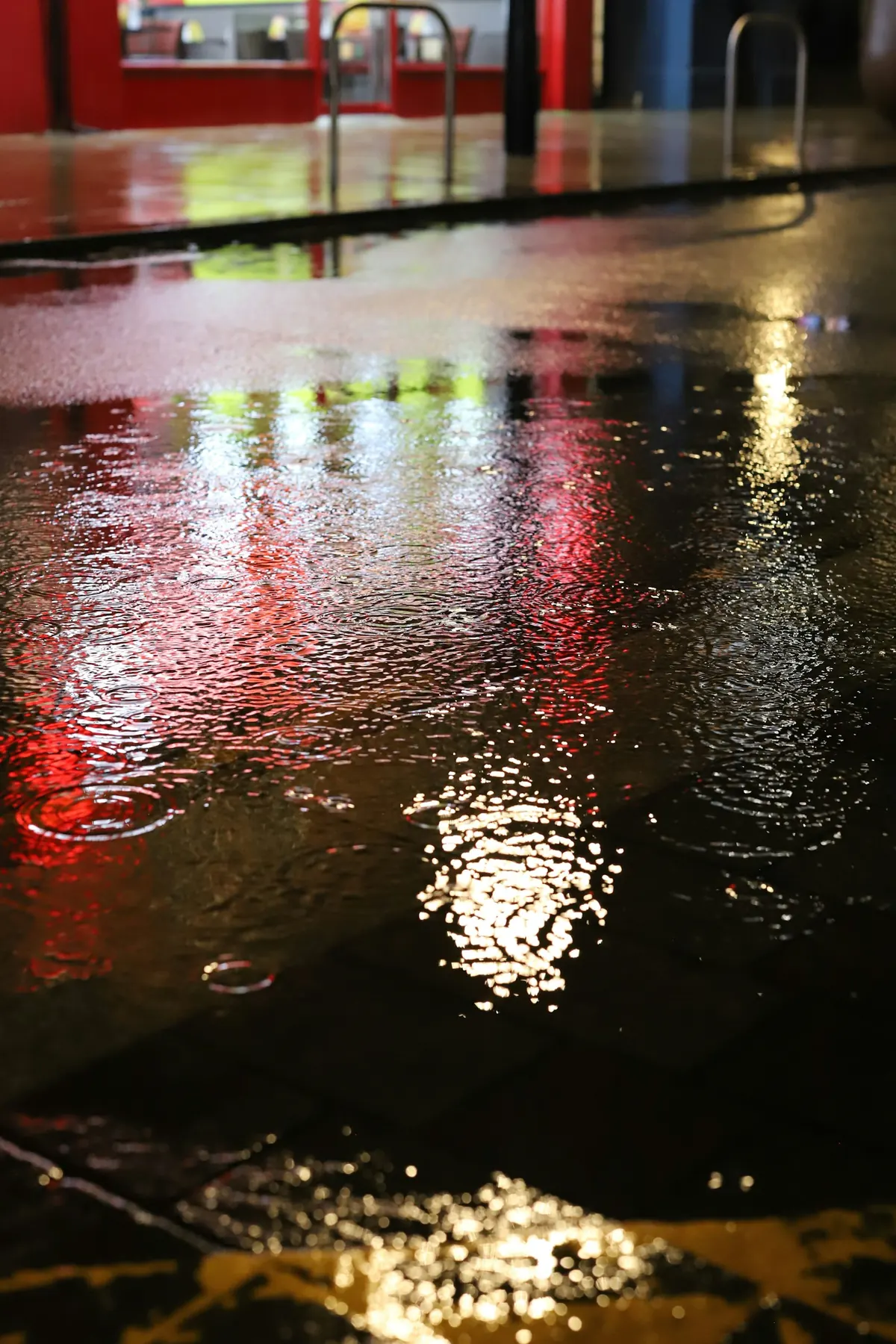
At home, compare the three frames with the same editing treatment and display brightness. Look first for the chosen subject, then examine highlight color and motion at the intended output size. Write down the setting that solved the problem and the compromise it introduced. Avoid lifting every shadow until the street resembles daylight; darkness can be part of the composition. The licensed photographs accompanying this article are contextual examples, not our three-frame test and not evidence of specific settings. Repeat the exercise in a second location only after you can explain why one of your first three frames works better.