The confirmed change
Nevion announced on October 6 that Providius has added native support for its eMerge IP media fabric to NVRT, the Network Visualization & Real-Time Telemetry platform. The integration combines live switch telemetry with service data from VideoIPath. Nevion is a Sony Group company; this is a broadcast-infrastructure development, not a camera launch. The practical question is whether an operations team can connect a production problem to the network carrying the affected media.
What the manufacturer says operators can see
Nevion describes route visualization, service names drawn from VideoIPath, PTP timing visibility and interface statistics including utilization and errors. The company says this can help teams isolate problems faster in all-IP and hybrid IP/SDI environments. We have not independently tested that claim. Its announcement does not publish a USD price, supported-version matrix or detailed commercial rollout date. Buyers need a vendor-confirmed configuration and quotation; the announcement date is not a guaranteed installation date.
Why the handoff matters
A production team describes an incident in programme terms: a camera disappears, a remote feed breaks up or an output stops reaching the intended destination. A network team may begin with ports, addresses and counters. Our reading is that the useful promise here is a better connection between those two descriptions. A display becomes operationally valuable when someone can trace the affected service to the relevant infrastructure without guessing which label belongs to which source. That is different from simply collecting more measurements.
Ask for a demonstration built around your workflow
Before evaluating a proposal, define one representative signal path from source to destination and the people responsible for each handoff. Ask the supplier to show how that path is identified in the monitoring view, how a normal state is recorded and how a discrepancy becomes visible. Use an agreed test environment, not an improvised interruption to an on-air service. The important outcome is a repeatable explanation of what an operator should do next, including when to escalate rather than change a configuration.
Separate an alert from a diagnosis
An unusual statistic can be a useful lead without proving the cause of a visible picture problem. A sensible acceptance exercise asks whether timestamps, service identity and the affected path can be compared across the relevant tools. Record what happened and what remained normal. Avoid treating a clear-looking dashboard as proof that every endpoint or conversion stage is healthy. Equally, do not assume a network alert explains a camera, audio or processing fault just because both appeared during the same show. Monitoring supports investigation; it does not remove the need for it.
Define ownership before the next live production
A shared view helps only if the operating procedure is equally clear. Identify who watches it, who acknowledges an incident, who can authorize a routing change and who maintains the service labels. Include temporary sources and hired equipment in that discussion. For distributed work, put contact and escalation details alongside the technical handoff. A small crew does not necessarily need enterprise infrastructure, but the same discipline applies: know which person owns capture, transport, reception and delivery, and avoid leaving an unassigned gap between them.
Check the commercial and technical boundary
Ask for the exact switch models, software versions, licensing requirements, deployment services and support responsibilities included in a quotation. Confirm how an existing installation would be upgraded, what maintenance window is required and what rollback arrangements are supported. Request evidence for the workflows that matter to you rather than extrapolating from a demonstration of another configuration. Do not budget from an assumed free integration: the public release provides no price. Likewise, do not promise a client a new capability until the complete proposed system has passed your agreed acceptance checks.
Read the pictures as archive context
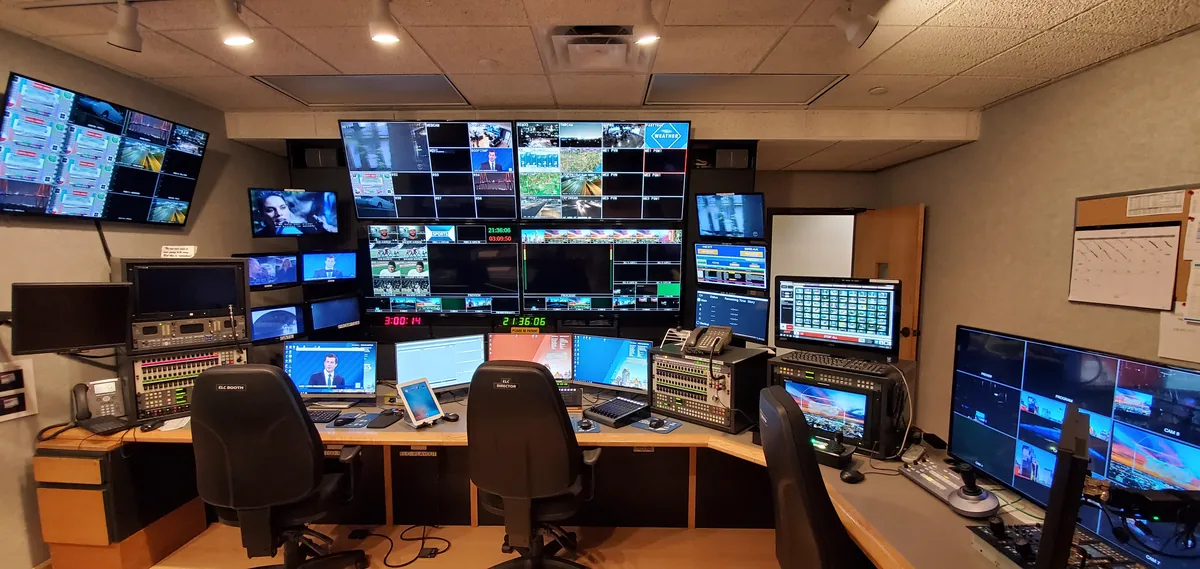
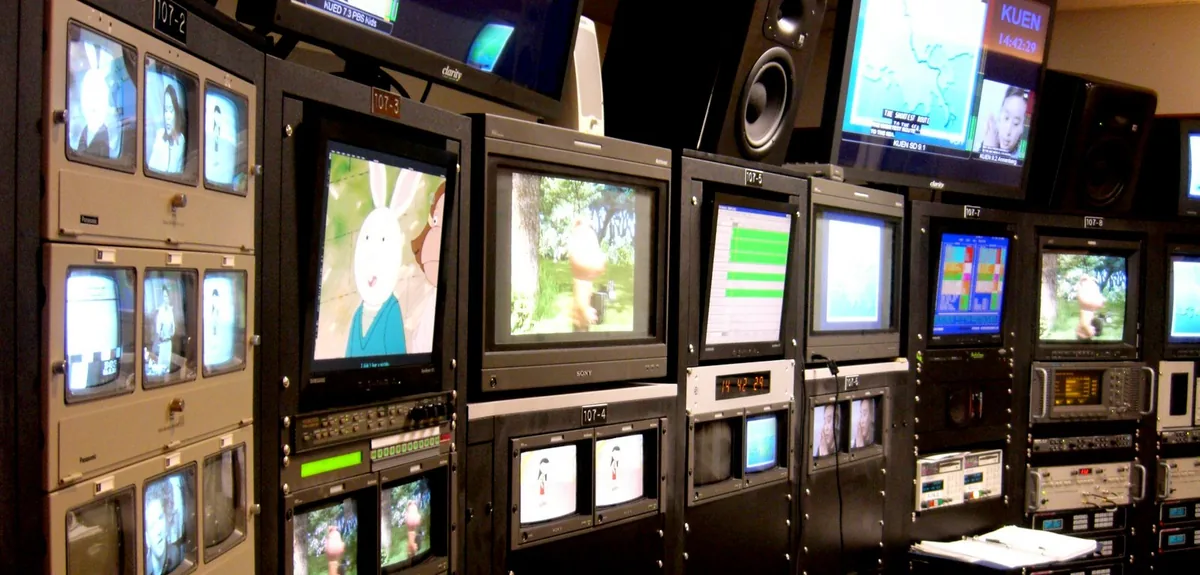
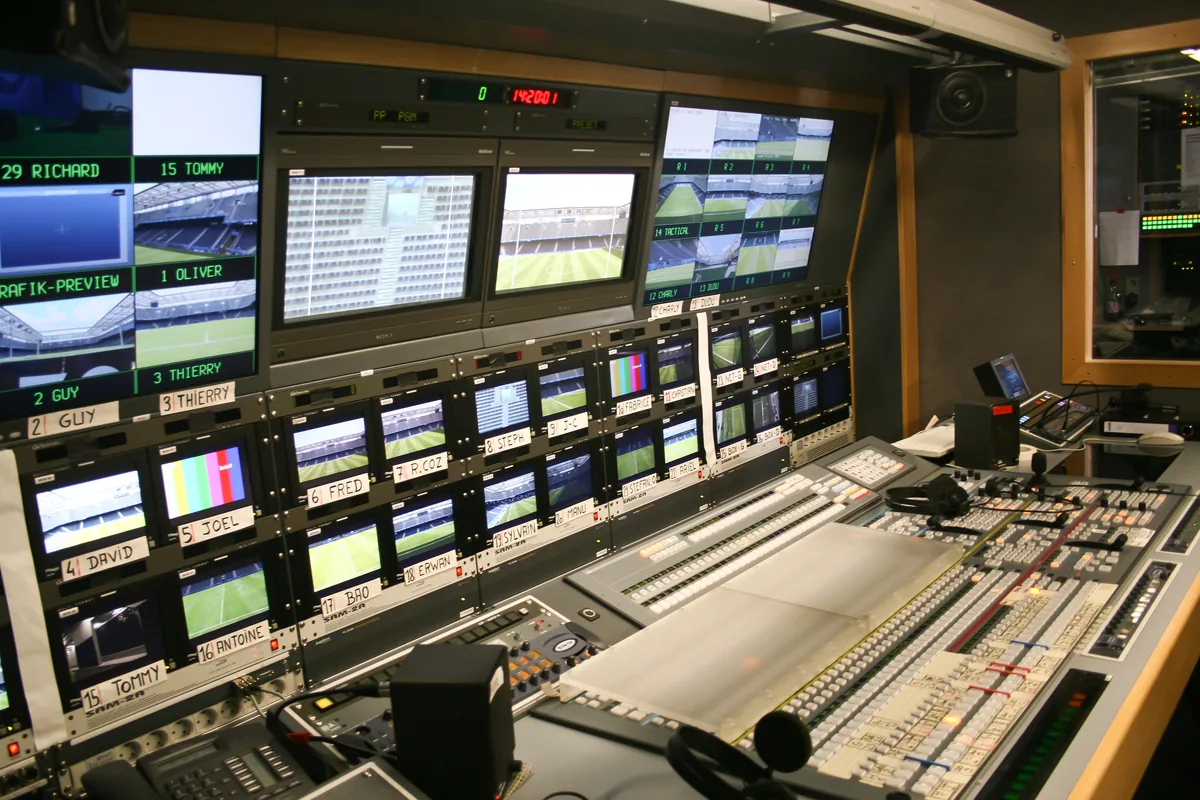
The photographs illustrate television control rooms and a broadcast truck, where multiple sources and destinations must be managed. They do not show NVRT, an eMerge installation or a test conducted for this report. The linked official product pages are the place to inspect current manufacturer diagrams and specifications. Our coverage of remote volumetric production explains a different distributed-video workflow; the small-crew synchronization guide addresses another handoff problem without implying that timecode and network timing are interchangeable.