Find the change the audience needs to see
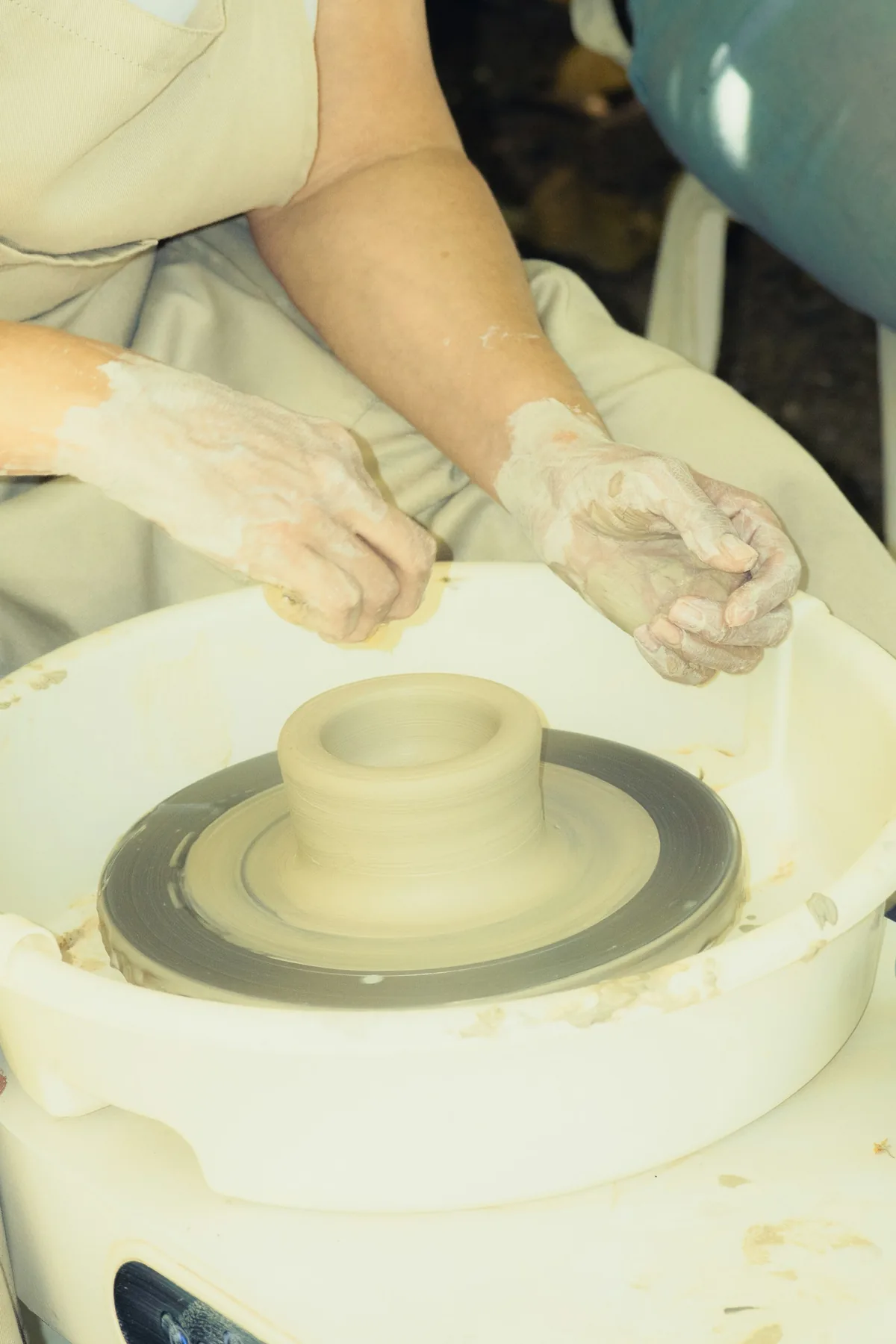
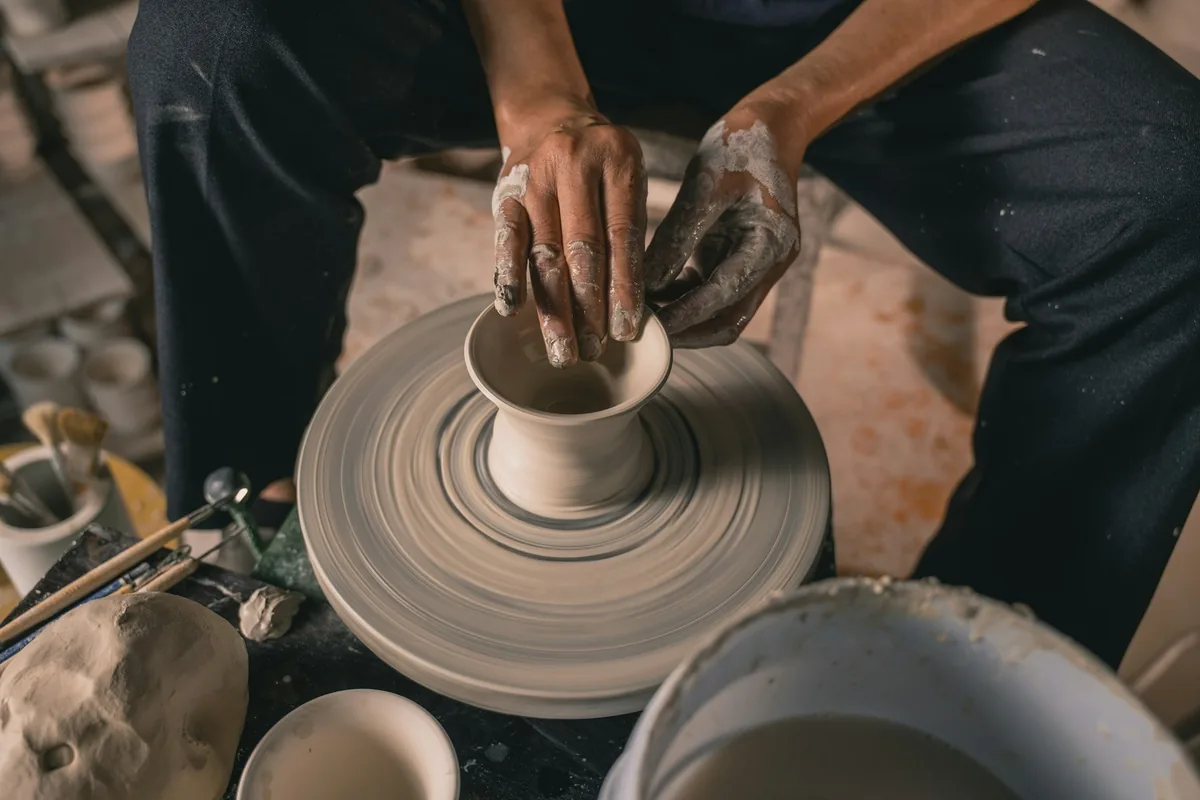
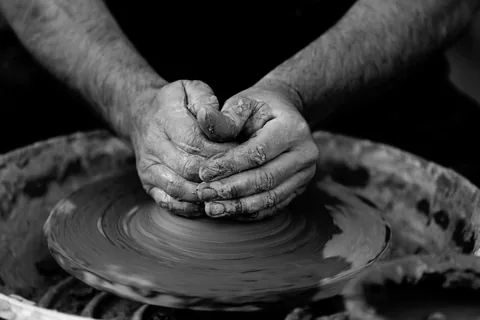
Watch a short stretch of work before picking a detail. A thumb opening the centre or fingers drawing up a wall gives the viewer a visible change to follow. Ask the potter where the camera can stand without interrupting the movement. A camera very close to the wheel can obscure the craftsperson’s view and introduce a shadow exactly where the hand touches the clay.
Give the editor a continuous reference
Record the entire gesture from a wider position, starting before contact and holding until the hands release. Keep enough of the potter and the wheel in view to establish which hand is where. This take provides the visual order of events and a continuous track of the room. Make a note of the vessel and the stage of work when the take ends.
Use a detail that belongs to that stage
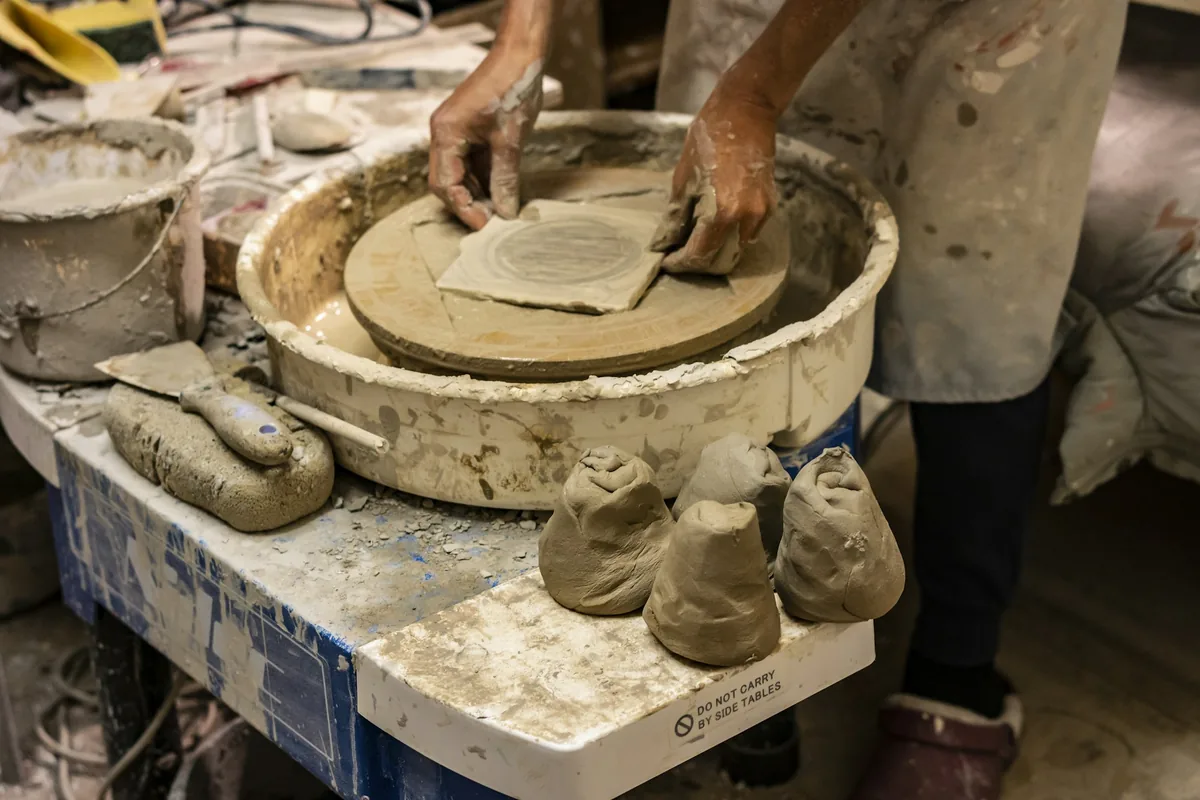
For the closer shot, look at the height of the rim, the wetness of the wall and the shape of the opening. If the next pass has already made the pot taller, a cut back to the earlier wide shot can make it shrink. With one camera, stay wide through an unrepeatable change. Capture a later detail for the later stage rather than asking someone to recreate the earlier pot.
Listen before laying the insert over speech
A wheel motor may run continuously while the sound of a sponge or a trimming tool begins abruptly. Keep the underlying room sound continuous across a picture cut when it represents the same moment. If the insert shows a tool making contact, listen for a sound you can honestly associate with that action. An unrelated scrape can give a misleading impression of the technique.
Review the cut in both directions
Play from the wide view into the detail and back out again. Pause at each boundary and compare hand position, wheel direction and vessel shape. If the transition creates a contradiction, shorten the insert, return to the wide shot later, or use the detail as a separate moment. A close-up earns its place when it shows something the wider position could not explain.