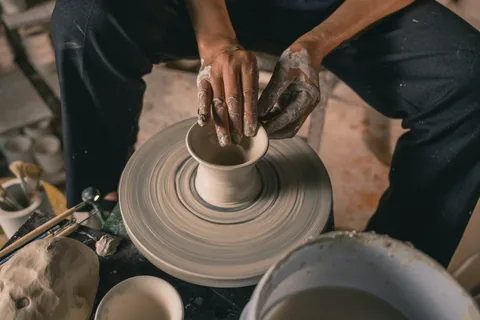
Choose what should look still
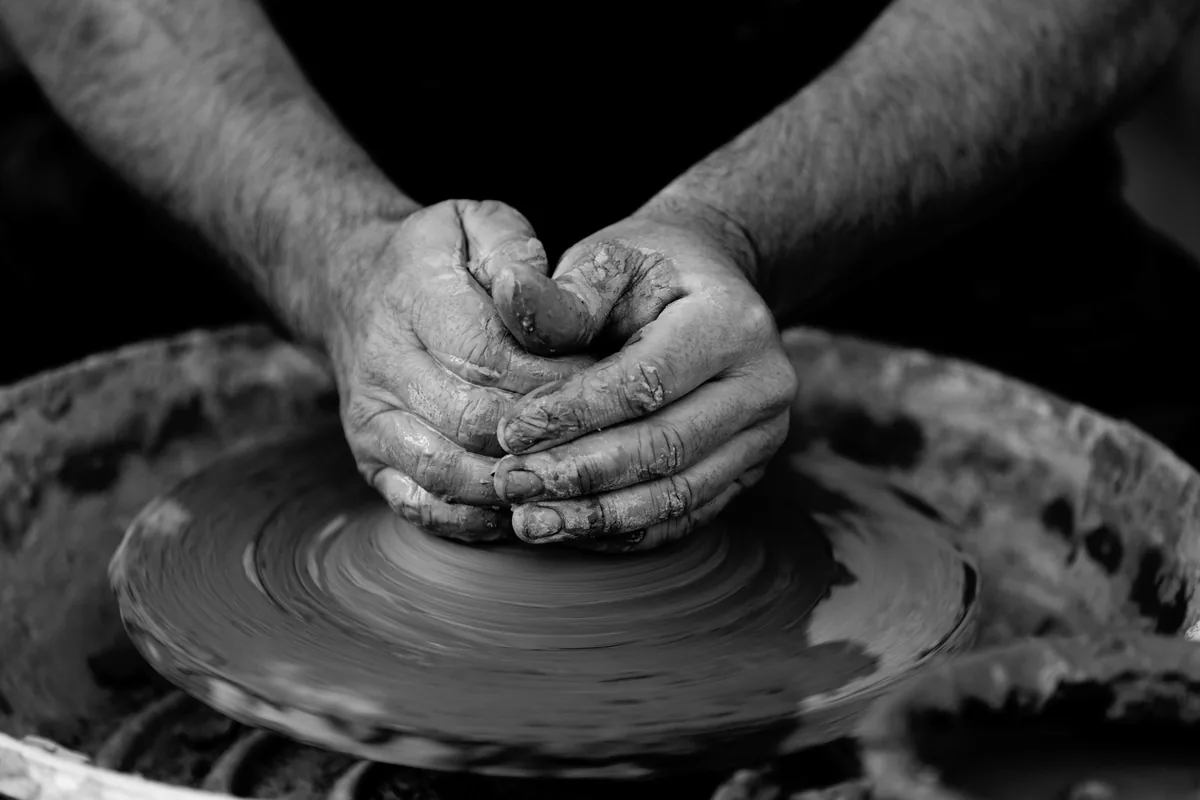
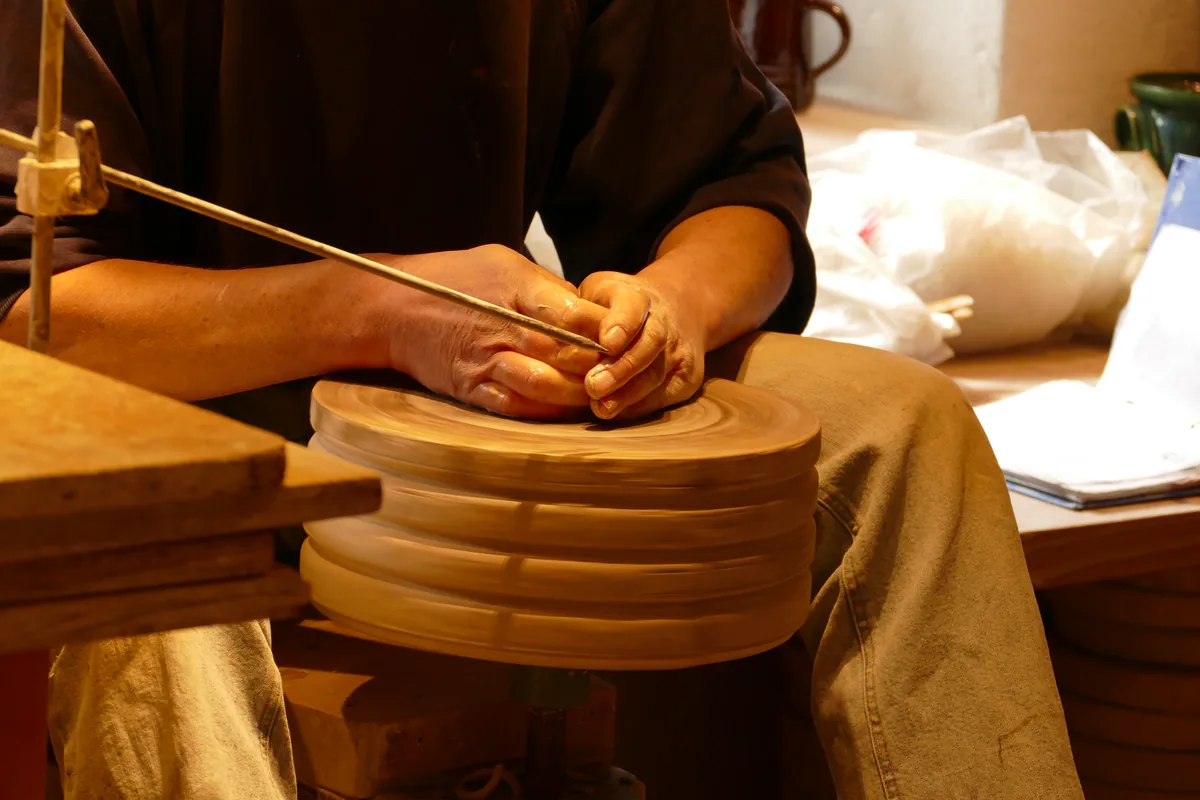
A wheel can appear stationary in a photograph even when the potter is turning it quickly. Decide whether the picture should describe a precise finger position or the continuous rotation of the clay. Nikon’s shutter-speed guidance explains the underlying distinction: a shorter exposure is more likely to stop movement, while a longer one records more of its path. The shutter speed that works depends on the speed of the action. A number copied from another workshop is a starting point, not a guarantee.
Make a comparison without moving the camera
With permission, choose a safe position outside the potter’s working space. Frame the hands, the top of the wheel and a fixed edge of the bench. Start with a relatively short exposure, such as 1/250 second, and inspect a frame. Try 1/60 and 1/15 while the potter repeats a similar stage of the task. These are suggested experiment settings, not the recorded exposure data of the photographs on this page. Support the camera and keep the composition unchanged so the comparison answers one question.
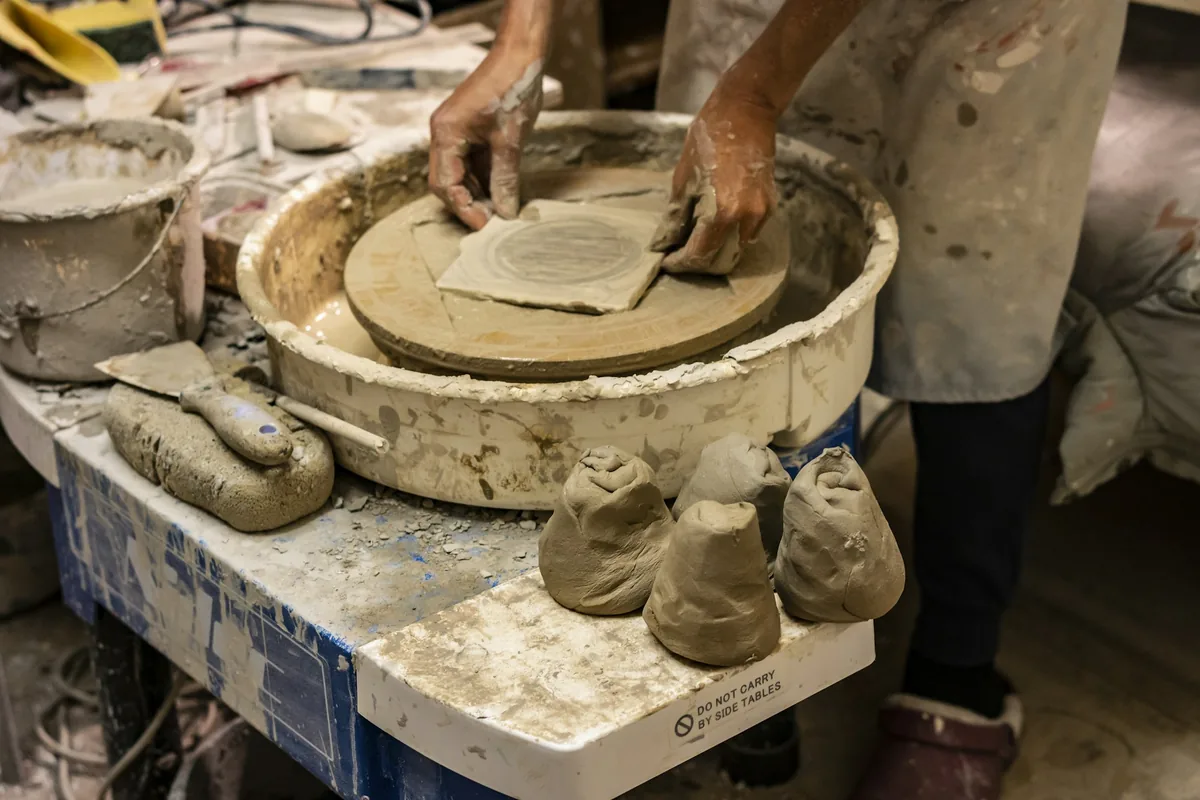
Keep exposure and focus from becoming the experiment
If the aperture needs to stay fixed for depth of field, adjust ISO as the shutter changes, checking the histogram and the preview. A slower exposure admits more light; do not compare a bright frame with a dark one and attribute every difference to motion. Focus on the intended hand-and-clay contact area and check it after a posture change. Do not ask someone to hold an unsafe or uncomfortable position for a photograph. If the clay moves outside the focused plane, make another frame at the next natural opportunity.
Read the stationary detail first
Inspect the bench edge at the intended delivery size. If it streaks in the same direction as everything else, camera movement may be hiding the effect you wanted to study. If it is clear while the wheel forms a circular trace, the photograph is describing subject movement more selectively. The hands can still blur because they move during an exposure. Choose the frame in which that blur supports the gesture instead of concealing the fingers. Keep the sharper alternative: an editor describing a precise forming technique may need a different picture from one introducing the rhythm of the workshop.