Separate the archive from the argument
Begin with a working collection, not by deleting the photographs that do not make the first edit. Preserve originals and their metadata, then create a selection you can rearrange without changing the archive. A documentary sequence makes an argument through inclusion, omission and order. Before comparing sharpness or color, write one sentence describing what the reader should understand. If that sentence is vague, the edit will often become a collection of technically successful images with no clear reason to sit together.
Name the contribution of every candidate
Give each selected photograph a short role label: setting, person, action, consequence, detail, transition or ending. Then describe the new information it contributes in plain language. “Beautiful light” is a visual strength, but it is not necessarily new information. Two strong images may do the same job, in which case one can stay in reserve. A quieter photograph can earn its place by explaining a relationship that the dramatic frames leave unclear. This exercise is an editorial tool, not a rule that every story must contain exactly the same set of roles.
Use pairs to expose weak transitions
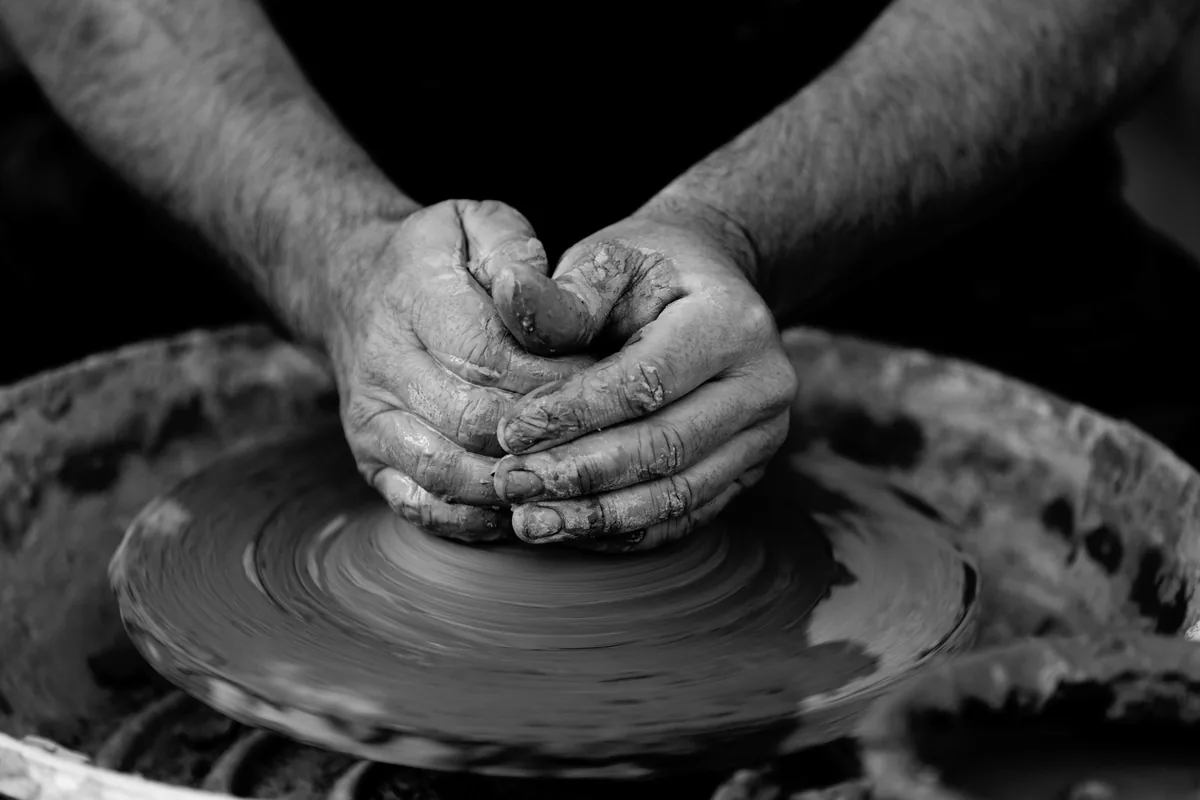
Place the first two photographs together and ask what changed. Did the reader move closer, meet someone, discover a new fact or simply see a near-duplicate? Repeat the test through the sequence. A change of scale can create rhythm, but a wide view followed by a detail is useful only when their relationship is understandable. The pottery detail illustrating this article is independent stock, not evidence that it belongs to the same session as another photograph. In a real documentary edit, verify those connections rather than relying on visual resemblance.
Check the implications of the order
Readers may interpret adjacent frames as a sequence of events even when you intended only a visual association. Compare capture times and your field notes before presenting a before-and-after relationship. If the order is thematic rather than chronological, make that clear in the introduction or captions when it matters. Avoid arranging photographs so that an unrelated reaction appears to answer a particular event. The test is not merely whether every image is individually genuine; ask whether the combination invites a conclusion your reporting cannot support.
Let captions repair context, not rescue missing evidence
Read the captions without looking at the pictures, then look at the pictures without reading the captions. The two passes reveal different weaknesses. Text may assume a person has already been introduced, while a photograph may leave a crucial activity ambiguous. Add verified context, names and dates where they help. Do not use a confident caption to turn an uncertain visual impression into a fact. Notre Dame’s photo-essay guidance emphasizes both selection and explanatory text; our caption guide provides a separate checklist for keeping observation distinct from inference.

Test the published sequence on a small screen
Make a proof in the layout readers will actually see. On a phone, a pair intended to sit side by side may become two widely separated images, and a caption may appear below a long stretch of empty space. Check that names and references remain clear after that change. Ask a reader unfamiliar with the assignment to describe the story and identify any confusing jump. Remove a frame, compare the result, and restore it only if something meaningful was lost. Save the final order and caption version with the project so later revisions remain traceable.