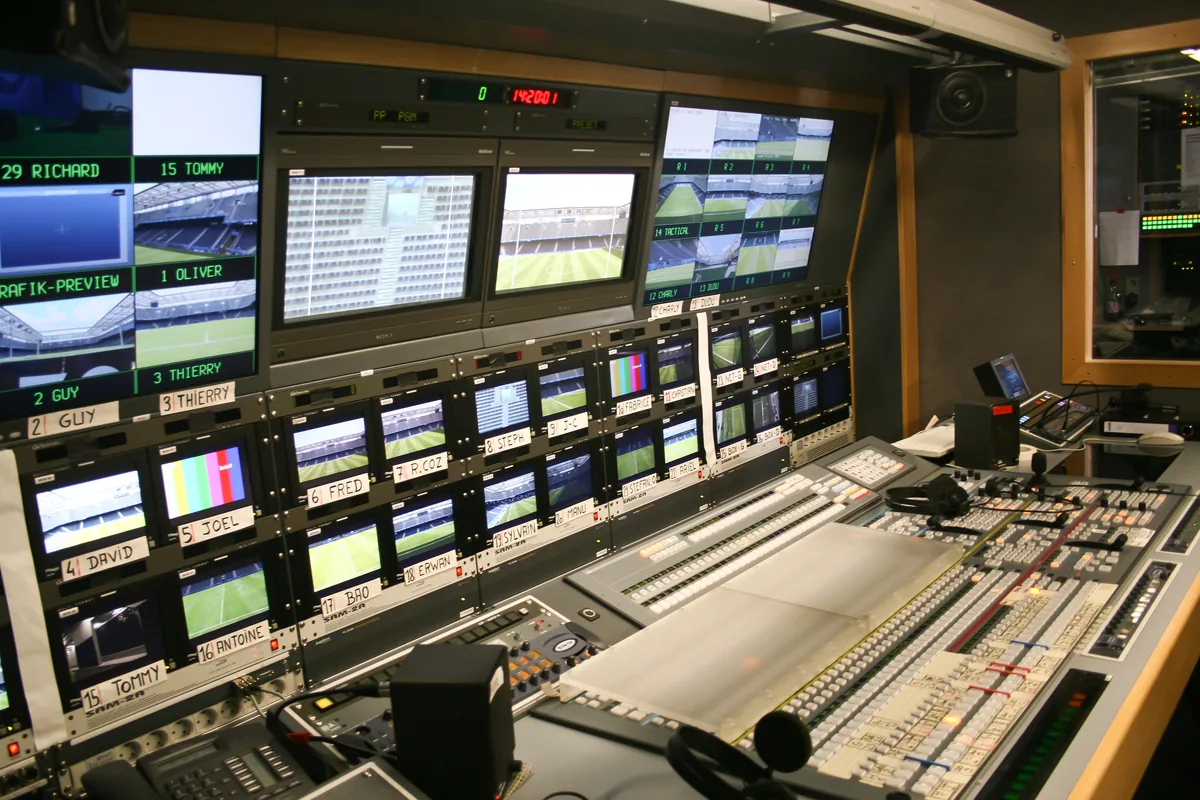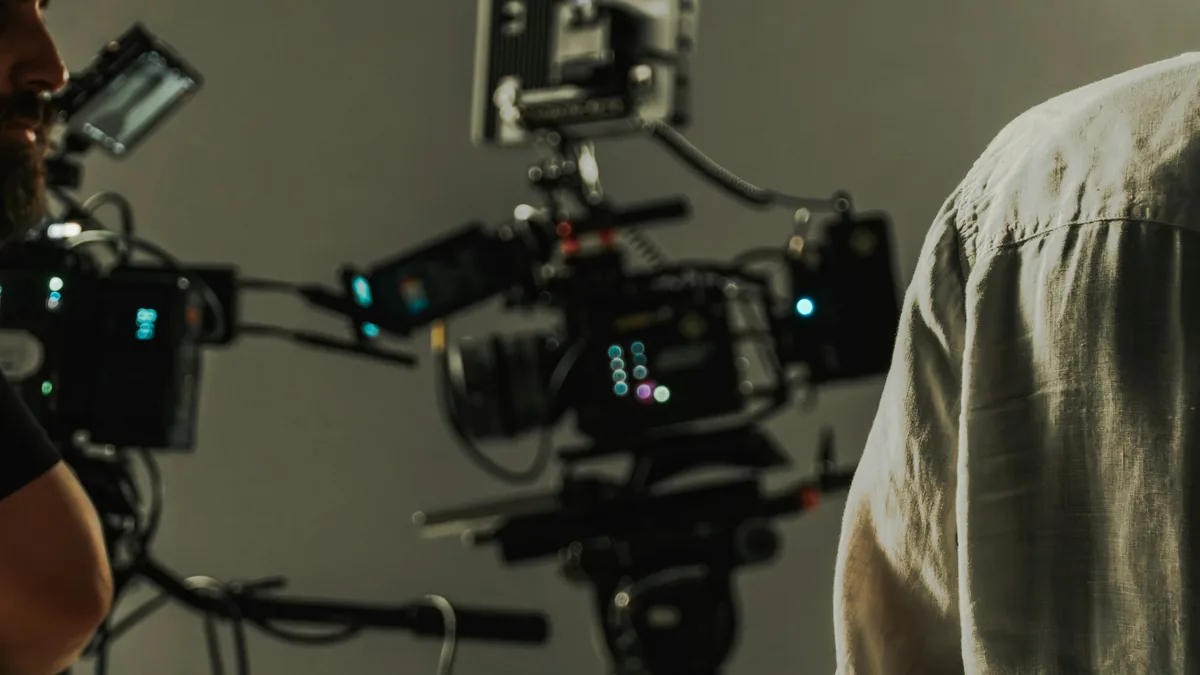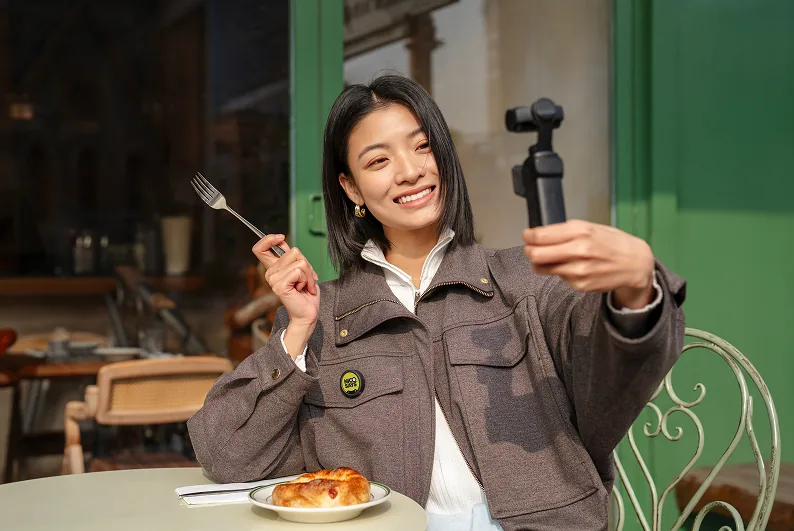
Begin with the question the next shot creates
Before filming a broad view, write down what the viewer needs to understand: which building a person enters, where a conversation takes place or how a worker relates to a larger room. An establishing shot supplies that context. A wide shot describes framing; an establishing shot describes a job within the sequence. They often overlap, but a distant view is not automatically informative. Adobe’s wide-shot guidance emphasizes showing a subject in its surroundings. Use that principle to choose the information your opening actually needs.
Choose one spatial relationship to make obvious
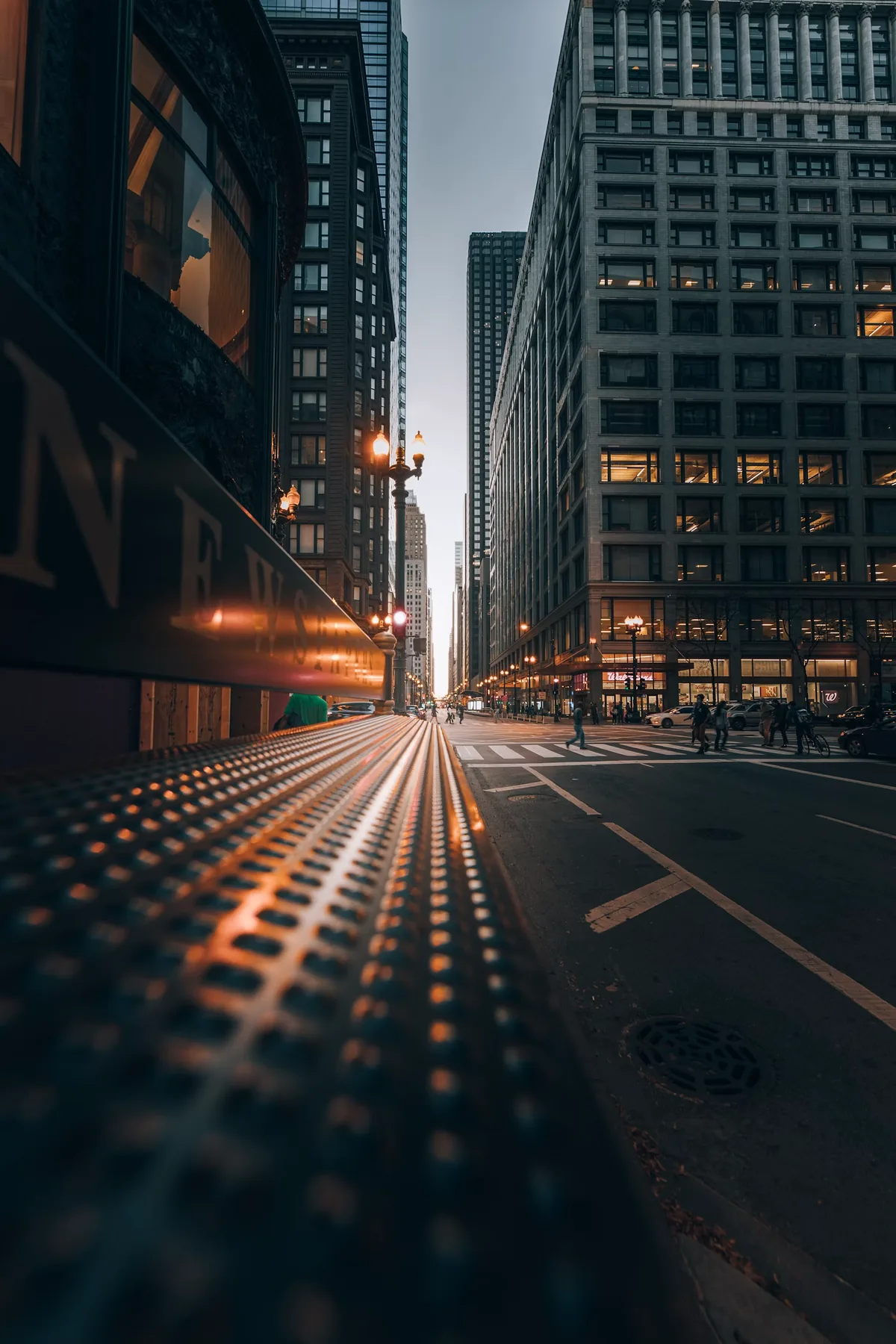
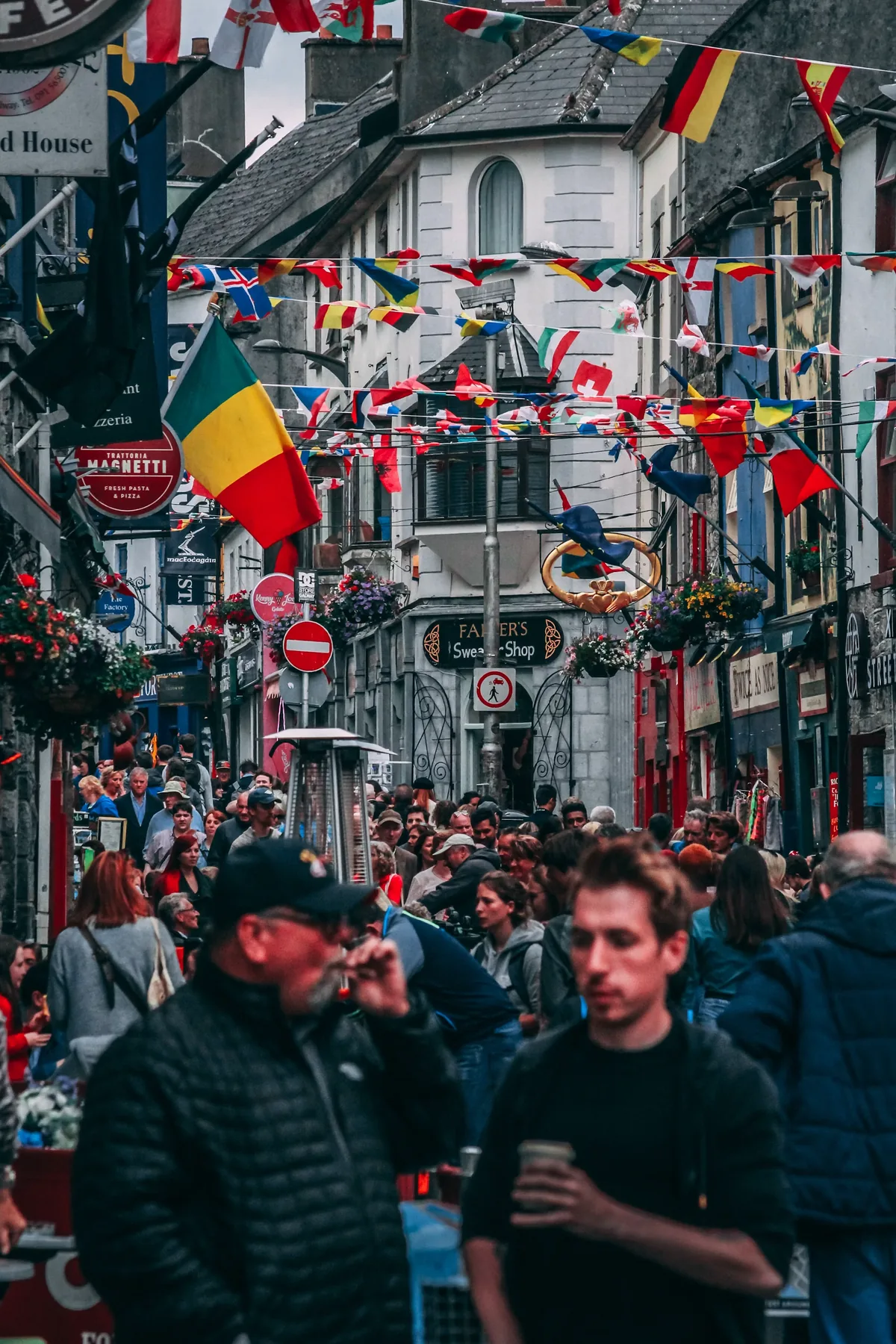
For an arrival scene, the useful relationship may be the person and the entrance. For a workshop, it may be the worker, bench and doorway. Position the camera so those elements can be read without searching the corners. If the entrance is hidden behind a parked vehicle, a broader lens may only add more irrelevant pavement. Try moving first. The accompanying city photographs are licensed still illustrations for studying location and scale; they are not frames from one film, and they should not be read as a continuous journey.
Select the distance before the lens
Stand where the important objects form a useful arrangement, then choose a focal length that includes the necessary boundaries. Very wide framing may make a person too small to notice, while a tighter view can omit the route they will take. Check the image at the size your audience is likely to see. On a phone, a subtle entrance or distant gesture may disappear. If the frame requires a spoken explanation simply to locate the subject, simplify it or let a clear movement introduce the subject.
Record a stable version before a moving one
A stationary shot gives the editor a straightforward way to establish the space. Hold the composition long enough to include a quiet lead-in, the useful action and a short pause afterward. Then consider a pan or other movement only if it reveals something the fixed view cannot. A moving camera can postpone the moment when the audience finally sees the relationship that matters. Rehearse where the movement starts and ends, and avoid ending on an obstruction just as the viewer becomes oriented.
Make the next angle belong to the same place
After filming the broad view, record a closer shot that shares a recognizable feature or follows a clear action from it. An entrance visible in the opening might become the doorway in the next frame. A person walking toward a workbench might lead into a closer view of the task. Preserve a coherent screen direction when that relationship matters. If you must cross to a very different viewpoint, consider a neutral intermediate view or a new establishing angle instead of expecting the audience to reconstruct the room.
Let sound connect the scale changes
Record useful location sound as well as the picture. A broad exterior and a close interior will not necessarily have the same acoustic character, but the transition should feel deliberate. Listen for traffic, machinery or room tone that changes abruptly when the image cuts. A short sound overlap can help connect the shots when it accurately represents the scene. Avoid using a dramatic sound merely to disguise an unclear visual relationship. Our related J-cut and L-cut exercise explains how to test a sound-led transition without changing the underlying events.
Judge the pair in the edit, not the opening alone
Place the establishing shot immediately before its intended closer view and watch without reading your notes. Can a viewer identify where the action moved and why the second shot belongs there? Trim the opening until it gives enough information without delaying the scene. There is no universal duration: a familiar doorway and a complex work floor need different reading time. If the cut remains confusing, choose a clearer opening or a different second shot. Keep the attractive wide view only when it helps the sequence communicate.