From a show preview to a regional launch
DJI previewed SDR Transmission 2 for IBC 2026, then launched the system on September 17. The European announcement lists the individual unit at £309 or from €349 and the Combo at £559 or from €629, with sales starting that day through DJI and authorized retailers in the release’s market. Those are regional prices, not US quotes. An official USD price and US availability were not confirmed in the cited releases as checked September 28. Do not substitute the original SDR Transmission’s price or treat a currency conversion as a US launch price. This is a post-IBC analysis, not a claim of a new announcement today.
One unit can serve either end of the link
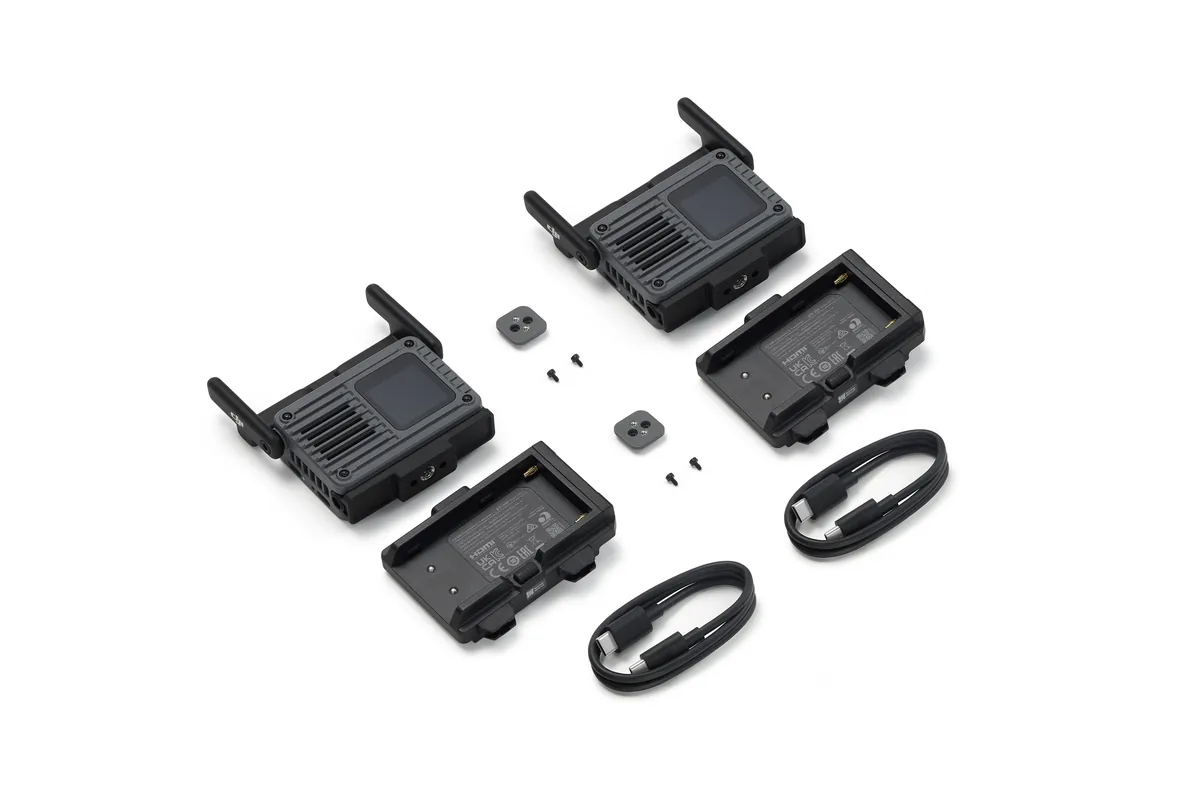
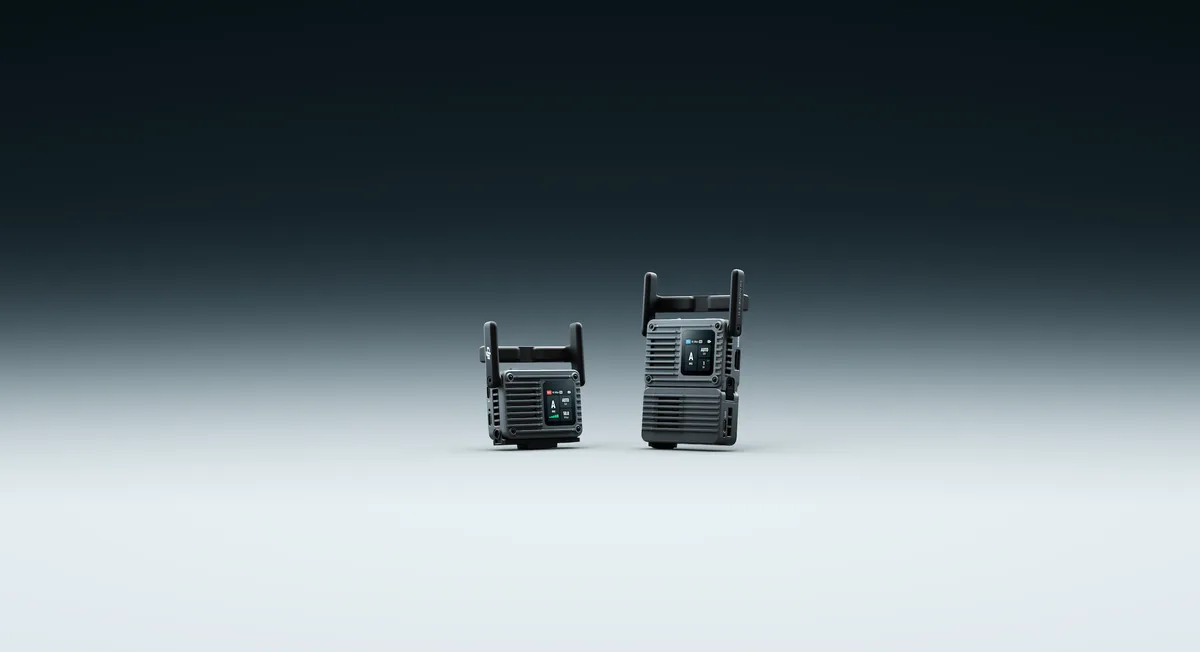
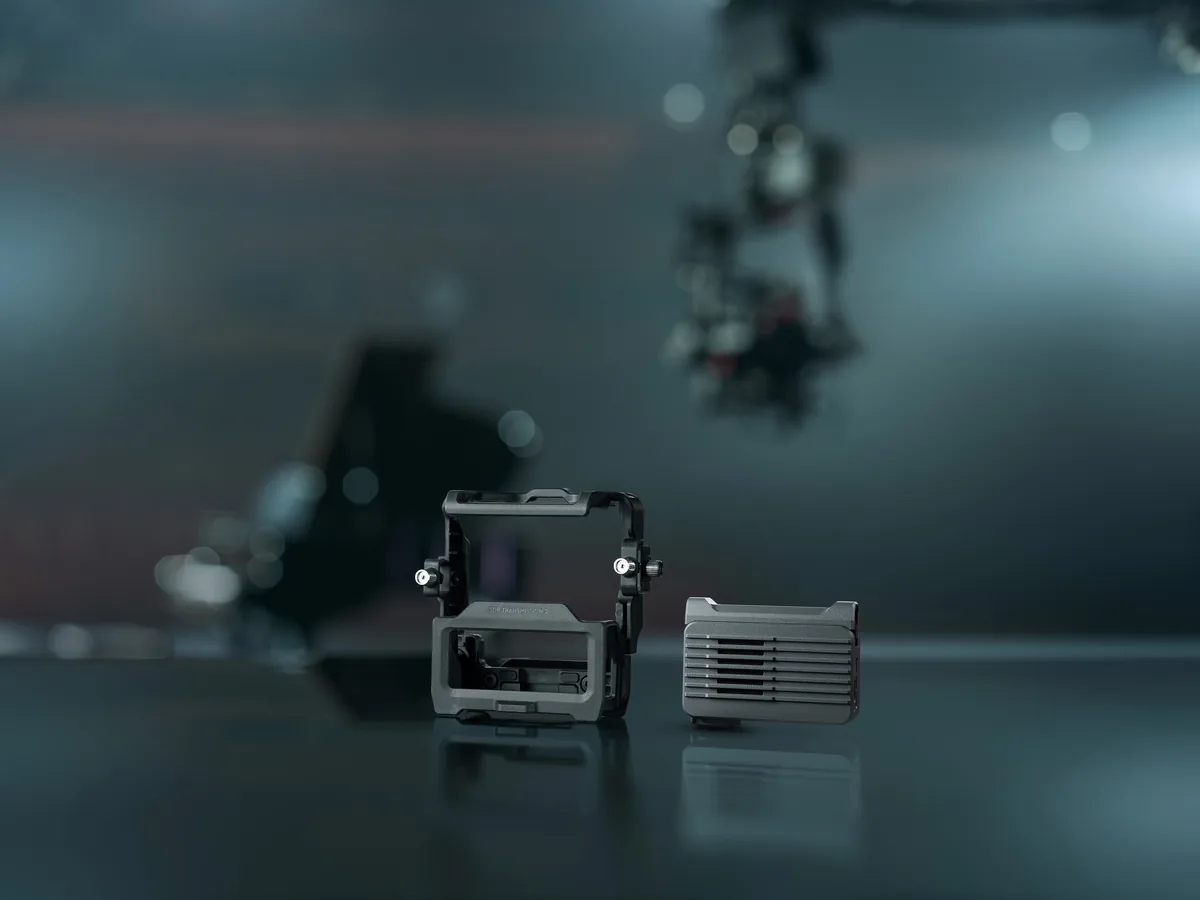
The design uses a transceiver that can be configured to transmit or receive. DJI Japan describes a body of approximately 136 grams and an optional expansion plate and protective cage. That distinction matters when putting together a kit: count the endpoints required for the camera and each viewing position, then identify the ports, mounting parts and power components needed at those endpoints. Our practical recommendation is to draw the complete path on paper before ordering. A box that performs two possible roles is not automatically performing both roles at once, and a useful accessory photograph is not proof that every accessory is included in every package.
Read the headline numbers as conditional claims
DJI specifies DCI 4K at up to 60 frames per second, 10-bit HDR, H.265 transmission at up to 50 Mbps, range up to 4 km and latency as low as 35 ms. The manufacturer explicitly identifies its figures as measurements under controlled conditions. They are not our results or a guarantee for a congested venue. For a focus puller, our suggested question is how the complete camera-to-screen chain behaves; for a director, it may be whether a useful picture returns reliably after an obstruction. Neither question is answered by a maximum distance alone.
Rehearse the difficult handoff, not only the clear view
A sensible rental evaluation should use the actual camera output mode, monitor and cables intended for the job. Walk the planned route, turn the operator’s body across the link and check the places where walls or vehicles intervene. Repeat with the rest of the production equipment operating normally. Log a dropout, a frozen image and recovery separately; they have different consequences for someone making a decision from the screen. This is a proposed test plan, not a report that the system passed or failed it. Keep an available wired monitoring path for a position where wireless performance proves unsuitable.
Treat monitoring and recorded image quality separately
A transmitted viewing signal is one part of the production, not a replacement for examining camera originals. Record a short scene with movement and fine detail, compare the monitor view with the resulting file, and confirm where any viewing LUT is applied. Ask each operator which information must remain visible and whether a clean feed is required elsewhere. Our judgment is that a monitoring upgrade earns its place by reducing uncertainty for the crew. More pixels alone do not establish correct exposure, faithful color interpretation or a supported remote-control function for a particular camera and firmware combination.
Budget a usable kit and a fallback
Before booking the system for paid work, obtain a region-specific written quote that identifies the exact model, supplied components, compatible power source and delivery status. Allow time to assemble and rehearse the complete kit before the first call time. If that cannot happen, use a known working monitoring arrangement rather than making an untested feature essential to the shot. All three illustrations here are DJI-supplied images of SDR Transmission 2 or its accessories, reproduced for this reporting; none is a field-test photograph. The launch is real, but the decision to rely on it still belongs to a tested production workflow.