Start with the room rather than a slogan
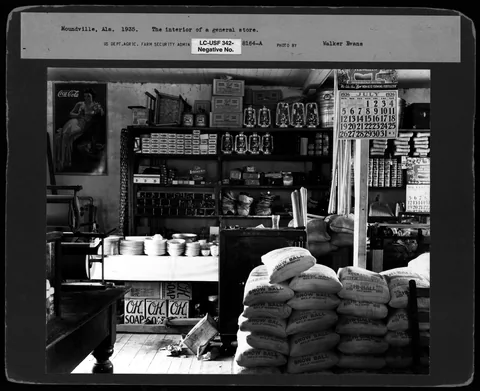
Walker Evans’s General store interior, Moundville, Alabama rewards an unhurried first look. Shelves, containers, stacked sacks and a passage through the room offer several routes for the eye. The Library of Congress identifies the photograph as summer 1936 and notes that its date is based on a calendar in the image. Before labeling the scene as a symbol of an era, distinguish what the photograph shows from what you bring to it. An object may be visible without its owner, price or everyday use being established.
Follow how one shape leads to another
In this print scan, the pale sacks at the front draw attention before the darker shelves farther back. Repeated containers create a rhythm, while vertical supports divide the space into smaller areas. This is our reading of the composition, not a statement of Evans’s recorded intention. Try tracing a path from the foreground into the room and then reversing it. Notice where the arrangement lets the eye continue and where an edge or dark area stops it. The picture becomes more specific when its organization is described in ordinary visual terms.
Look at the photograph as an archival object
The lead reproduction is the Library of Congress digital file from a print, identified as LC-DIG-ppmsc-00246. Its border and archival label remain visible here; we have not cropped them away or reconstructed missing edges. The label says 1935, but the current catalog dates the photograph to summer 1936 using the calendar visible in the scene. The catalog also provides a file from a preservation duplicate negative. Those are different reproductions of the same work, and tonal appearance can vary between them. A scan is not a transparent substitute for an original print. Naming the version helps readers understand what they are actually studying on a screen.
Compare the shop with a domestic passage
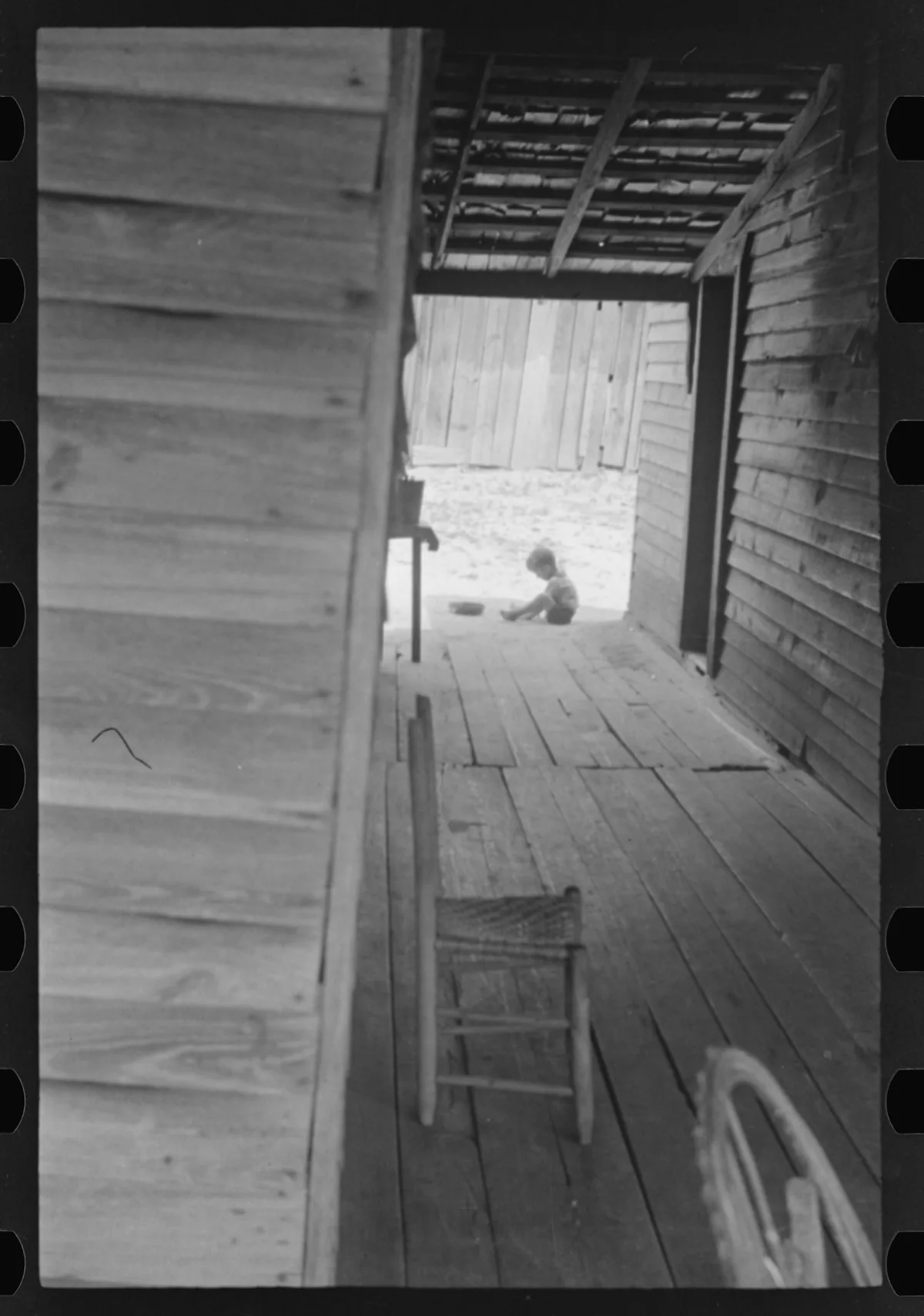
The accompanying Dog run of Floyd Burroughs’ home, made in Hale County in 1936, provides a useful second space to examine. Compare the way a passage organizes the frame with the store’s arrangement of goods and openings. Resist treating the two rooms as interchangeable illustrations of hardship. One is identified as a home and the other as a store; each contains different evidence about its function. The exercise is to ask how a photographer makes a space legible while leaving room for details that do not fit a single summary.
A portrait changes the terms of attention
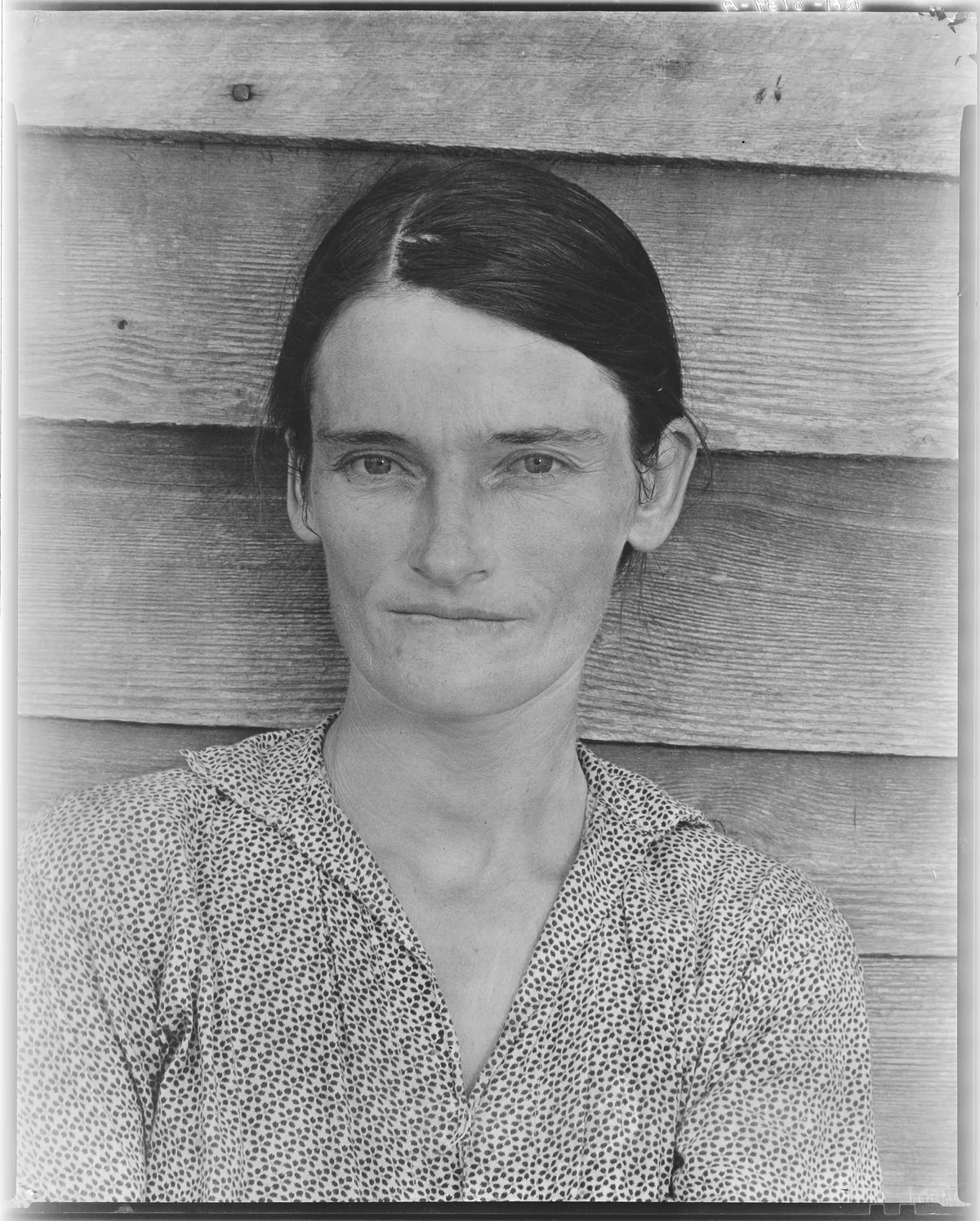
Allie Mae Burroughs’s portrait, also made by Evans in Hale County in 1936, shifts the comparison from objects to a named person facing the camera. Study the relationship between her face, clothing and the wooden surface behind her without assigning an emotion that the image cannot prove. A caption identifies a subject; it does not give a viewer access to that person’s private thoughts. Placing the portrait beside the interiors is useful only if that difference remains clear. People should not become another decorative detail in a visual account of material life.
Keep observation separate from explanation
Write two short columns while looking: what can be seen, and what would require further evidence. Shelves, lettering, containers and the direction of light belong in the first. Income, the photographer’s instructions, a customer’s routine or the meaning of an expression belong in the second unless a reliable source establishes them. Evans’s work can invite large interpretations, but careful looking begins with modest claims. The archive’s captions and collection context are a foundation for research, not permission to invent a complete history from a single frame.
Try the lesson in a present-day interior
With permission, photograph a small shop or workroom where objects reveal how the space functions. Begin with an overall view, then make a second frame that clarifies a relationship you noticed: storage and work surface, display and passage, or sign and doorway. Record names, place and date accurately, and ask questions instead of inferring personal circumstances. The aim is not to imitate the appearance of a 1930s photograph. It is to practice the discipline these pictures encourage: organize the frame, preserve useful details and make the limits of your account visible.