Facts arranged with restraint
Walker Evans is often associated with a cool, frontal style: buildings face the camera squarely, signs remain legible and people meet the lens without theatrical lighting. That description is accurate but incomplete. The photographs are not emotionally empty; they hold emotion inside a structure that refuses to perform it for the viewer. During his work for the Resettlement Administration and Farm Security Administration in the mid-1930s, Evans photographed architecture, roadside commerce, labor and families across the American South. His pictures ask how much meaning can emerge when the frame describes precisely and the photographer resists explaining everything in advance.
A house becomes a record of decisions
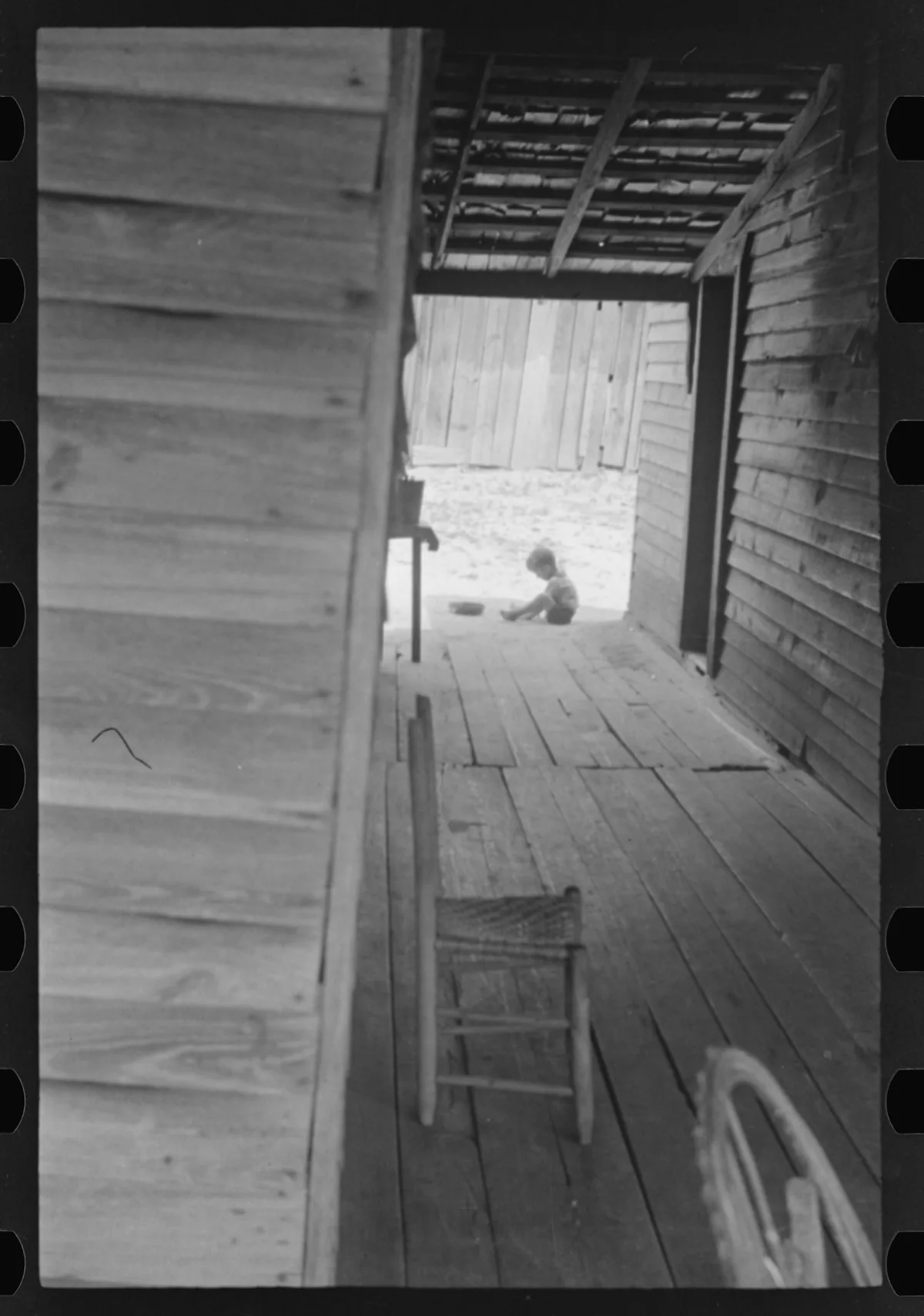
In the photograph titled Dog run of Floyd Burroughs’ home, the central passage recedes toward a bright yard. Floorboards, timber walls and openings organize the vertical frame, with a small seated figure visible beyond the passage. The central passage—the dogtrot—both separates and joins the domestic spaces. Evans does not rely on a dramatic sky or a figure arranged for scale. He allows construction, wear and adaptation to describe how the house works. The image is architectural, but not detached from life: every board and shaded opening points back to the people who built, repaired and occupied it.
Why the frontal view remains complicated
A frontal picture can appear neutral because it reduces obvious perspective effects, yet choosing what deserves that direct attention is already an argument. Evans’s camera height, distance and edge decisions make the structure readable while preserving the surrounding ground. The frame does not sensationalize poverty, but it also does not turn the building into picturesque rural design. Contemporary photographers can learn from that balance. Straight lines and even light do not guarantee objectivity; they make the photographer’s selection easier to examine. The honest question is not whether style disappeared, but whether style helps the subject remain specific.
Allie Mae Burroughs meets the camera
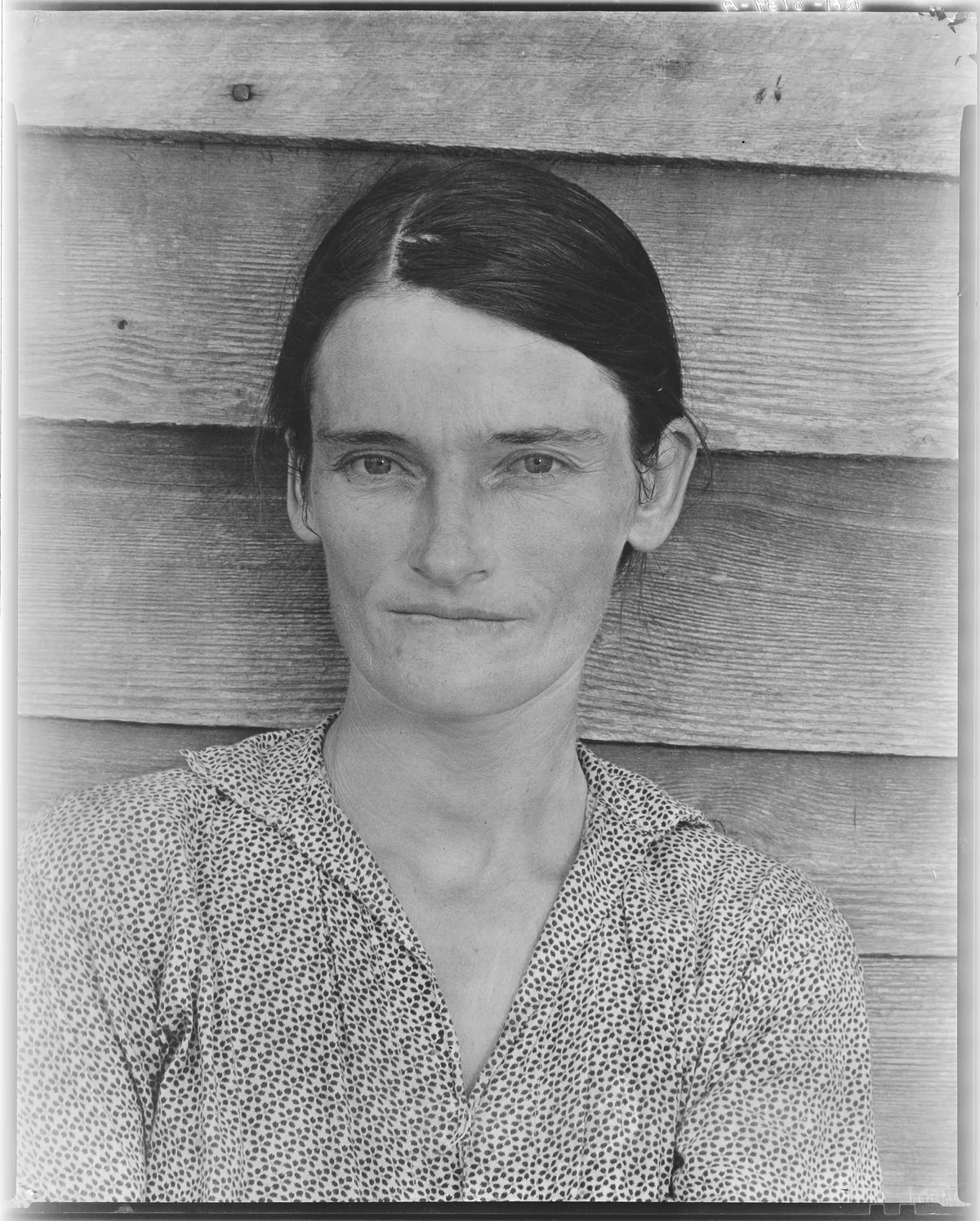
Evans’s portrait of Allie Mae Burroughs is among the best-known photographs from Hale County. She faces the large-format camera directly against a rough wooden wall. The tight framing gives the face and clothing no decorative escape, while the wall records the same material world visible in the house photographs. Her expression has been described in many ways, but the picture itself does not supply a single emotion. Responsible viewing begins by naming what is visible and resisting the urge to turn a person’s face into a convenient symbol of an era.
Portrait and environment work together
The portrait becomes more legible when it is not isolated from the larger assignment. Views of the house, rooms, tools, fields and family members provide spatial and economic context that one face cannot carry alone. This is a practical lesson for documentary projects: make the portrait, then photograph the systems around the person. A sequence should include where someone works, what objects are handled, how spaces connect and what distances shape daily life. Context does not reduce individuality. It prevents a visually powerful portrait from being asked to stand in for an entire social condition without evidence.
The assignment behind a famous book
Evans traveled to Hale County, Alabama, in 1936 with writer James Agee for a magazine assignment that was not published in its original form. Their work later became the 1941 book Let Us Now Praise Famous Men. The book’s reputation can make the photographs feel inevitable, but the archive shows a working process of negatives, captions, variants and editorial choices. The federal collection also places the Hale County pictures beside a much wider record of the Depression. Reading the assignment through the archive restores dates, titles and institutional context that a fine-art presentation may leave in the background.
A portrait of Evans at work
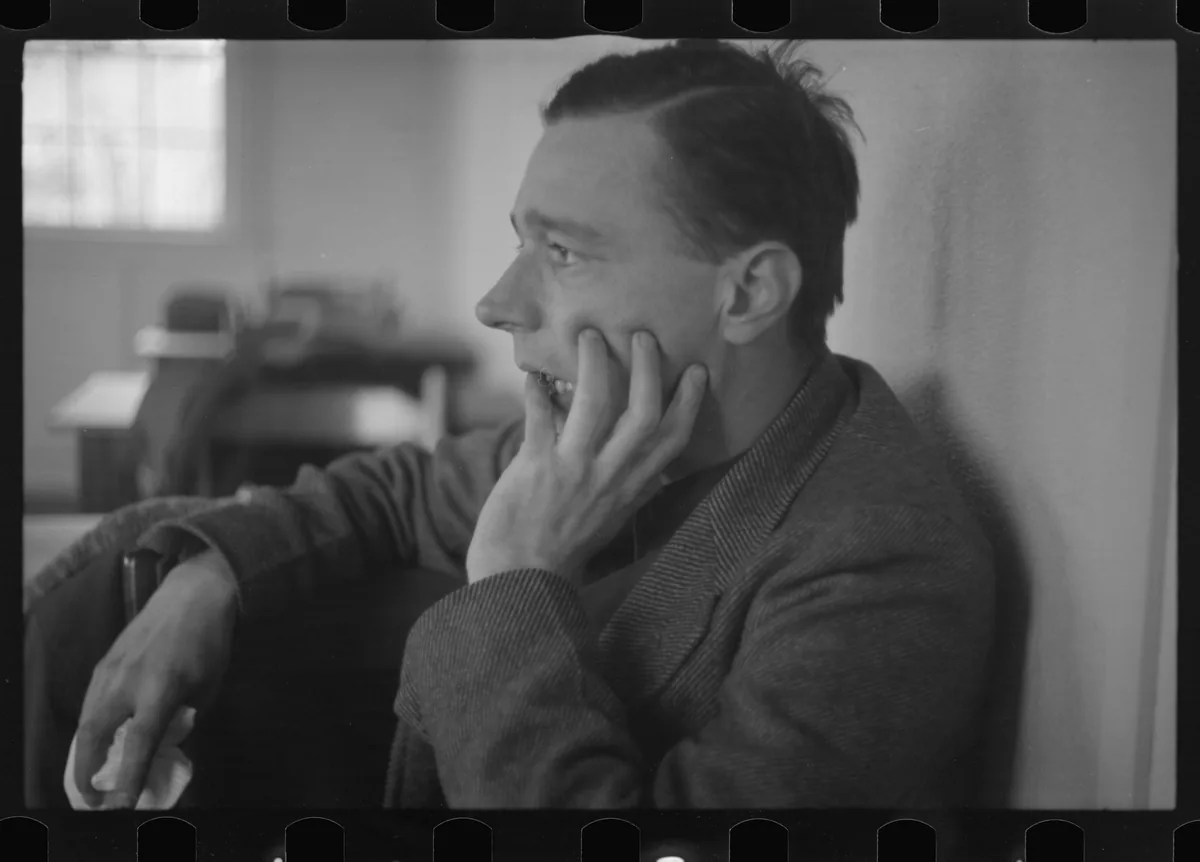
Edwin Locke’s profile photograph of Evans, preserved in the same federal archive, shows the photographer with one hand raised toward his face. It is not a heroic portrait. That matters. Evans built an influential visual language from repeated acts of looking, positioning and withholding rather than from a public performance of authorship. The picture also reminds us that documentary authority is made by a person standing in a particular relation to other people. A spare style can reduce visual manipulation, but it cannot erase responsibility for access, captions, selection and later circulation.
What to borrow—and what not to imitate
The useful lesson is not to copy Evans’s frontal compositions until every storefront looks like the 1930s. Borrow the discipline beneath them. Keep the camera level when geometry is the subject. Step back far enough that edges and surrounding evidence remain visible. Make a second frame after the apparently perfect one, changing only distance or height, then compare what each version includes. Write exact captions before memory softens. Most importantly, distinguish restraint from indifference: a calm image should increase attention to the subject, not provide the photographer with an excuse to avoid the human consequences of the work.
How to study the archive
The three photographs reproduced here come from Library of Congress records marked with no known restrictions. Open each source record, read the original title, date, reproduction number and rights advisory, then compare neighboring negatives by call number. That archival movement changes the experience from consuming an icon to examining a body of work. It also models a better way to publish historical photography online: preserve attribution, link to the holding institution and state the rights basis beside the image. Visual history becomes more useful when readers can retrace the evidence rather than simply trust the page.