The photographer hidden inside an archive
Vivian Maier spent much of her adult life working as a nanny and caregiver while photographing the streets of New York and Chicago in her free time. Her public reputation arrived only after boxes from a storage locker were dispersed at auction in 2007. The archive eventually revealed more than 100,000 negatives and slides, as well as films, recordings and prints. That discovery story is dramatic, but it can overshadow the more useful fact for photographers: Maier did not merely accumulate isolated lucky frames. She built a sustained visual practice across roughly five decades.
Why contact sheets matter
A finished photograph hides nearly every decision that produced it. A contact sheet restores the neighboring frames: the first approach, the hesitation, the step closer, the missed gesture and the moment when the photographer stopped. Maier’s official archive says her negatives and slides have been digitized as contact sheets, making sequences a central way to study the work. Read across a sheet and the celebrated image becomes less like an accident. It sits inside a chain of observations in which distance, timing and background are tested against one another.
She often solved the background first
Street photography is usually described as a hunt for decisive human gestures, but a strong sequence often begins with geometry. A doorway, shop window, patch of hard light or blank wall gives the frame a structure before the subject enters it. Maier’s Chicago pictures are especially alert to reflections, deep shadows and figures divided by the architecture around them. The practical lesson is to find a stage and wait. A clean background does not make a picture simple; it gives the unpredictable action in front of it somewhere legible to happen.
One small movement can change the whole frame
Contact sheets reward attention to differences that would disappear in a fast scroll. A person turns an eye toward the camera. A hand separates from a coat. Two walkers overlap and then pull apart. The photographer may remain almost still while the scene reorganizes itself. This is useful discipline for anyone who tends to move on after one exposure. When a situation still has visual tension, make another frame—but ask what you are waiting to change. Repetition becomes purposeful when each exposure tests a specific possibility.
A waist-level camera changes the encounter
Maier is closely associated with the twin-lens Rolleiflex, viewed from above at waist or chest height. That way of working creates a different physical relationship from raising a camera directly in front of the face. The photographer can look down to compose, glance up and remain visibly present to the person nearby. It does not make the act of photographing invisible or automatically ethical, but it can soften the theatrical moment when camera and subject confront one another. Modern photographers can learn the broader principle without copying the equipment: camera position affects both perspective and social distance.
Look for self-portraits without turning inward
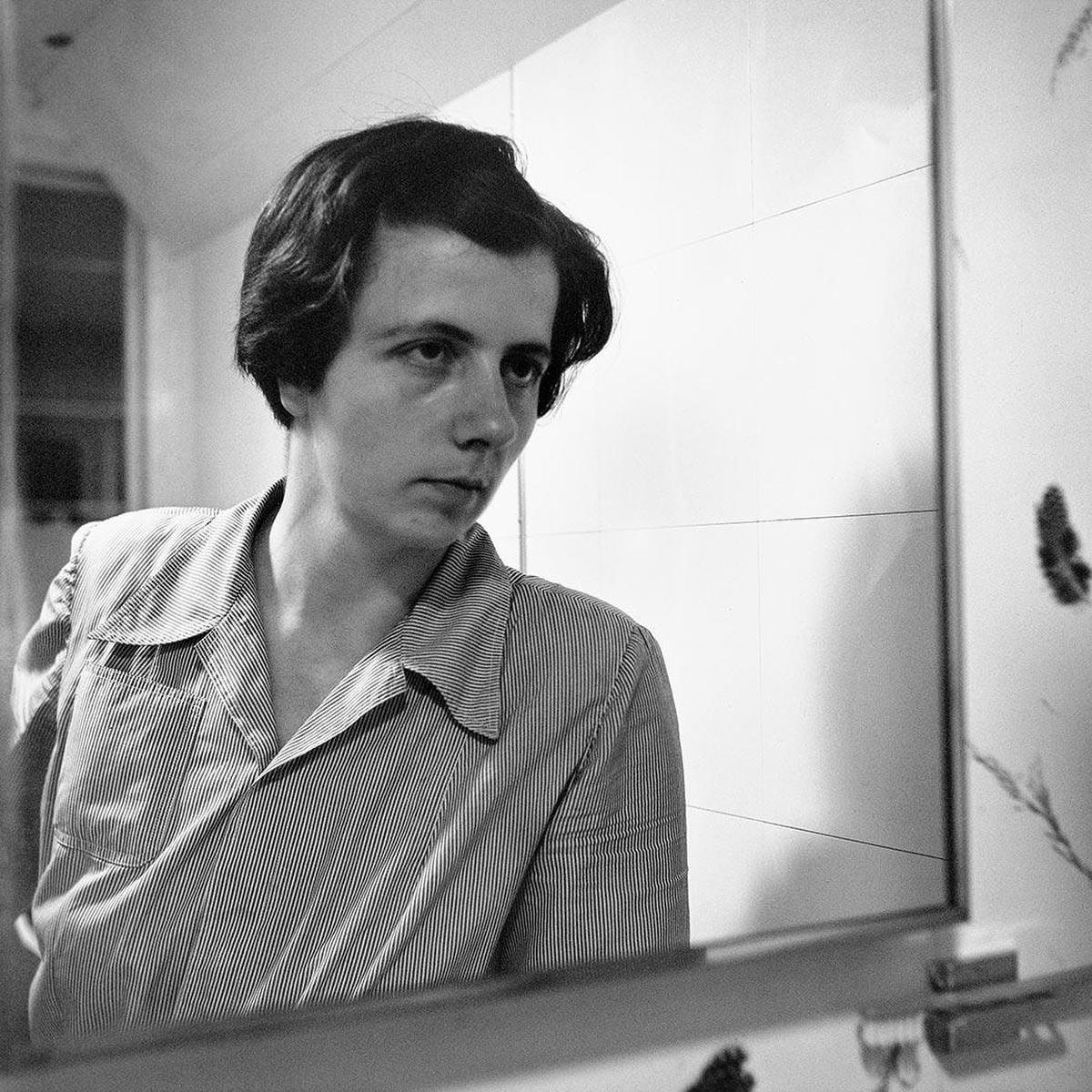
Maier repeatedly placed her own outline into mirrors, shop windows and shadows. These images are self-portraits, yet they are also descriptions of the city surfaces that contain her. The figure is sometimes clear and sometimes fragmented; the street remains an active subject. The method offers an alternative to the conventional portrait in which the background merely decorates a face. Use reflection as a relationship among photographer, place and frame. The most interesting question is not “How do I look?” but “What does my presence do to this scene?”
Editing is part of authorship—and part of the debate
Maier left an enormous body of work but did not shape most of it into the books and exhibitions through which audiences now encounter her. Archivists, collectors, curators and publishers have made consequential choices about which negatives to scan, how to print them and how to sequence them. That history does not erase Maier’s authorship at exposure, but it complicates the idea of a definitive edit. Every posthumous selection is also an interpretation. Viewers should distinguish what the photographer made from the editorial structure later built around it.
A practical contact-sheet exercise
After your next photo walk, place every frame in capture order on one screen or printed sheet. Do not rate anything for ten minutes. First mark the sequences in which you stayed with a scene for three or more exposures. Then identify what changed: your position, the subject, the light or the frame edge. Choose one sequence and write a sentence explaining why the strongest image works better than the frames beside it. The goal is not to imitate Maier’s visual style. It is to learn from the visible process of looking, correcting and looking again.
How to view Maier’s photographs responsibly
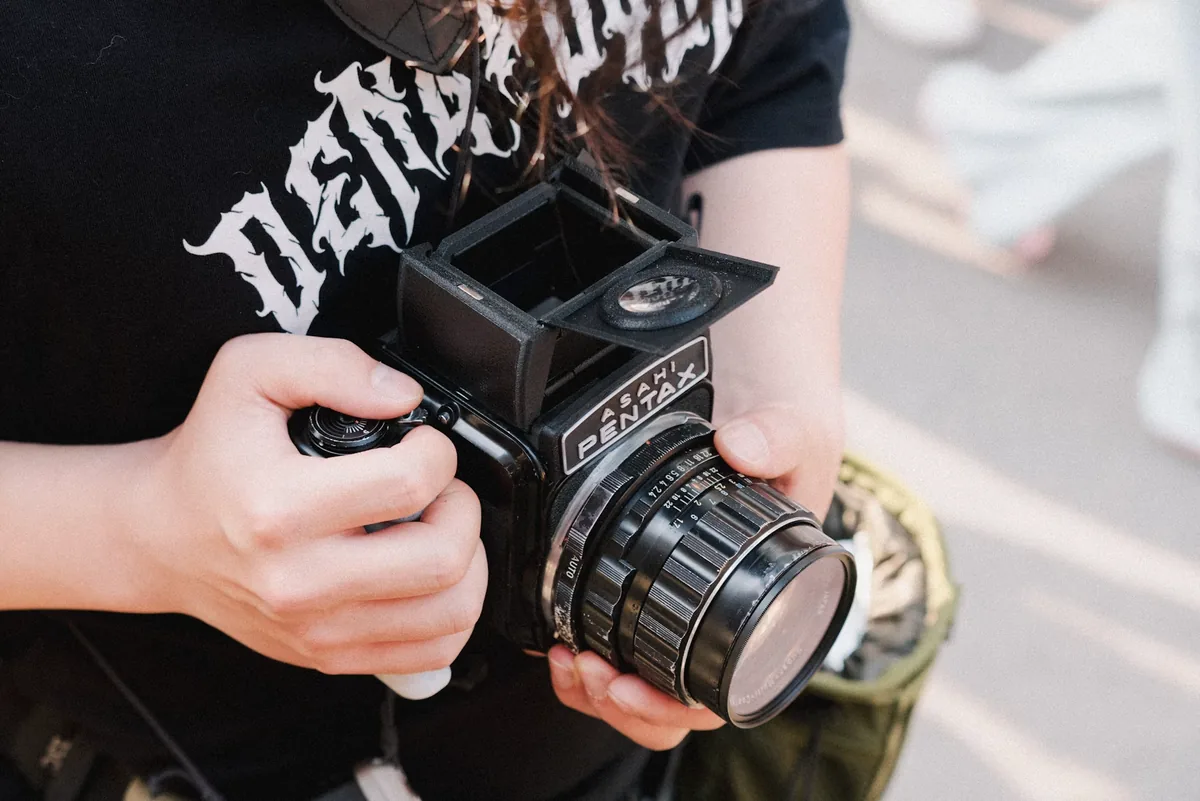
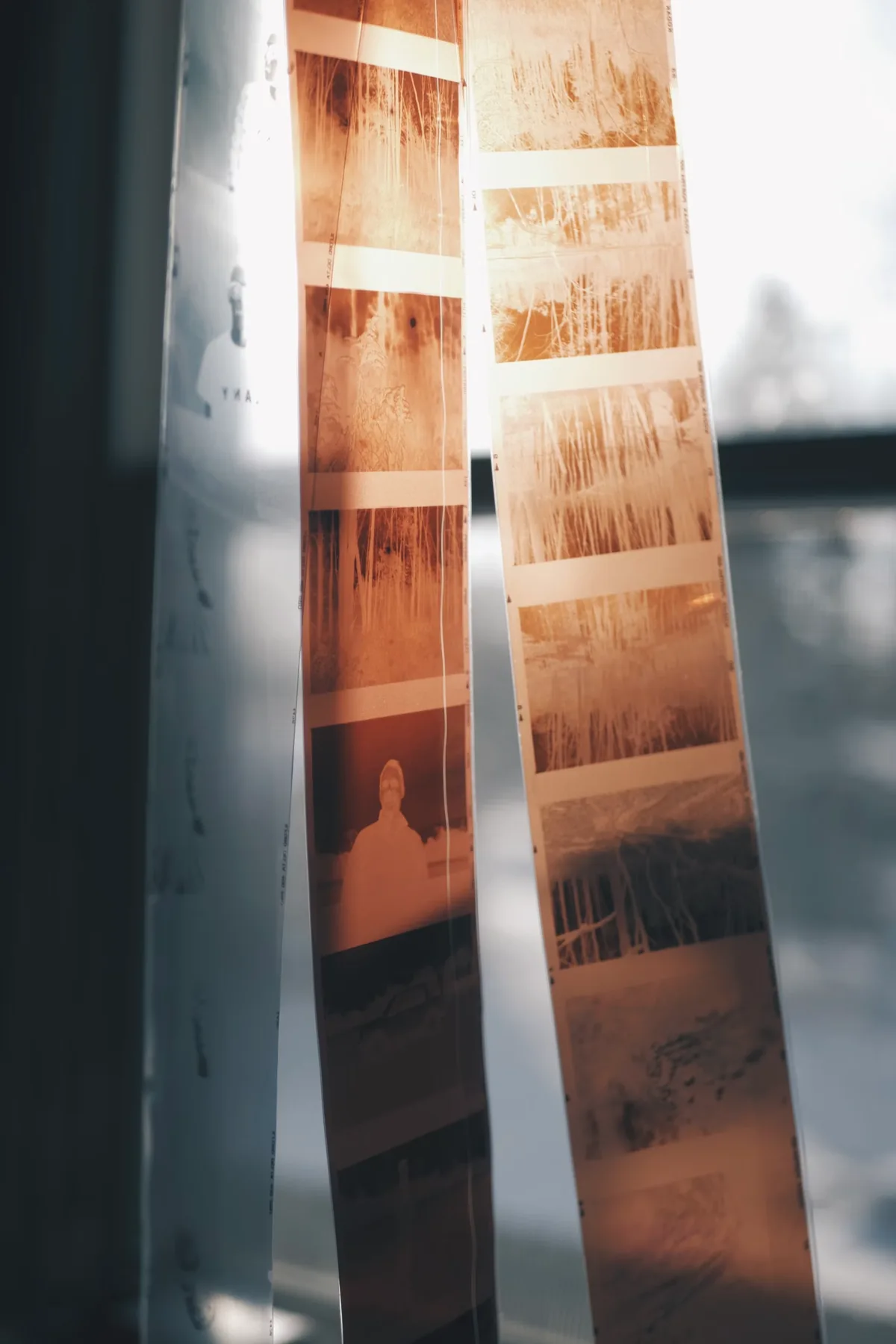
The cover is Self-Portrait, 1956, identified in the official archive as VM1956W03008-11-MC. The mirror edge and tiled wall make the relationship between photographer and surrounding space visible. The inline camera and negative photographs are contextual illustrations, not photographs by Maier. Readers can study her photographs and digital contact sheets through the official archive and the University of Chicago collection. Image credits and source links should remain attached to reproductions; a picture appearing online is not, by itself, permission to reproduce it.
The enduring lesson
Maier’s archive makes patience visible. Her contact sheets suggest that seeing is not only a flash of recognition; it is the ability to remain available while a scene becomes more precise. Find the structure, watch the edges, notice the smallest gesture and make enough frames to understand what changed. Then edit with humility, because the photograph that survives may owe its force to decisions made before and after the shutter as much as to the instant itself.