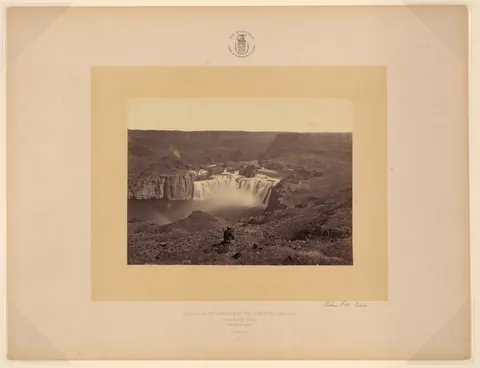
Find the person before looking at the falls
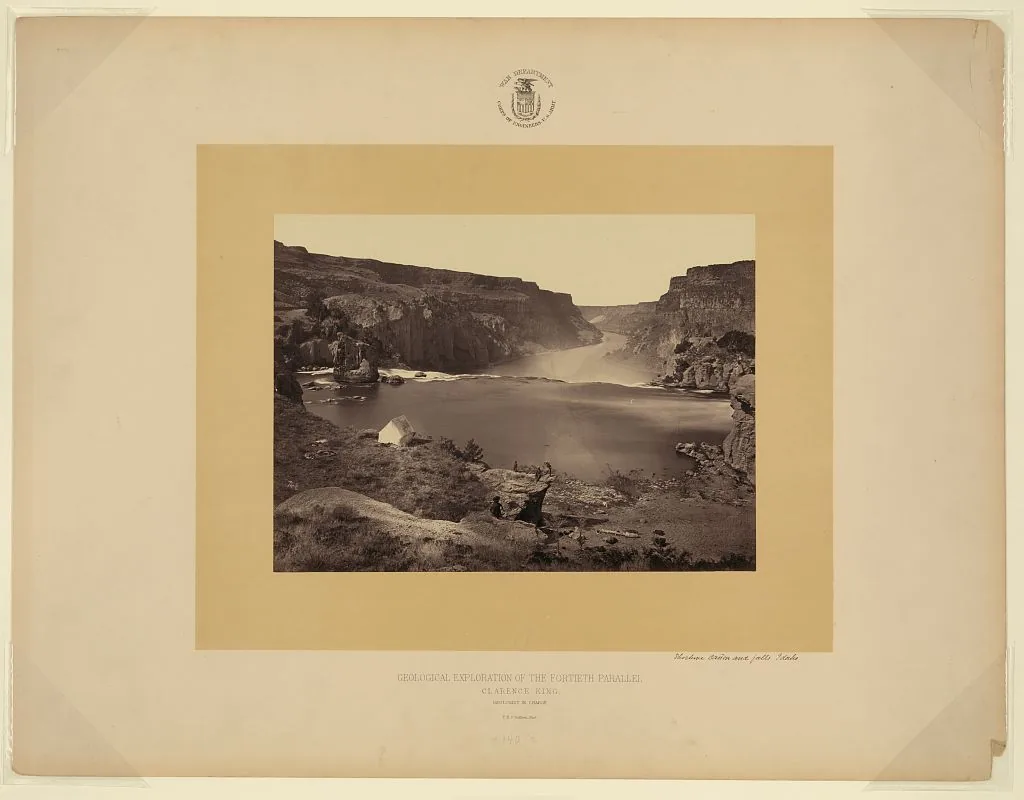
Begin with the wide print at the top of this page. The water is easy to locate because it is bright. The small figure in the foreground is easier to overlook. Find it, then look across the gap to the falls again. The rock underfoot takes on a human scale, while the space beyond it becomes harder to measure. That small shift in attention changes how large the water feels without changing the size of the print.
From the Civil War to the survey
Timothy H. O’Sullivan had photographed in the field during the American Civil War before joining Clarence King’s geological survey along the Fortieth Parallel. His 1868 views of Shoshone Falls belong to that survey. A record of a site had to carry information back to people who had never stood there. A single view could establish the shape of the canyon or describe the surface of falling water, but it was difficult to do both equally well.
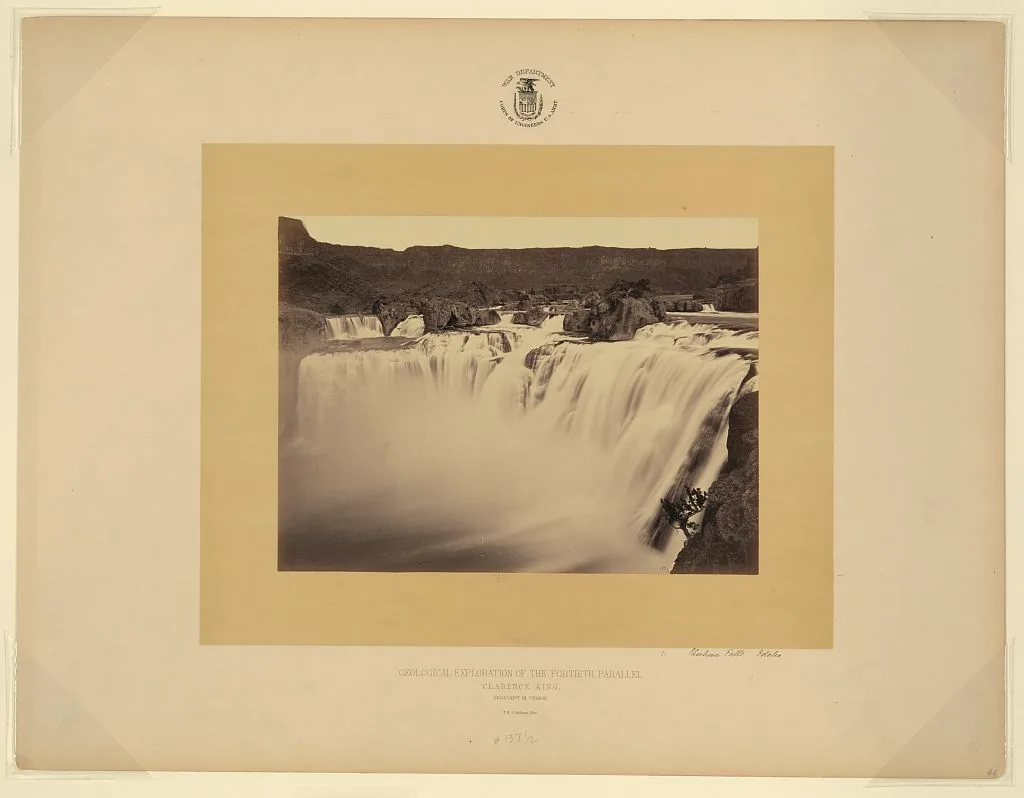
What the closer position gives up
Compare the wide picture with the closer print. The bright lip of the falls now breaks into separate streams. The dark rock above it gives the water a definite starting edge. Much of the approach to the canyon has disappeared. If you saw this frame alone, you could describe the texture of the drop more confidently than its distance from the viewer. The wide view supplies that missing relationship.
Read the river past the spectacle
In the third print, follow the channel through the rock before looking for the brightest patch. The river has a course upstream and downstream of the celebrated drop. Look at the boundaries of the photographic image inside the mount. Where does O’Sullivan let the water run out of the picture? Where does a ledge turn the eye back toward it? These are choices a map of the same stretch of river would render quite differently.
A place worth photographing again
O’Sullivan returned to Shoshone Falls in 1874 with George Wheeler’s survey. The Library of Congress identifies the falls as the one site he photographed twice during his western survey work. The later visit makes a useful distinction for anyone building a series. Repeating a subject can extend the record when the new position reveals a relationship the earlier photograph could only suggest. Start by identifying that relationship before choosing a new spot for the tripod.