Start with one question about the street
Walk the block once before taking the first series frame. Are you interested in how entrances meet the pavement, how residents mark their thresholds, or how neighboring facades divide a continuous wall? Each question needs a different boundary. To compare thresholds, include a strip of pavement in every photograph. To compare pairs of doors, leave room for the seam between properties. Make the decision while looking at several entrances. The first attractive doorway may turn out to be the least typical one on the block.
Pick one measurement you can repeat
Try placing the threshold one fifth of the way up the frame and giving an ordinary single door roughly half the image height. Use those proportions as a starting exercise. Stand opposite the entrance, keep the camera level, and check both jambs against the frame. Move back if the lintel is clipped. Where the pavement is too narrow, record a wider context view from a safe public position and flag it as a possible exception. Forcing every doorway to the same width can erase the very difference you came to record.
Keep the evidence at the edges
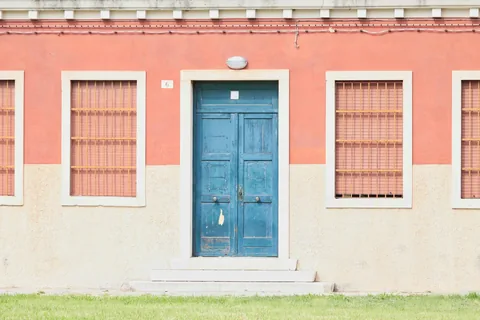
One picture might depend on the shutters to either side, another on the worn paint just above a handle. Take the consistent series frame first. Then take a separate detail if the mark would otherwise disappear at print size. The blue door in the lead image sits between two shuttered openings. Cropping tight to the door would turn a photograph of a symmetrical facade into a study of a single blue rectangle. Both readings work, but they answer different questions.
Edit the street in pairs
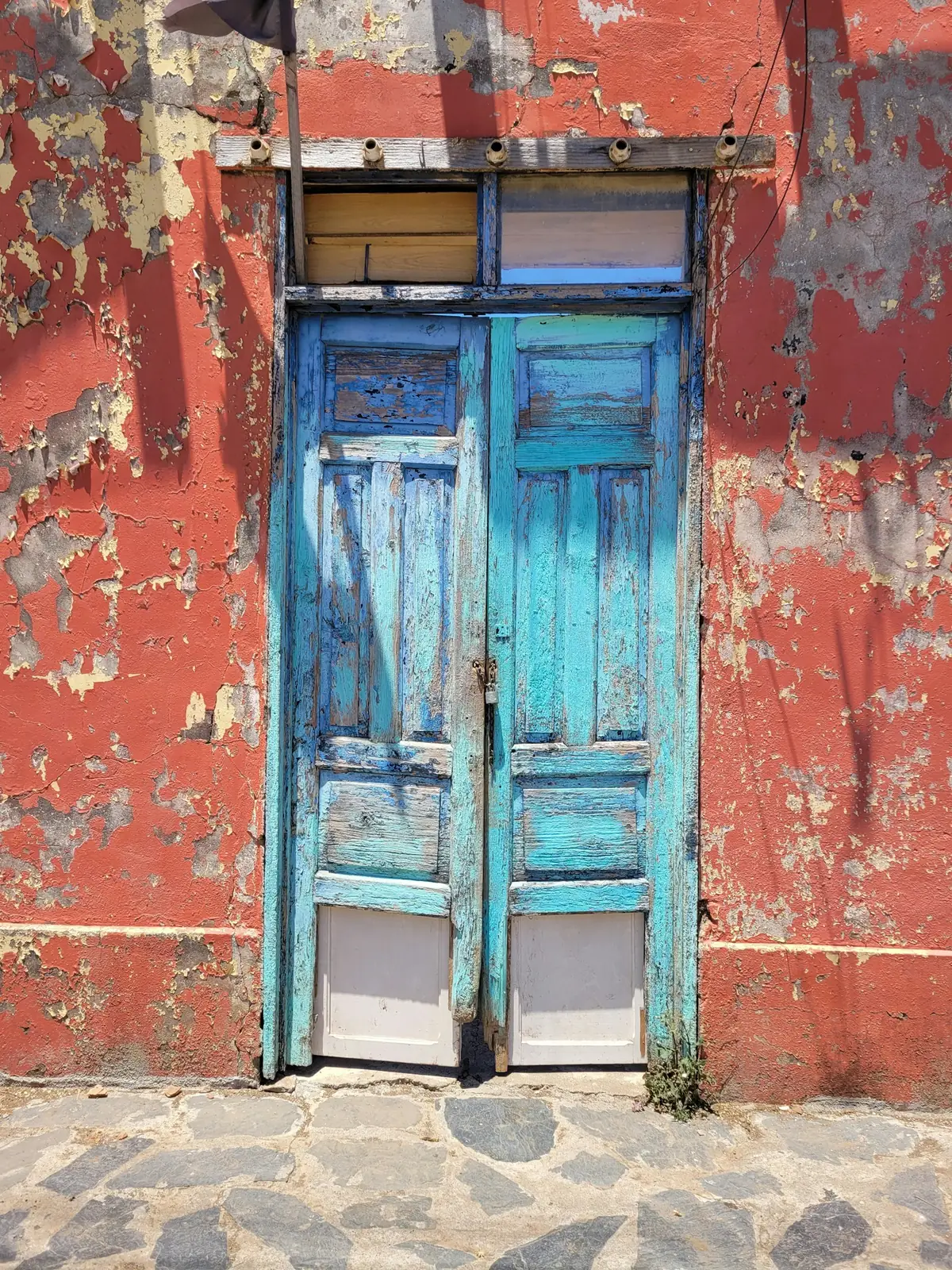
Place two frames beside each other at the same display height. Cover the upper half and compare the thresholds. Then uncover the tops and look for a sudden jump in camera height, tilt or scale that draws attention away from the buildings. Try another pairing before rejecting the odd frame. A double entrance can be a useful ending to a sequence of single doors. Keep the context pictures with your edit notes so you can tell later which differences belonged to the street and which came from where you stood. The credited photographs illustrate independent scenes.