The confirmed release
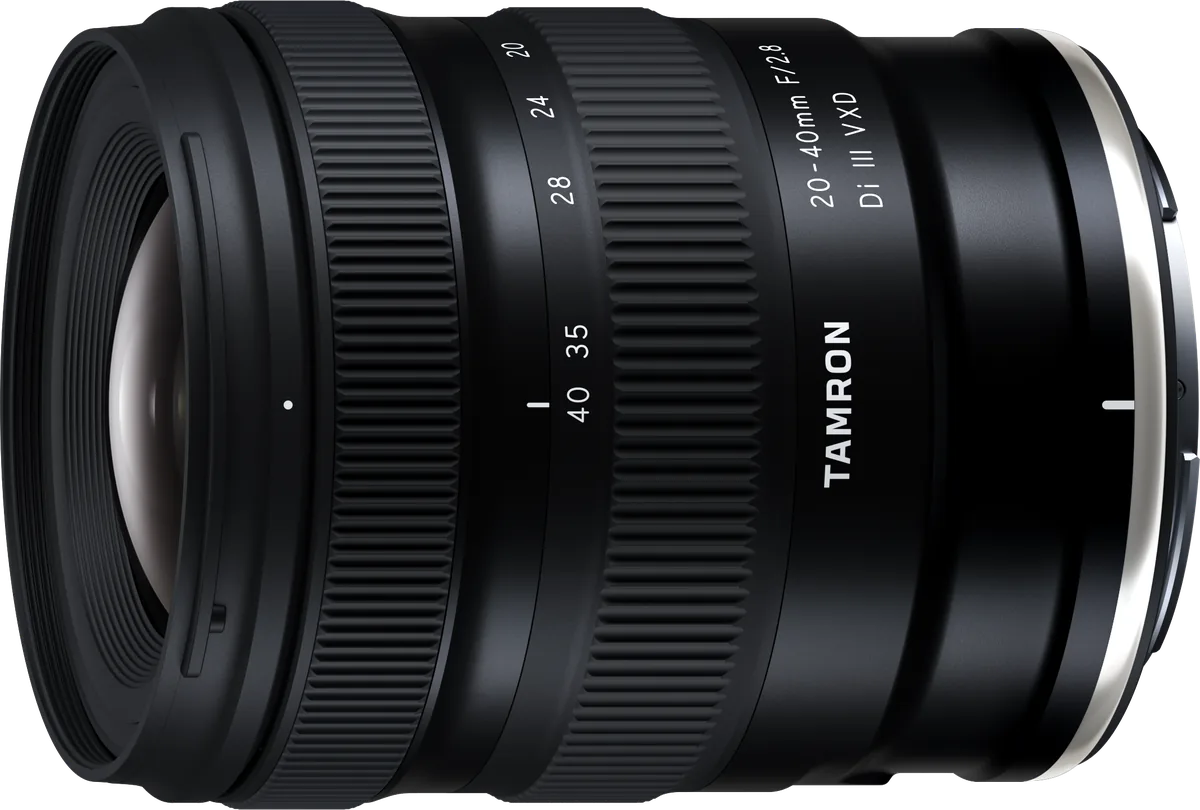
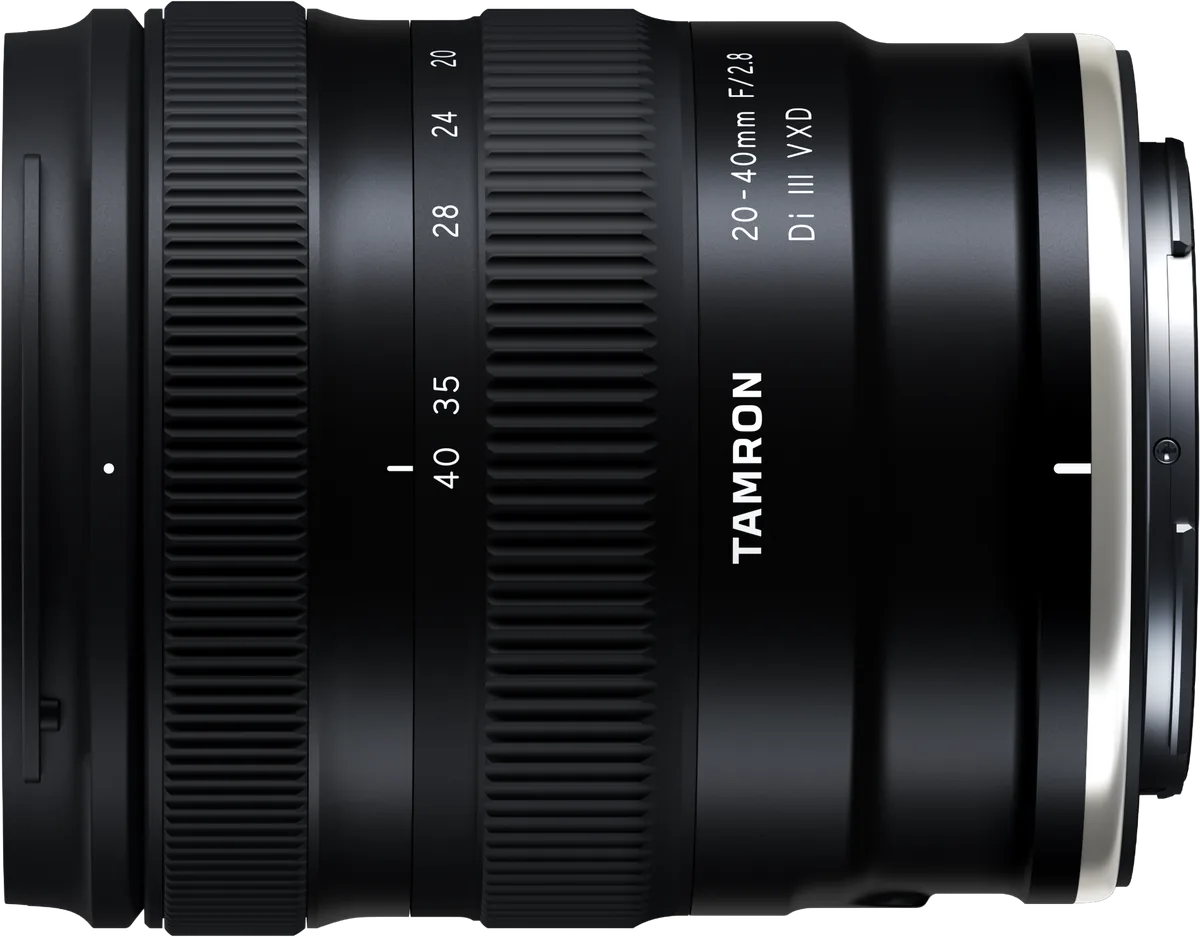
Tamron announced the Nikon Z-mount 20–40mm F/2.8 Di III VXD, Model A062, on October 8. Its Americas release gives a US price of $729 and an October 22 on-sale date. This is a new mount option for an existing lens family, not the first appearance of the 20–40mm design. The official specification table lists 380g and 88.7mm for the Nikon Z version. Availability is announced rather than independently verified inventory; confirm the exact mount and delivery estimate with the seller before planning a job around it.
A different compromise from a standard zoom
The practical attraction is the starting point. A 20mm view can accommodate an interior, a foreground-led landscape or an environmental portrait that feels cramped at a longer focal length. The compromise is equally important: 40mm is the end of this zoom, not a stop on the way to a telephoto view. Someone who routinely makes tightly framed portraits from across a room should look at their actual photographs before deciding that this can replace a longer standard zoom. The smaller range is useful only when it matches the distances at which you work.
What the aperture changes—and what it does not
The maximum aperture remains F2.8 through the zoom range. That gives the photographer one consistent aperture option while reframing, but it does not guarantee that every scene should be photographed wide open. An interior with important detail at several distances may still need a smaller aperture, a more deliberate focus choice or additional lighting. For video, a constant maximum aperture also does not remove the need to check exposure, focus and framing during a zoom. We have not tested this lens and are not making an independent sharpness or autofocus claim.
Check the camera format before imagining the view
Tamron describes an approximately 30–60mm full-frame-equivalent angle of view on APS-C. For a Nikon DX user, that makes this a different proposition from an ultra-wide travel lens on FX. The marked focal lengths and F2.8 maximum aperture do not change when the lens is attached to a crop-sensor body; the recorded field of view does. Before buying, review whether your usual problem is fitting more into the frame or isolating a smaller part of it. A compact full-frame lens is not automatically the most useful focal-range choice for every smaller camera.
Close focus needs careful composition
The published minimum object distances are 0.17m at the wide end and 0.29m at the long end, with maximum reproduction ratios of 1:3.8 and 1:5.1 respectively. These are not life-size macro specifications. Minimum focusing distance is measured from the camera’s focal plane, not the front glass, so the space left in front of the lens can be much smaller than the headline number. When working close, check whether the lens or your hand blocks the light. Include the background deliberately: moving near a small foreground subject can make the relationship between it and its surroundings unusually prominent.

For video, test the whole arrangement
The launch materials identify a VXD linear autofocus drive and compatibility with Tamron Lens Utility. The distributor also notes a small change in lens length during zooming. Those details make a useful testing agenda, not a substitute for one. With your own camera and support, check a slow focus transition, a person approaching the lens and a quiet indoor recording. Review whether any framing change or recorded mechanical sound matters to the intended shot. If using a gimbal, verify clearance and balance at both ends of the zoom rather than balancing only the opening composition.
A useful pre-purchase check
Look through a recent travel or indoor assignment and separate frames that genuinely needed a wide view from frames made by cropping a distant subject. If the latter dominate, this lens may leave you changing equipment frequently. If the former dominate, try composing at the two endpoints and note what you would leave behind. The official photographs here show the announced Nikon Z lens, not our review sample. Our conclusion is about its proposed role: a wide-biased, constant-aperture option whose value depends on accepting a short zoom range, with optical performance still to be assessed independently.