
Give one layer a clear job
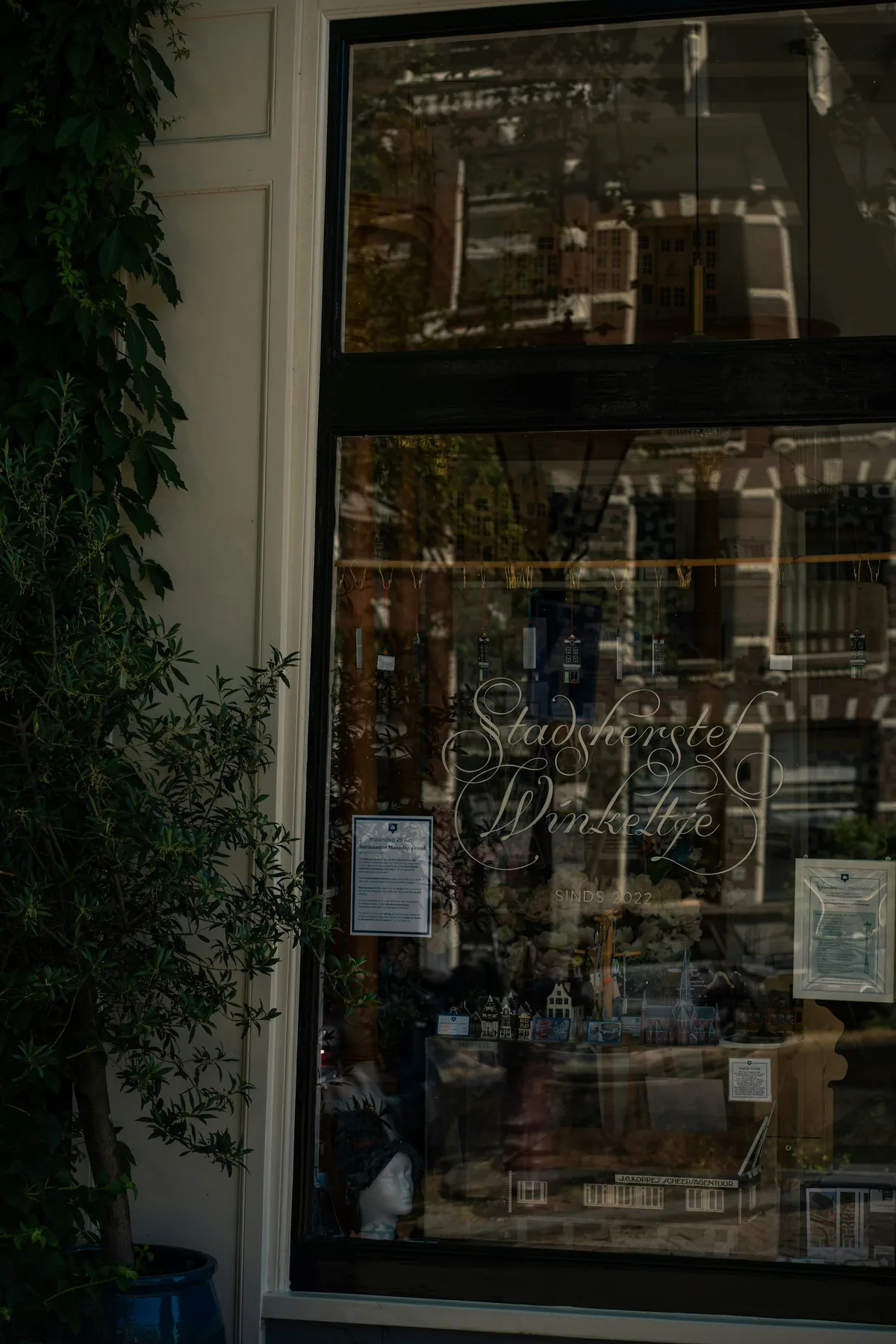
A shop window can hold three competing subjects: lettering on the glass, objects behind it and the street reflected in front. Before raising the camera, decide which should lead. A clean product display needs a different position from a photograph about the neighborhood mirrored across a storefront. If both layers matter, look for a relationship: a reflected building that frames a sign, or a passerby whose shape occupies an empty area. Including everything is not automatically the same as making a layered composition.
Walk a short arc and watch the overlap
Take a step left or right and observe where the reflection moves relative to the display. Then try a slightly higher or lower viewpoint. A bright patch that hides a face or label may shift into a less important part of the frame. Make these changes slowly enough to see the effect before shooting. The right position often solves a problem that exposure cannot: darkening a bright reflection also darkens the scene you wanted to reveal. Keep the pavement clear and avoid stepping backward into traffic.
For a clearer view, reduce light on your side
When the aim is to see through glass, a shaded position can help reduce reflections from the camera side. Move closer if access permits, while keeping the lens and accessories away from the window. Nikon’s guidance for photographing through glass recommends getting close, shooting straight through and avoiding flash reflections. Treat that as a starting point rather than a rule for every shop: angled panes, double glazing, interior lights and scratches can change the result. Never press equipment against a private window or block an entrance.
For a reflection, choose a quieter background
If the reflection is the subject, search for a darker or less busy area behind the glass where it can read clearly. A bright interior and a bright reflected street can compete for attention. Watch the borders of letters and faces as you move; a small adjustment can prevent an important feature from disappearing into a shelf or window frame. The photographs accompanying this guide illustrate different relationships between lettering, glass and buildings. They are licensed examples by their credited photographers, not before-and-after tests made by us.
Tell focus which surface matters
Autofocus may select a high-contrast letter on the glass when you intended a display farther inside, or a reflected building when you wanted the sign. Use an appropriate small focus area on the intended subject and check magnified playback. If the camera repeatedly chooses the wrong plane, try manual focus with the camera’s available focusing aids. A reflection has an apparent depth, so focusing on dirt or lettering on the physical pane does not necessarily sharpen it. Decide whether the other layers may remain soft before stopping down merely to include everything.

Expose for the detail that carries the photograph
Check whether bright lettering, lamps or sky reflections have lost necessary detail. Adjust exposure and inspect the result, keeping shutter speed sufficient for people or your own camera movement. A stationary display and a moving pedestrian may require different compromises. For a frame combining interior and exterior light, accept that some areas may remain darker than your eyes perceive. If the light range is too large, changing position or returning at another time can produce a more convincing result than forcing every shadow and highlight into equal brightness.
Review the edges and the ethics
Before leaving, inspect corners for a cut-off word, a distracting reflection of your camera or an unintended person dominating the scene. Ask the business before arranging a close, extended session, and respect requests from staff or customers. Preserve useful context in captions: where the scene was made, which layer is a reflection and whether permission was obtained when relevant. A practical exercise is to make three distinct frames from one permitted location—display-led, reflection-led and combined—then explain which one communicates the clearest idea and why.