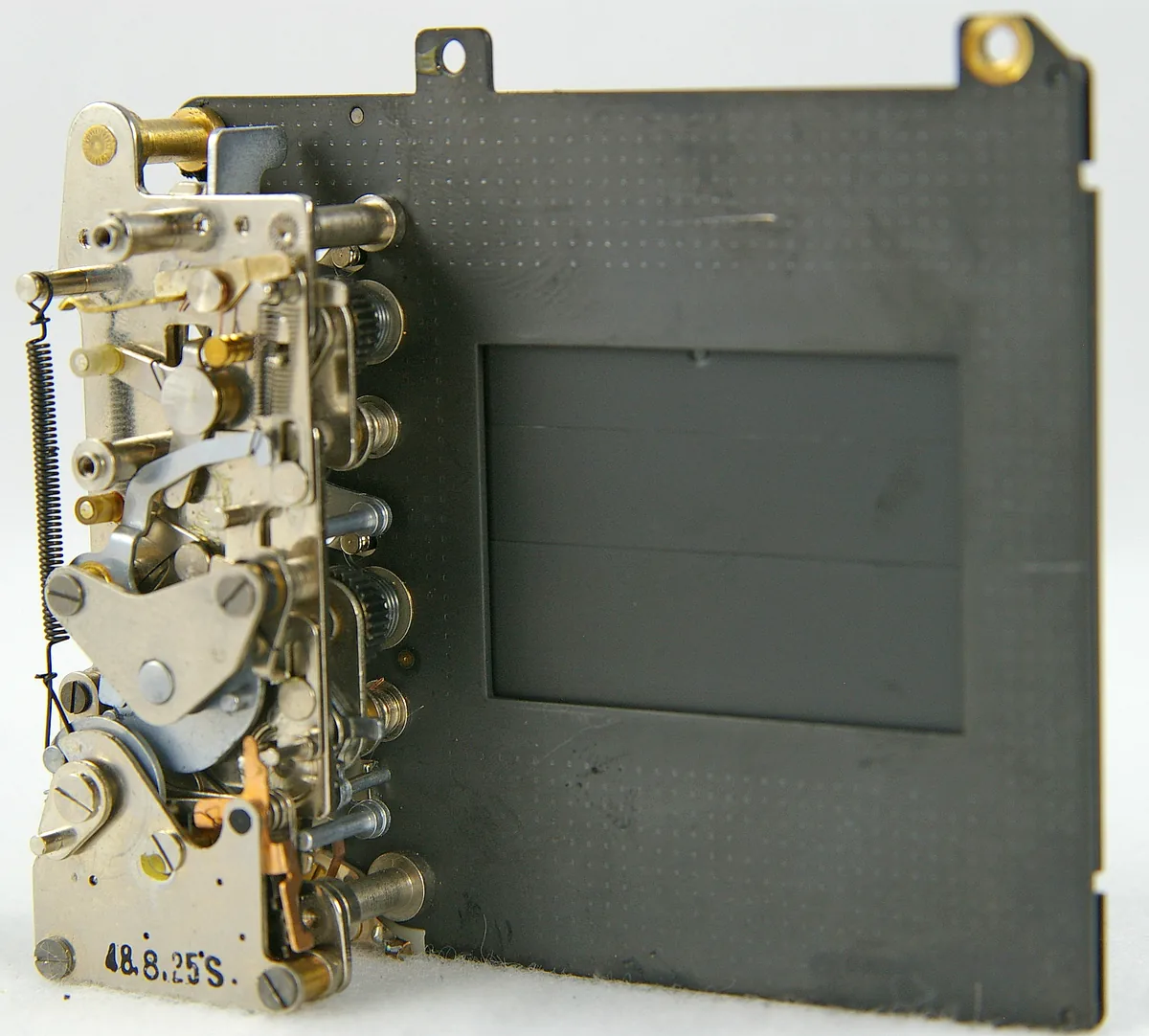
What the official release notes confirm
OM SYSTEM’s support pages now list firmware version 1.1 for the M.Zuiko ED 40–150mm F4.0 PRO, M.Zuiko ED 100–400mm F5.0–6.3 IS II and M.Zuiko ED 150–600mm F5.0–6.3 IS. Each identifies the same addition: 50-frame-per-second still-image shooting in High-speed Sequential Shooting SH2 and Pro Capture SH2 with compatible OM SYSTEM cameras. We verified those official notes on October 13, 2026. The pages reviewed do not state a precise release date or a separate USD price for the firmware; this is an available software update, not a newly announced lens shipment.
Read the complete model name
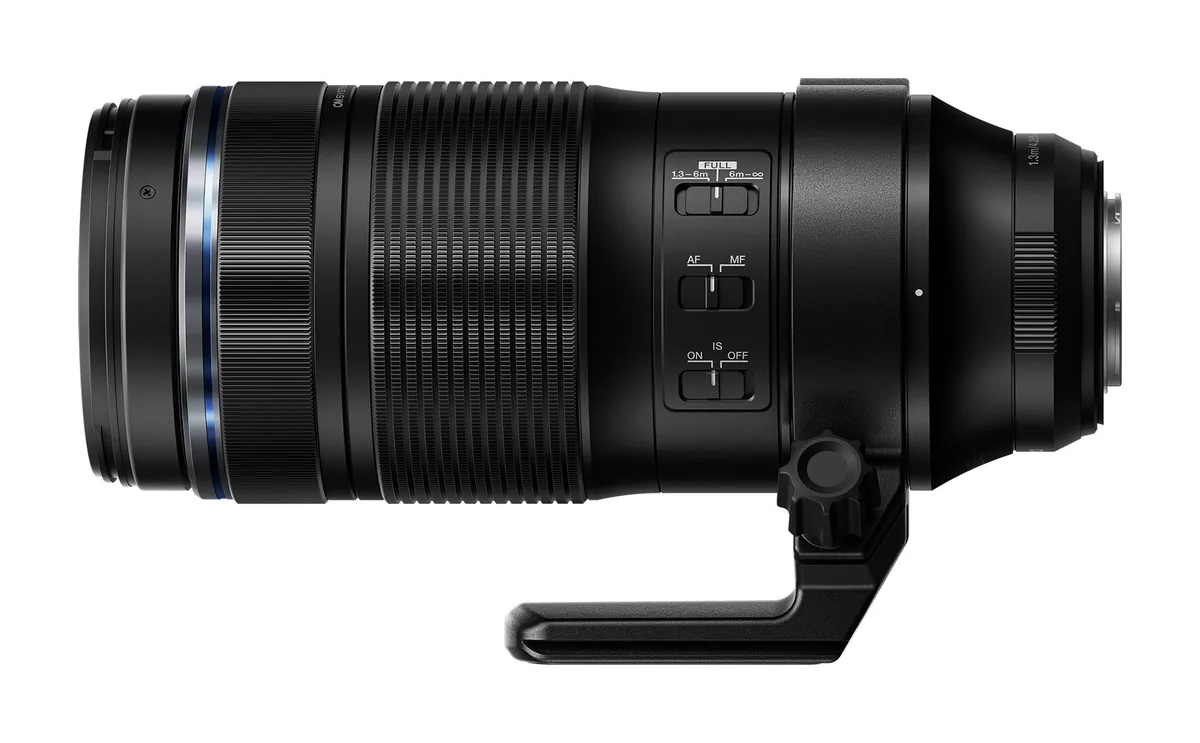
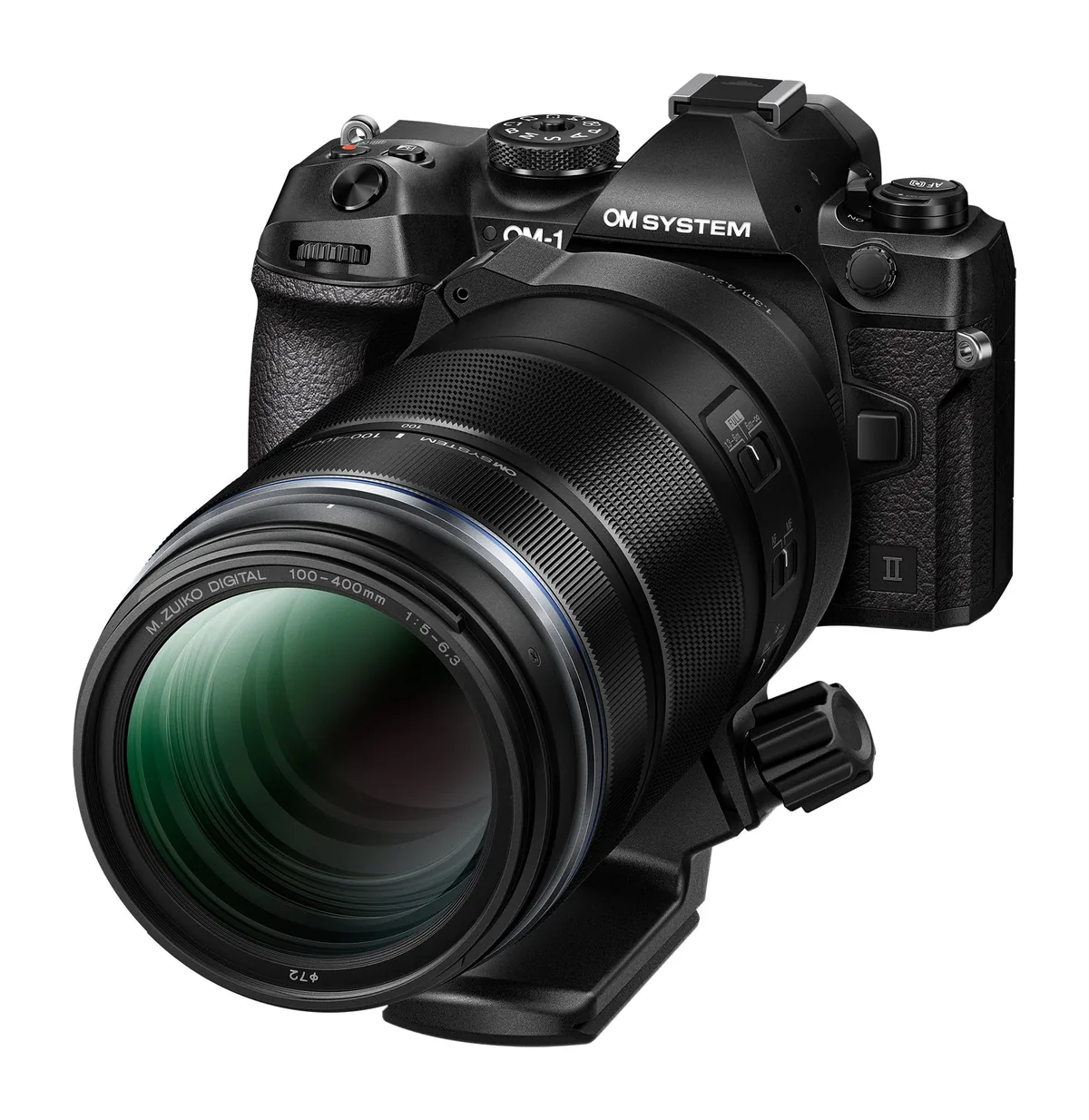
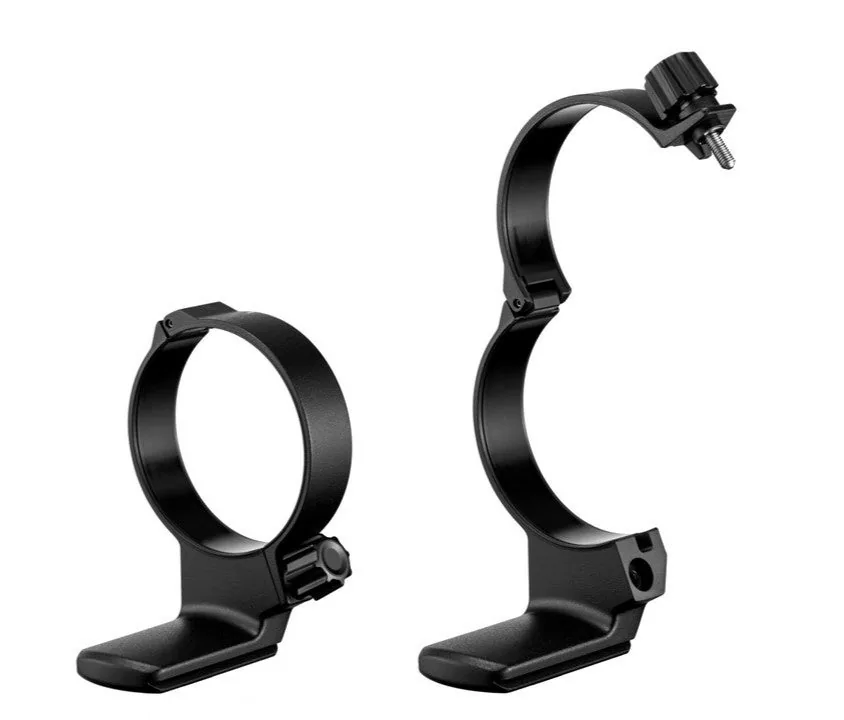
The distinction between the 100–400mm IS II and the earlier lens matters. A shared focal-length range does not make firmware interchangeable, and the 40–150mm F4.0 PRO should not be confused with the F2.8 model. Check the inscription on the barrel and the version information reported by the camera before opening the update utility. Start from the matching official support page linked below. The photographs accompanying this report show the 100–400mm IS II and its collar from the manufacturer’s 2025 launch materials; they are product identification images, not demonstrations of the new firmware.
A lens update is only part of compatibility
The release notes explicitly qualify the change by camera compatibility. They do not promise 50 fps on every Micro Four Thirds body, nor do they convert a camera without SH2 into one that supports it. Check the current specifications and instructions for the body, its firmware and the selected lens together. As broader context, OM SYSTEM advertises up to 50 fps with continuous autofocus for the OM-3, but an advertised maximum is not a guarantee for every setting or shooting condition. We have not conducted an independent autofocus or sustained-burst test of these lens updates.
More samples can help timing, not fix the photograph
At an evenly spaced 50 fps, the nominal interval between frames is 20 milliseconds. That calculation describes sampling frequency, not shutter speed: a sufficiently short individual exposure is still needed when the aim is to freeze motion. Extra frames can offer more choices around a wing position or a ball leaving a hand. They cannot repair missed focus, an obstructed subject or a composition that cuts off the action. Treat the higher rate as an option to rehearse, particularly if a lower rate already supplies the decisive moment with less editing.
Pro Capture changes when you commit
OM SYSTEM describes Pro Capture as retaining frames from before the full shutter press after preparation with a half-press. The practical attraction is a little protection against reacting late to an unpredictable movement. It is not an instruction to hold the shutter indefinitely, and the number of retained frames and other limits remain camera-specific. Learn the button sequence with an ordinary repeatable subject before an important assignment. Review the complete saved sequence afterward so you know where the pre-release portion ends and what your chosen settings actually produce.
Update during a quiet window
Follow OM SYSTEM’s current procedure for your equipment rather than using a file from an unrelated model. The manufacturer offers supported update routes through its software and, for compatible combinations, OI.Share. Back up settings where supported and note anything the backup does not cover. Its instructions warn against disconnecting during the update and say to wait for the camera’s completion indication. They also warn that an update cannot be rolled back. Leave enough time to confirm the version, reconnect accessories and make a short test sequence before putting the kit back into service.
Rehearse the recovery as well as the burst
The useful field question is whether the camera is ready for the next moment after a demanding sequence. Test the intended file format, card arrangement and drive mode together; then inspect focus, motion and the time before another comparable burst is available. Keep the original files when comparing settings. The addition is most meaningful for owners who can use the supported modes and need finer timing choices. It does not by itself justify replacing a working lens or establish that a maximum-rate burst is the best default for every subject.