Start with the person, not the symbol
Lewis Hine’s child-labor photographs invite a difficult kind of looking: the viewer sees an individual, but also a workplace arranged around that individual. The three images here come from the National Child Labor Committee collection at the Library of Congress. They are photographs from Hine’s work, not contemporary stock illustrations. Read each as a combination of visible evidence and an archival record. A child’s size relative to machinery can be seen in the frame; a name, date or duration of employment needs a source outside it. Keeping those categories separate makes a photograph more useful, not less moving.
Sadie Pfeifer: scale as an argument
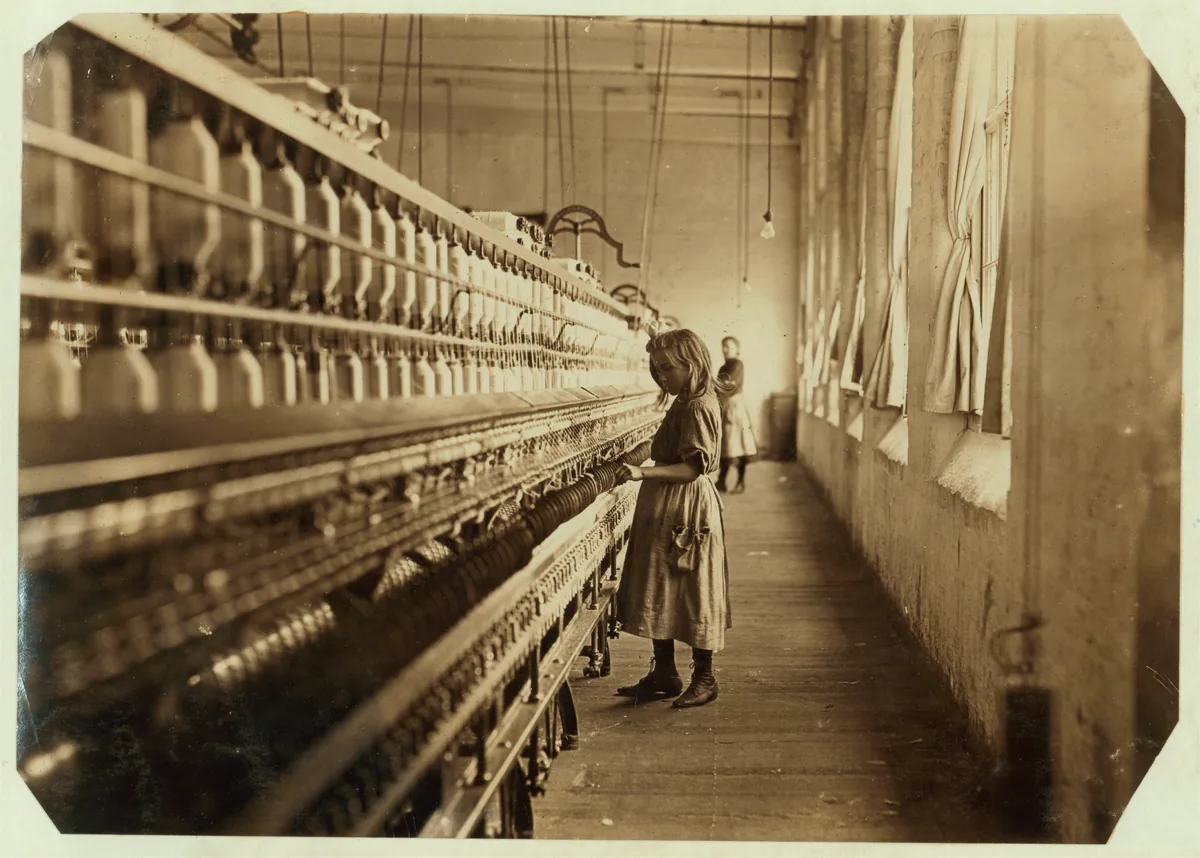
The archive identifies the child in the opening image as Sadie Pfeifer, photographed at Lancaster Cotton Mills in South Carolina on November 30, 1908. Its caption records her height as 48 inches and says she had worked for half a year. Those details belong to the historical caption, not to an inference from her appearance. In the photograph, the machinery stretches away from her while light enters from the side. My reading is that the contrast between a small figure and a long industrial space gives the image its force. The setting is not decorative background: it establishes the physical relationship that the viewer is being asked to consider.
The breaker boys: a group without anonymity
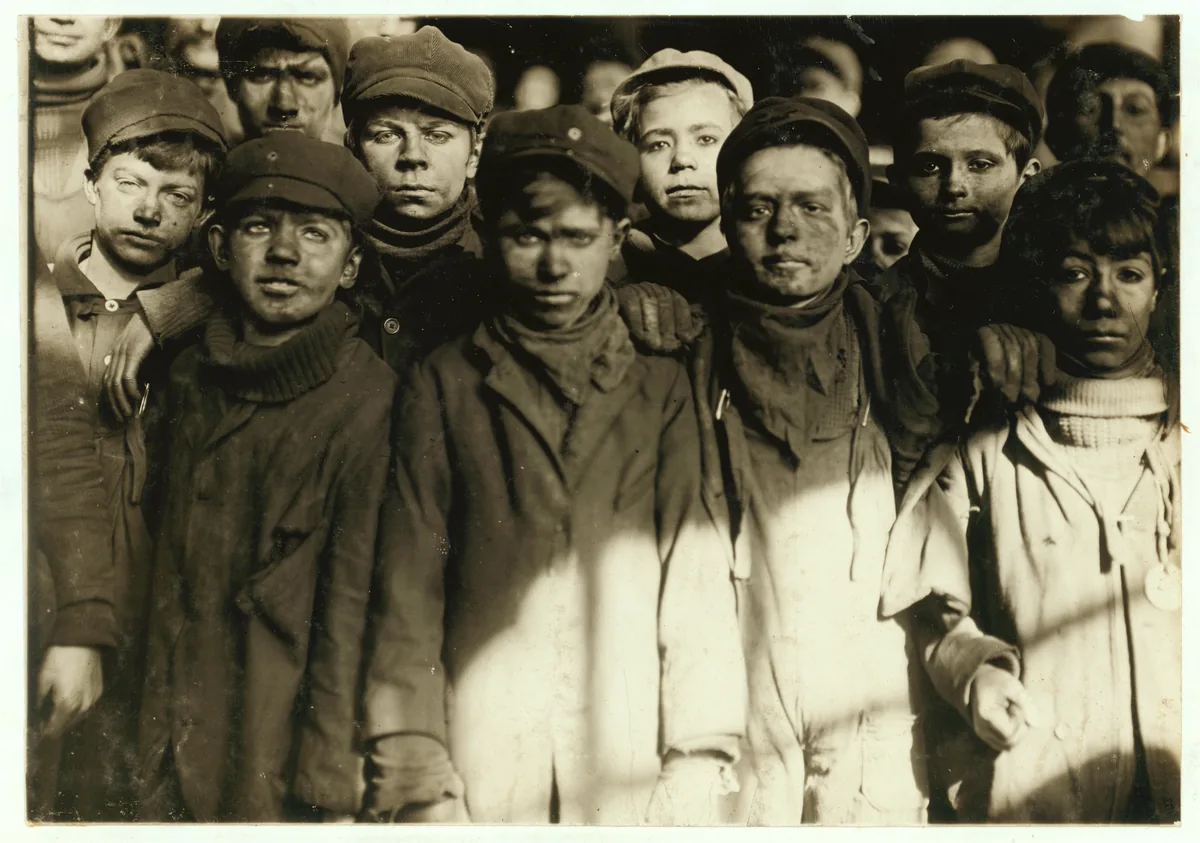
The second image is catalogued as a group of breaker boys at the Pennsylvania Coal Company’s No. 9 breaker, in Hughestown Borough near Pittston, in January 1911. The Library of Congress attributes it to Hine on the basis of provenance. Look beyond the collective label. Faces, clothing and the positions of individual boys keep the group from becoming a single undifferentiated shape. The dark diagonal area in front of them is also part of the composition; removing it would change the balance of the frame. We should not invent the boys’ feelings from their expressions, or treat one group portrait as a complete account of every person’s working day.
The spinner: context on both sides of the subject
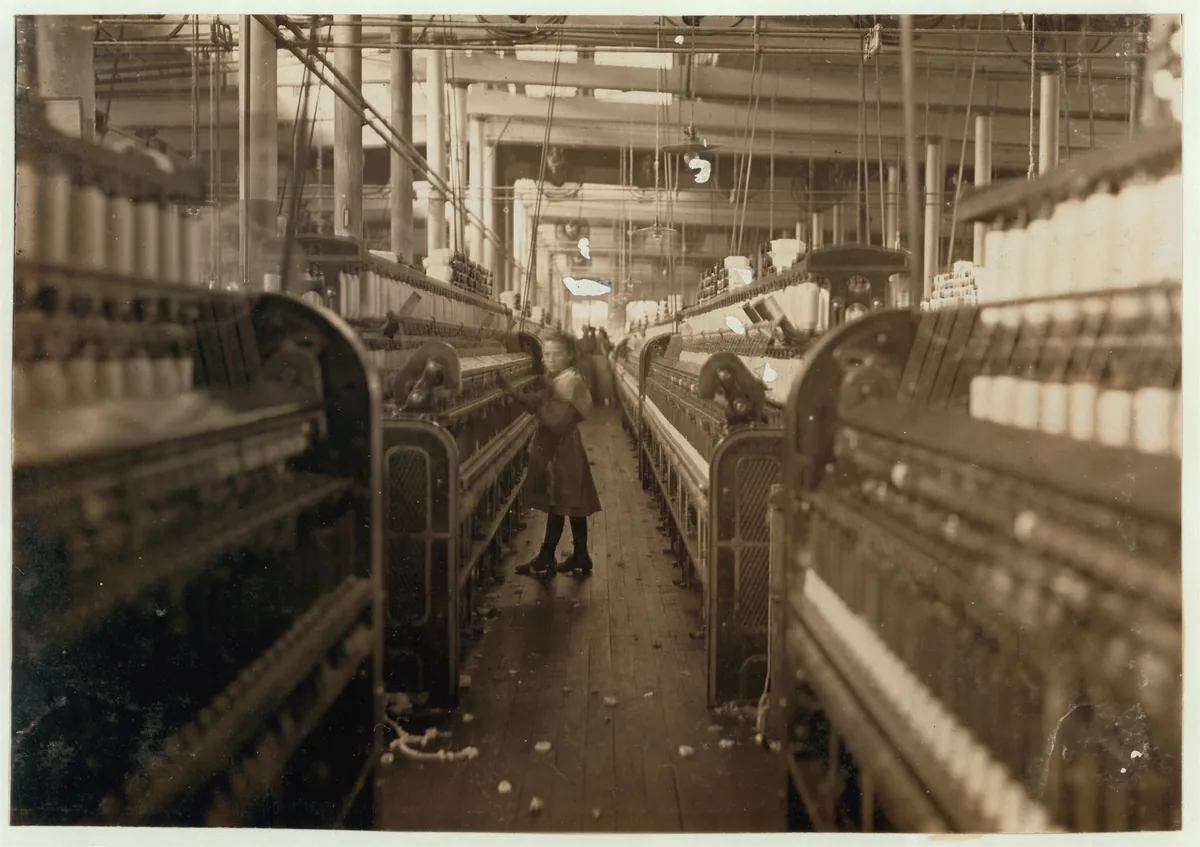
The third record places a young spinner at Mollahan Cotton Mills in Newberry, South Carolina, on December 3, 1908. The photograph positions her in an aisle with machinery on both sides. Compare this with Sadie Pfeifer’s image: both make the surrounding equipment legible, but the arrangement directs attention differently. Here, the aisle creates a route through the picture toward the figure. This is a close reading of the frame, not a claim that we know every decision Hine made before the exposure. The archive supplies the location and date; the visible arrangement gives us material for discussing how the photograph communicates.
A caption is part of the evidence
For a present-day photographer, the practical lesson is to preserve the information that an image cannot carry alone. Record names accurately when appropriate, distinguish what you witnessed from what someone told you, and keep the original notes with the files. If you quote a historical caption, make its origin clear rather than silently turning its wording into a modern assertion. Uncertainty should travel with the picture. The attribution note attached to the breaker-boys photograph is a useful example: an archive can identify a likely creator while still explaining the basis for that identification. Our caption-writing guide (linked below) develops this distinction between observation, context and inference.
What to carry into your own documentary work
Study how a person’s surroundings can explain an activity without overwhelming the person. Make a wider frame as well as a closer one, then ask what each version reveals and what it removes. Do not confuse this compositional exercise with permission to photograph vulnerable people without care. A forceful image can still have an incomplete caption, a misleading crop or an irresponsible publication context. These reproductions retain the full scanned frames, including their archival borders. They invite comparison rather than claiming to summarize Hine’s entire career. Read the linked catalogue records alongside the photographs, and notice how much the meaning depends on that patient work of documentation.