A gap in a ring is the interesting part
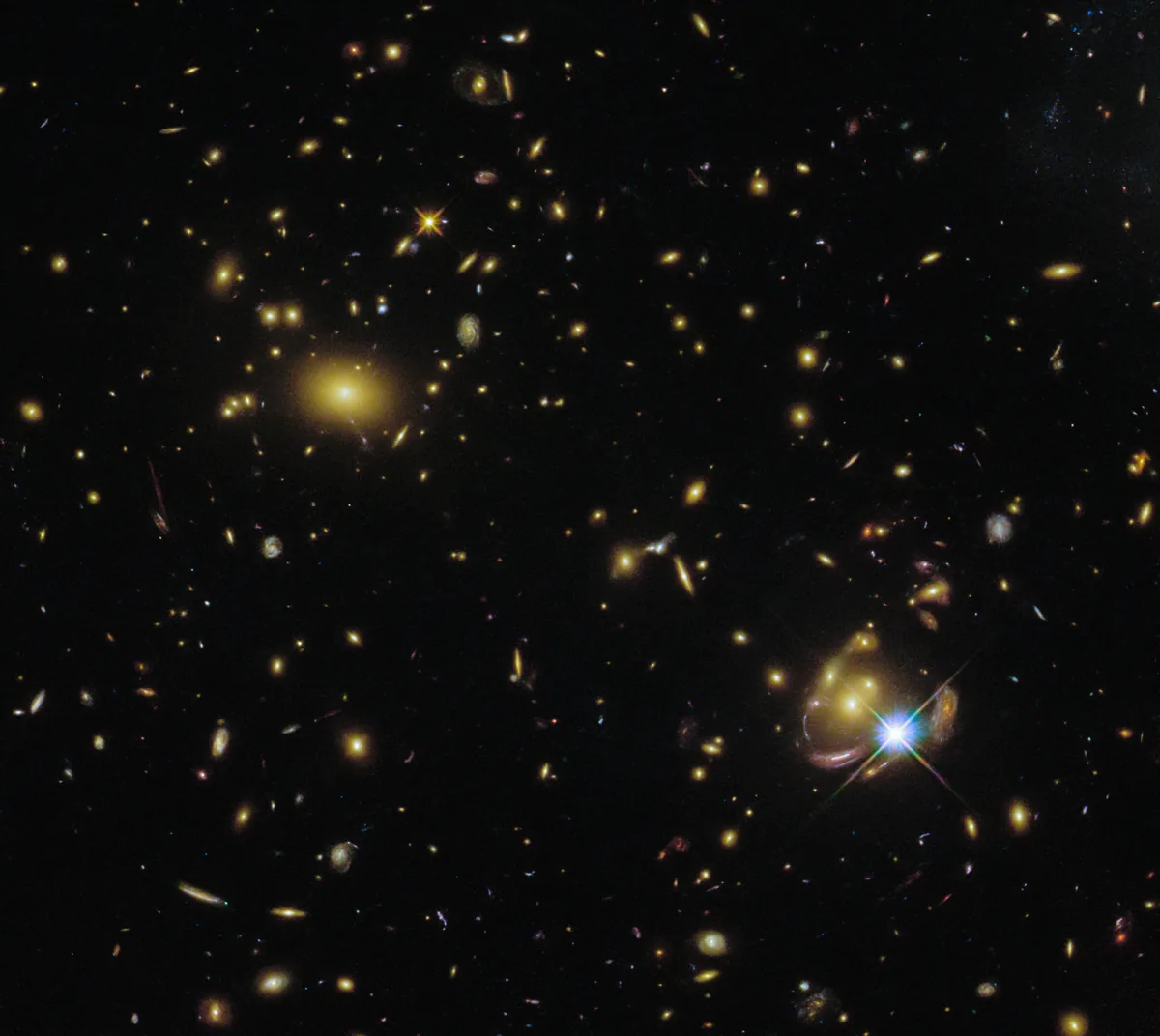
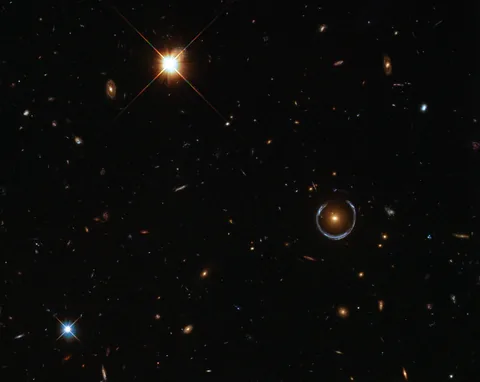
In panel D of a gallery NASA published on November 12, a lane of dust crosses a foreground galaxy. Around it lies what could be an almost continuous image of a more distant galaxy. One reading of the apparent gap is that dust hides part of the arc. Infrared observations with the Nancy Grace Roman Space Telescope could help astronomers test that reading. NASA presents this as a question for follow-up. The published observation comes from Hubble.
How one object becomes several marks
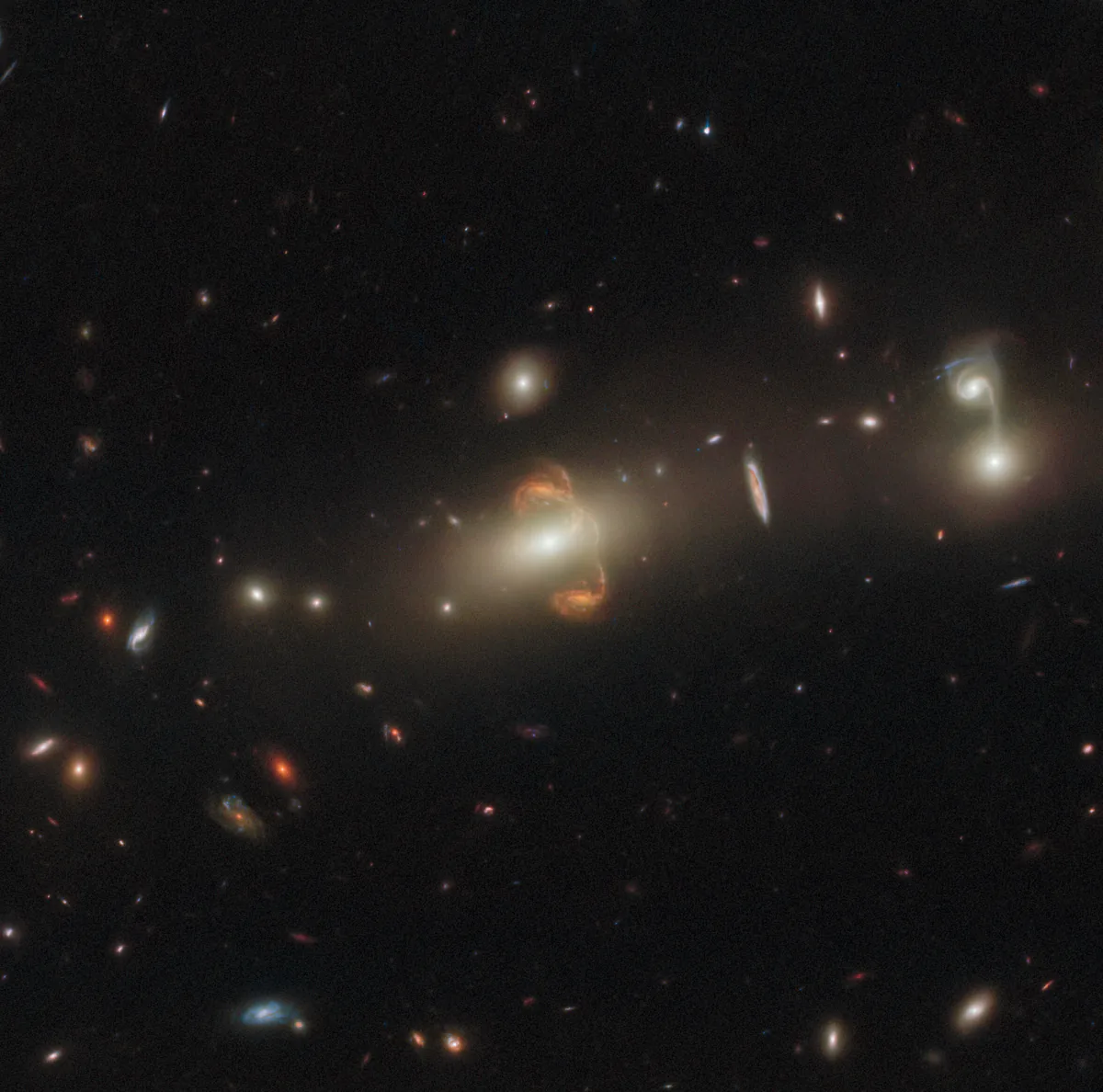
A galaxy between Earth and a more distant light source can bend different paths of light toward the observer. The result depends on how the objects line up and how mass is distributed in the foreground. In panel A, look for an arc on one side and a counterpart on the other. In panel I, four small patches belong to a single background galaxy. Reading each patch as a separate object would give a misleading inventory of the scene.
Why change the instrument?
The candidates were initially detected with the Dark Energy Spectroscopic Instrument. Hubble then resolved individual systems. Roman combines a wider field with a different wavelength range, giving researchers a way to look for many more candidates and to see through some of the dust that complicates visible-light images. A larger field and a closer look answer different observational questions.
What the pictures can measure
The arcs contain information about the mass responsible for the distortion. Astronomers compare their positions and shapes with models of the foreground system. Small departures from a model may reveal clumps of matter that emit too little light to see directly. The models and follow-up observations are essential steps between noticing an unusual shape and drawing a conclusion about dark matter.
Read the original panels at full size
Open NASA’s labelled gallery below. Start with the nearly closed ring in panel F, then compare it with D before reading the annotations. The three earlier Hubble photographs accompanying this story provide independent examples of lensing. Their credits link to the original exposures and target descriptions.