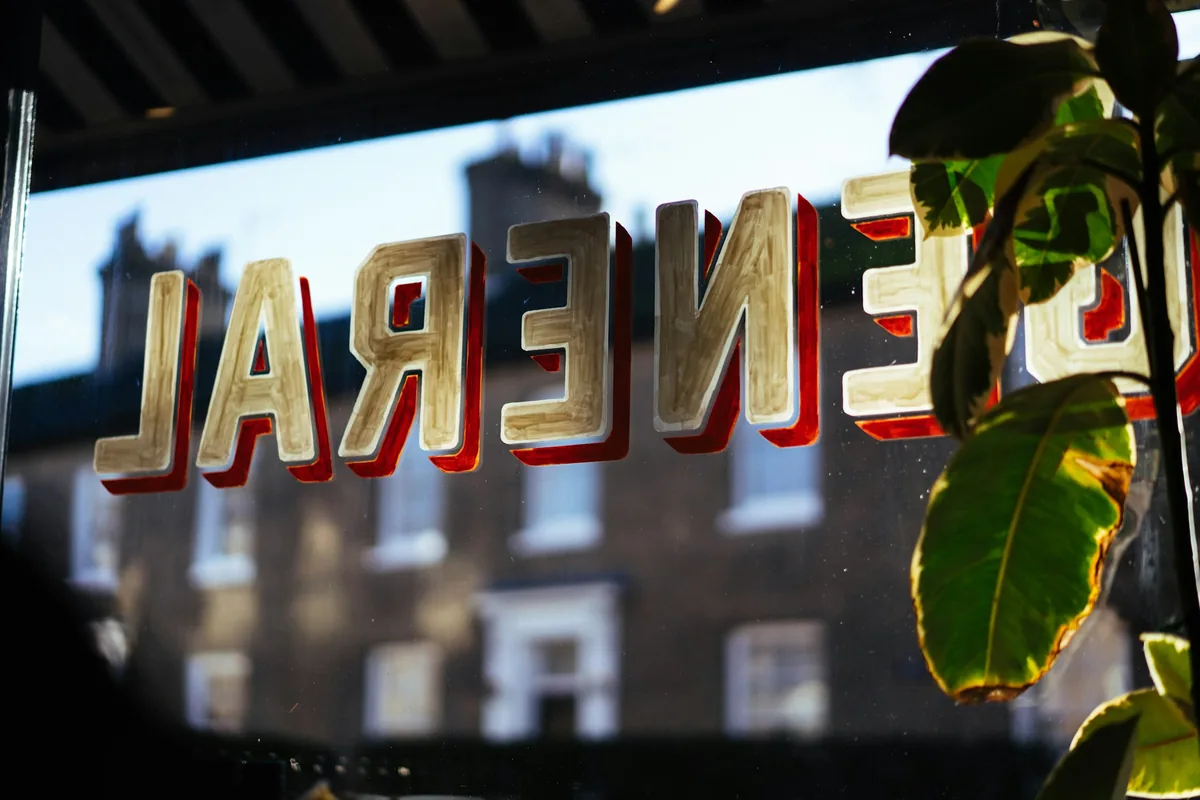
Decide what the sign identifies
Stand where the shop entrance and sign can appear together. A painted name above a shared arcade might belong to one door, several units or an earlier occupant. Include the visual evidence a stranger would need to tell which interpretation fits. One neighbouring bay, the entrance number or the edge of an awning can do more work than a wide stretch of unrelated pavement.
Make the detail from a second position
For the lettering frame, move as close to square-on as the pavement allows. Compare the height of the first and last letters in the viewfinder. A sharp oblique picture can still compress the far end until smaller characters merge. If a parked vehicle prevents a straight view, keep the oblique context frame and look for a clearer position for the detail. Work from a safe public position.
Find the difficult letter
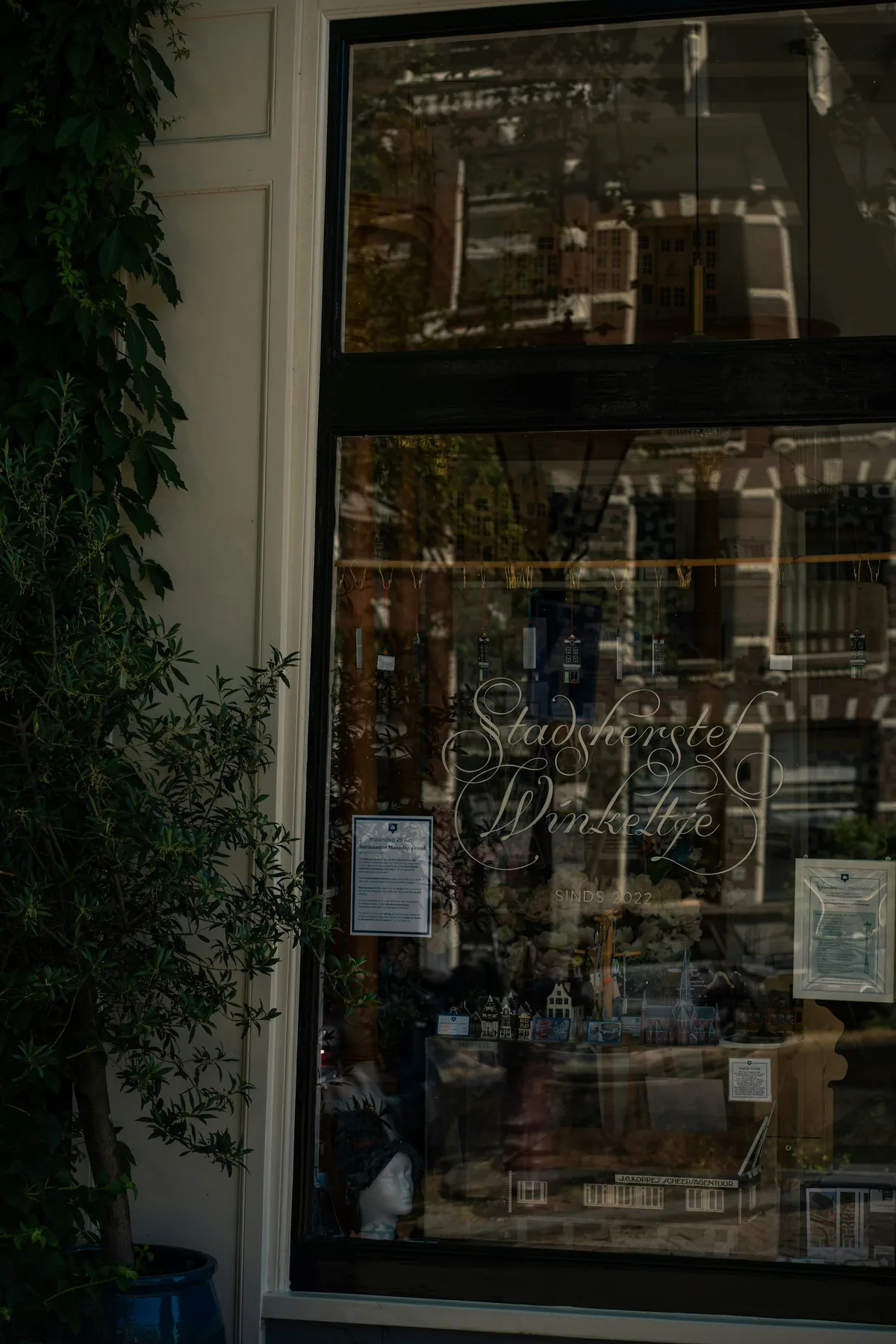
Pick the smallest mark that changes the meaning, such as the last digit of an address or the apostrophe in a name. Inspect it in playback. Painted gold can disappear against a bright patch of glass even when the focus is right. Look at the background immediately behind that particular letter. A small change of camera height may put a darker interior wall behind it while preserving the rest of the word.
Leave an edge around the message
Give the first and last characters some breathing room. Include a projecting bracket or painted border if it explains how the sign is mounted. If a reflection, missing letter or peeling strip makes a word uncertain, preserve that evidence. A caption can describe a partly legible sign without guessing what its owner meant to write.
Test the pair as a reader will see it
View both pictures at the intended publication width. Can you point to the sign in the first and transcribe its visible wording from the second? If both frames answer only one of those questions, change the weaker frame while you still have access. Keep the pair together with the street, date and viewing direction. For formal architectural records, consult the National Park Service documentation guidance for the project’s specific requirements.