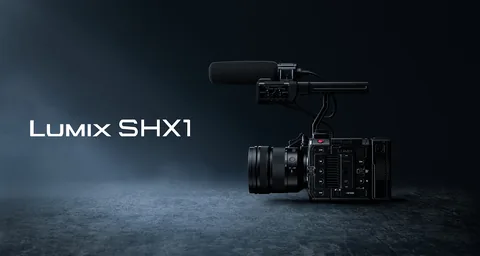
A cinema body with two ways to record RAW
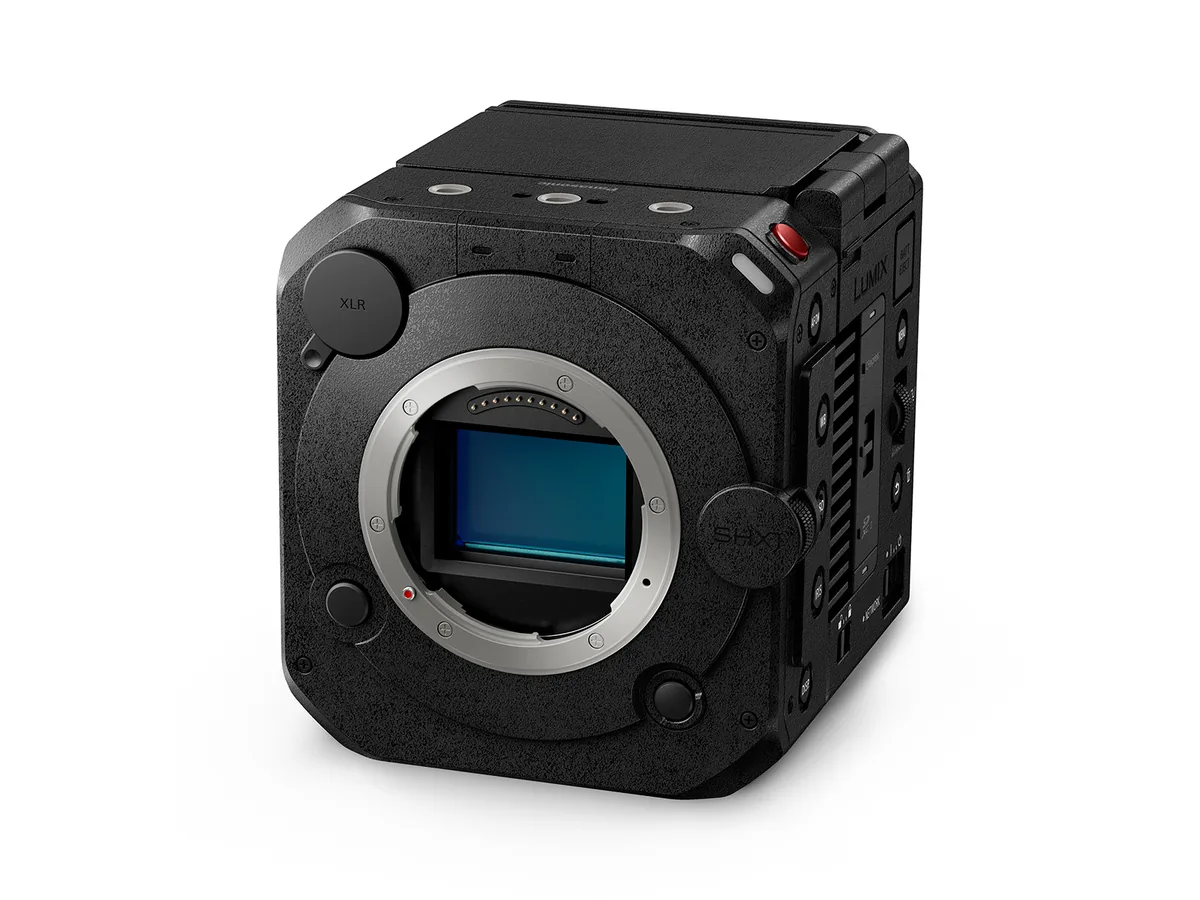
Panasonic announced the AU-SHX1 on November 17, calling it the first compact cinema camera in the LUMIX line. The box-style body combines a 6K full-frame sensor, in-body stabilization and a tilting monitor on top. For a crew deciding what to pack, the most consequential choice may come before a lens goes on the camera. Apple ProRes RAW records internally to a CFexpress Type B card. Blackmagic RAW records over USB-C to an external SSD. Both paths dispense with an external recorder, but only one keeps the master inside the body.
Budget the recording path first
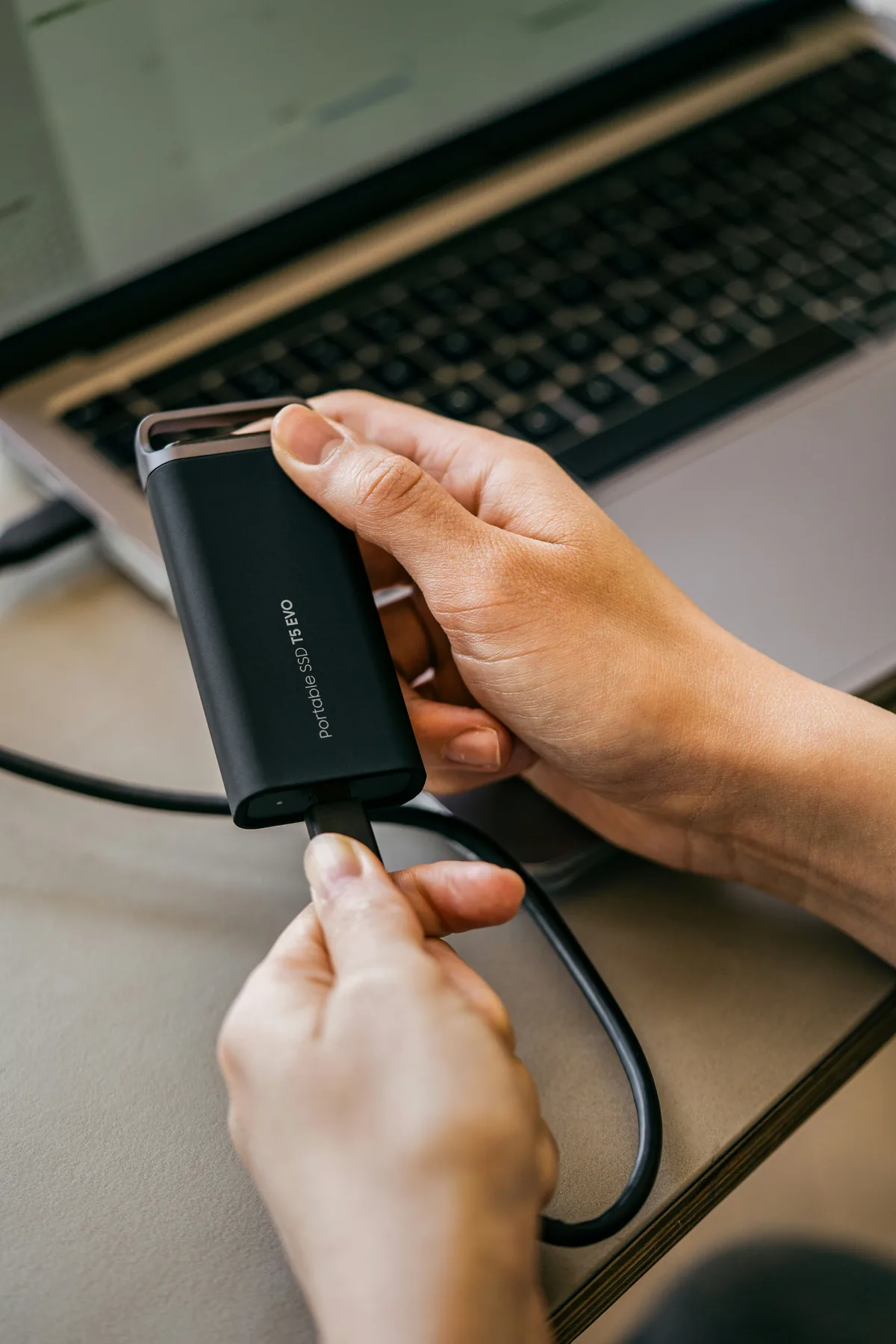
For Blackmagic RAW, Panasonic recommends a compatible drive of 2 TB or less. When the SSD holds the master, the camera can write a proxy to SD. It cannot make a simultaneous second full-quality recording to either internal slot. If the job calls for two copies of a master before leaving the location, schedule time for a verified offload. An SD card containing proxies serves a different purpose in the edit. For a gimbal rig, choosing internal ProRes RAW also removes the need to secure an SSD and route its cable through the moving assembly.
Choose a frame for the deliverables
Panasonic lists 6K at 30p and 5.1K at 60p in 3:2 open gate, both at 10-bit 4:2:0. A taller frame gives an editor room to extract a vertical composition from the same take as a widescreen master. Put both crops over a rehearsal frame before committing to a camera position. An interview subject might fit either crop while the second person entering from the side disappears from the vertical version. The company also lists open-gate Blackmagic RAW at 6K 24p and notes a slight crop in that format.
Read the condition behind the range claim
Panasonic rates the sensor at 15 stops with Dynamic Range Boost enabled and 14-plus stops with it off. The company also says enabling boost increases rolling-shutter distortion and limits the available recording quality and ISO settings. A locked interview and a fast pan across vertical lines are therefore different tests. Check the chosen mode with the actual movement planned for the shot before treating the higher figure as a reason to leave boost enabled.
US price, kit contents and timing
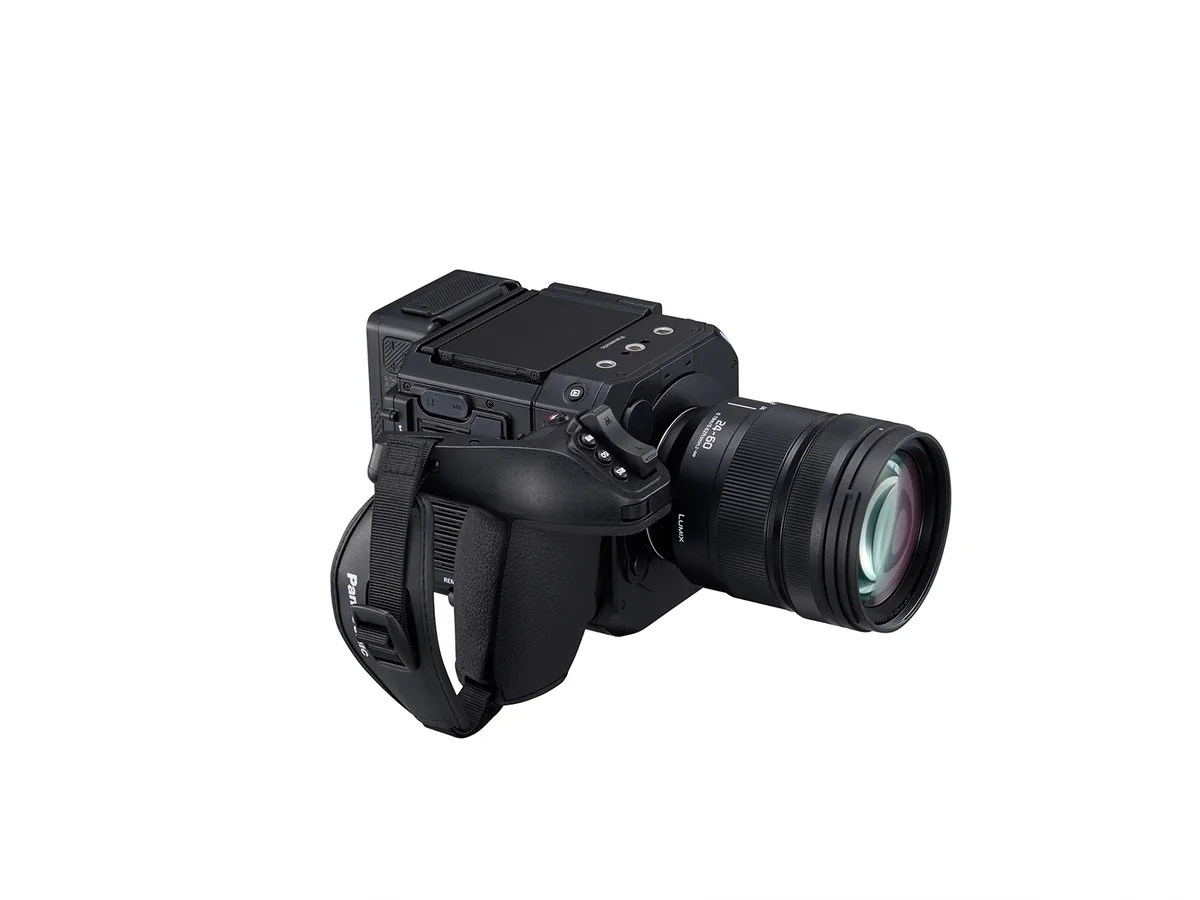
Panasonic lists the US body at $4,699.99 and a $5,499.99 kit with the AU-XHU1 XLR handle and AU-GRP1 control grip. US availability is scheduled for January 2027. The company says the international rollout begins in stages in December 2026. The separate AU-LPU1 live production unit is scheduled for the first half of 2027. Crews planning a synchronized multicamera installation should distinguish that accessory’s delivery window from the camera’s when booking a job.