An October delivery window, not a new announcement today
OM SYSTEM’s new PEN belongs on an October release checklist, but its announcement is dated September 9, 2026. The manufacturer’s US release targets late October availability; its US product page still showed preorder when checked on October 5. Those are different facts from a confirmed shipment to an individual customer. We have not tested the camera or verified general retail stock. This preview separates the published offer from the decisions a photographer can sensibly make before a delivery date is confirmed.
Read the price with the kit attached
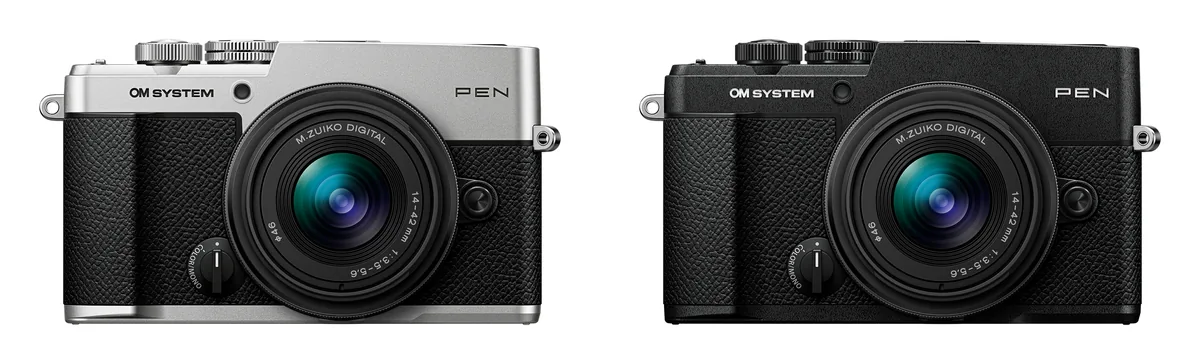
The US announcement lists $999.99 for a body, $1,099.99 with the M.Zuiko Digital 14–42mm F3.5–5.6 III and $1,299.99 for the double kit that also includes a 40–150mm F4–5.6 R. These are announced US prices, not a guaranteed checkout total or a claim of immediate availability. A body price is useful only if you already have an appropriate lens. Compare the named kit components, regional warranty, taxes and delivery terms before comparing totals. Do not infer that an estimated arrival for one color applies to another.
Identify the reason to choose this system
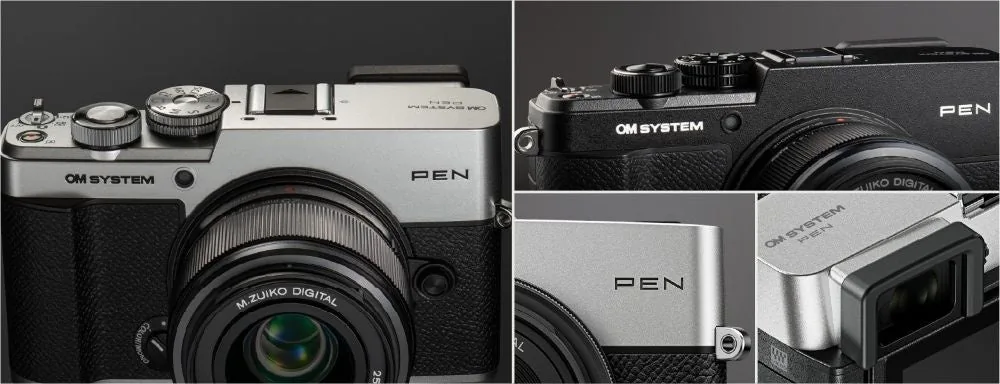
The official product page describes a Micro Four Thirds interchangeable-lens camera with an electronic viewfinder, an articulating touchscreen, 121 cross-type phase-detection AF points and 4K recording up to 30p. It also lists creative color and monochrome profiles. These establish the feature categories, not autofocus reliability or video performance in your assignment. A useful shortlist starts with the work: carrying a small camera daily, framing through a finder, choosing an existing lens or producing a particular delivery format. Mark anything essential for a later demonstration rather than treating a feature label as an answer.
Read stabilization and sealing as conditional claims
The Japanese manufacturer release specifies a 20.37-megapixel Live MOS sensor and TruePic IX processor. It describes five-axis stabilization, with its quoted compensation depending on measurement conditions, and IPX1 splash resistance. Neither specification means every handheld exposure will be sharp or that the camera is waterproof. Lens choice, subject movement, handling and environment remain separate variables. Our practical advice is to read the exact operating limits before planning wet-weather work and to keep ordinary protective arrangements in place. A rating is not permission to improvise an immersion or spray test.
Use the creative controls deliberately
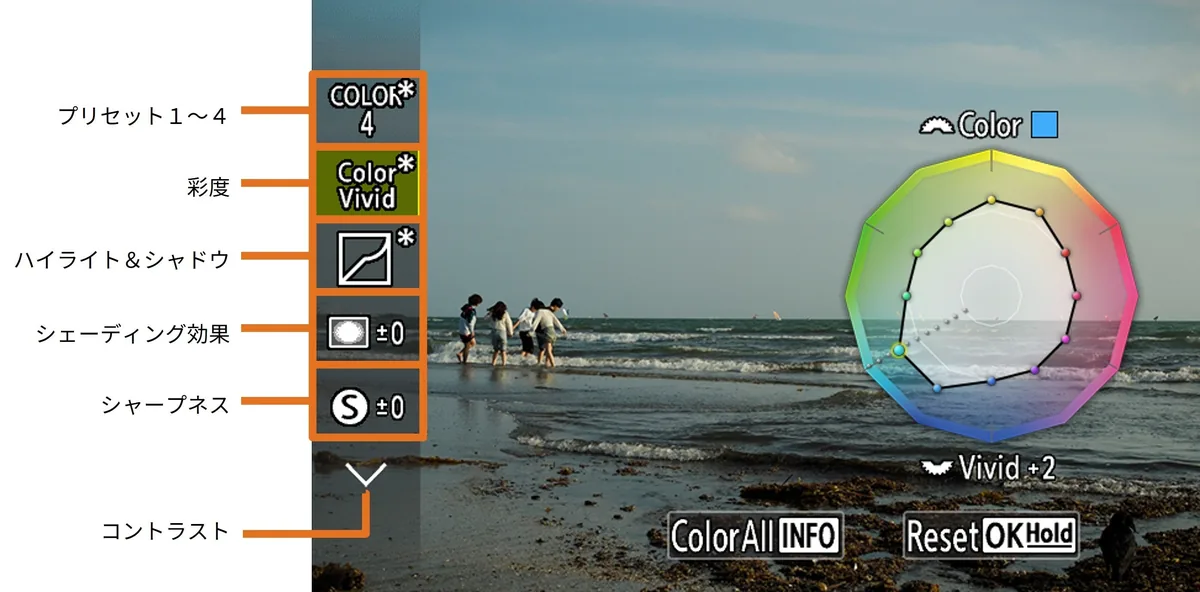
The release artwork shows a color-profile interface, and the product page emphasizes built-in looks. For someone who enjoys finished in-camera JPEGs, control placement and repeatability may matter as much as the number of presets. During a demonstration, ask whether you can quickly return to a neutral starting point and identify the active profile without interrupting the subject. Check the manual for how settings affect each file type. Do not assume the manufacturer’s beach illustration demonstrates your eventual output, or that an attractive preset removes the need for reliable exposure and white balance.
Check the whole bag, not just the body
If you are joining the system, write down the lenses and accessories needed for the first realistic outing. Verify mount compatibility, battery and charger arrangements, supported recording media and any required microphone or connection against the exact manual and package contents. Existing ownership can change the value calculation considerably, but a similar-looking connector is not proof of compatibility. Avoid ordering a collection of accessories before confirming the intended combination. Renting or trying a complete setup can answer handling questions that a specification comparison cannot settle.
Leave time between delivery and a commitment
A late-October target should not become an unconditional promise to a client. Ask the seller for the status of your specific order and keep an alternative camera available until the new system has completed a representative shoot-to-export test. Our first-week camera workflow explains that practical handover. If the delivery slips, reassess the schedule rather than substituting an untested setup at the last moment. The photographs here are authorized manufacturer press assets from the announcement; they are not evidence that The Camera Post received a production sample.