A new cinema family, not a single lens launch
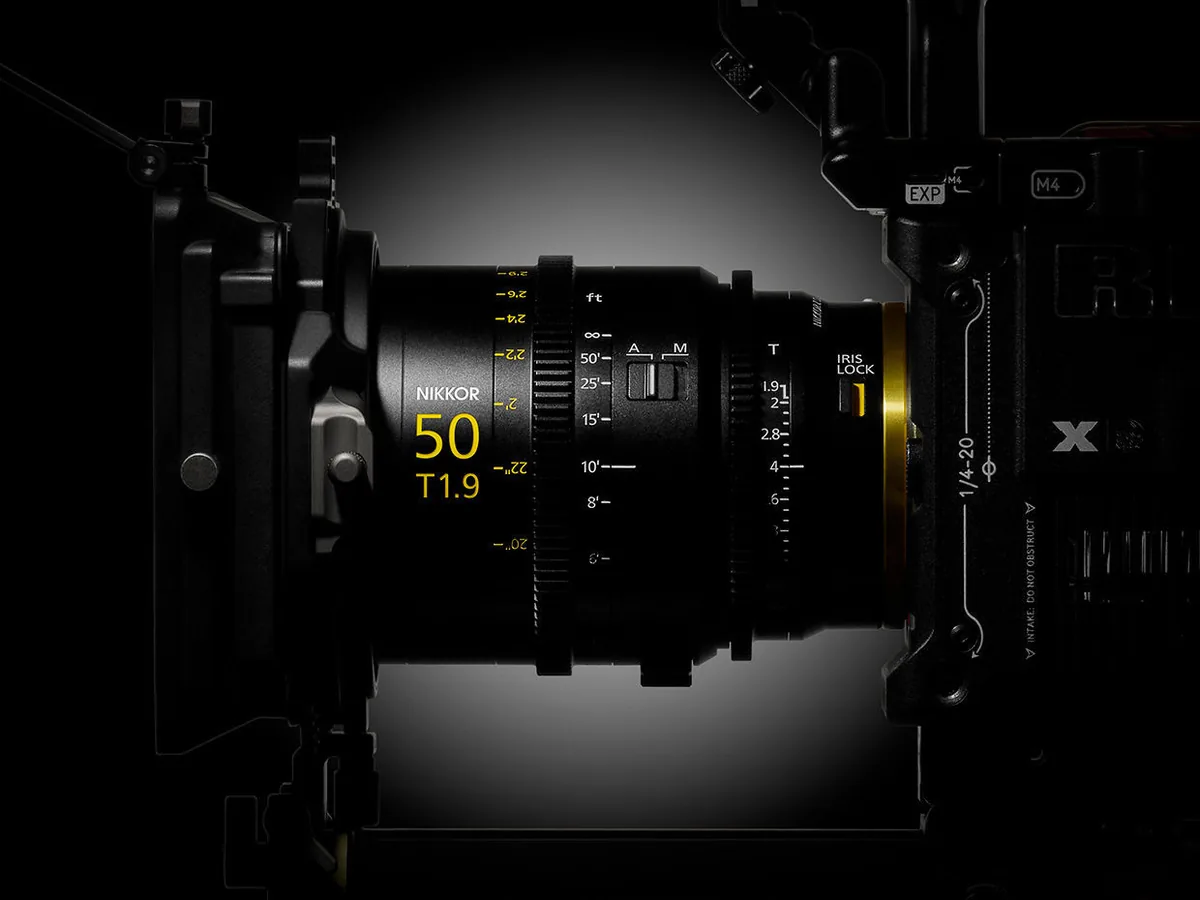
Nikon announced on September 8, 2026, that it is developing the NIKKOR Z CINEMA T1.9 VV series, a nine-lens family centered on the NIKKOR Z CINEMA 50mm T1.9 VV. The language is important: this is a development announcement for a line, not a completed retail launch. Nikon says the lineup is designed for cinema, high-end productions and creators looking for “high-quality solutions,” meaning the primary audience is professional and semi-professional motion work rather than casual stills buyers. The company also describes the series as enhancing the NIKKOR Z CINEMA line with a new design philosophy that can balance cinema rendering and practical production demands.
Confirmed facts
Nikon’s official newsroom states that the series will be comprised of nine lenses, including the NIKKOR Z CINEMA 50mm T1.9 VV. The company says the first series will feature an image circle large enough to cover the RED V-RAPTOR [X] VV sensor, which Nikon describes as being larger than a full-frame sensor. Nikon also says the lenses will include a highly precise autofocus mechanism to support creators’ workflows. Those are direct statements from the company’s announcement and can be treated as confirmed in the context of the development brief. Nikon has not yet shared a U.S. price, product page, launch date or an exact shipping schedule for the line.
Why the large image circle matters
The most consequential claim in Nikon’s announcement is the coverage of the V-RAPTOR [X] VV sensor. That sensor is larger than a full-frame format, which means the lens family is not simply a premium set of cine primes for traditional stills mount work. It is positioned to accommodate a larger format and to support a production workflow that values field-of-view, coverage and a consistent visual character across a series. For camera operators, that matters because a lens family intended for larger sensors can be planned in advance for more expansive framing and fewer compromises when a project changes lenses mid-shoot.
Audio and motion advantages are part of the pitch
Nikon says the new interior design and cinema-focused optical interpretation are intended to support the visual expression expected in professional cinema. The company’s design language emphasizes rendering performance and practicality in production environments. That combination is precisely the kind of promise a cine lens family makes: controlled character, dependable operation and enough real-world usability to justify a crew adopting it instead of relying on a broader library of older glass. The announcement is careful about the target use case, but it is not a spec sheet, and the real value will be judged in sample footage, optical tests and field reliability.
The RED connection is central, not a side note
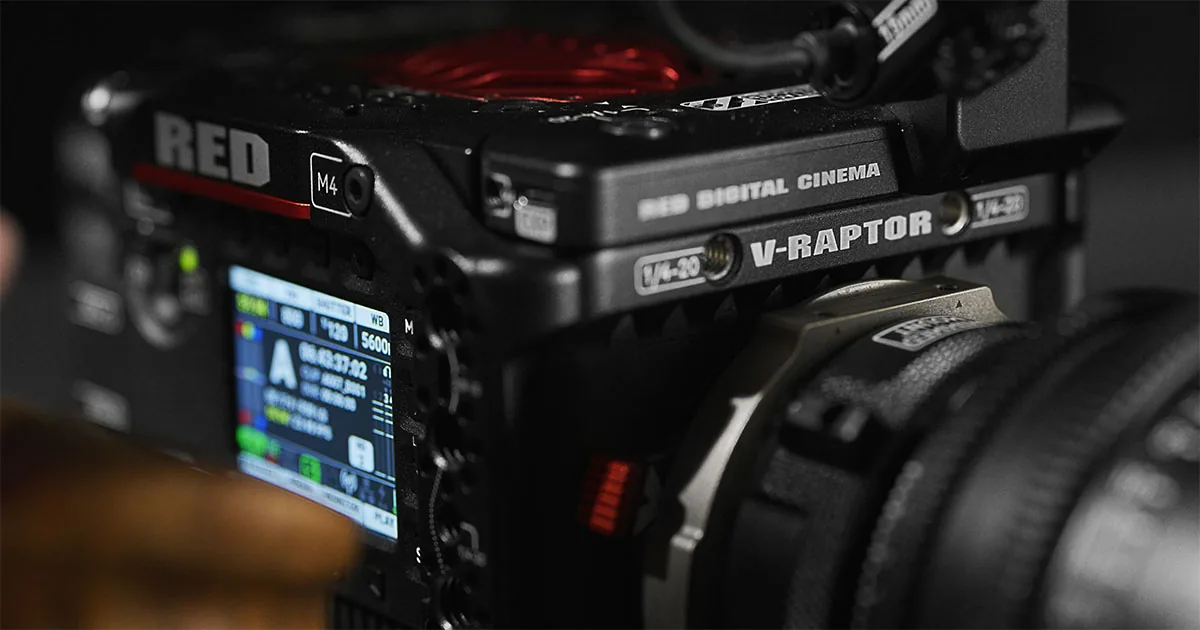
Nikon explicitly positions the series as part of a relationship with RED. The company says creators can expect a synergy between Nikon and RED, and the environmental wording points to a production ecosystem rather than a one-off collaboration. That matters because large-sensor cinema has a very specific set of requirements: image circle, distortion control, focus behavior, lens breathing, flare handling and compatibility with camera support systems. A relationship with RED helps explain why Nikon is emphasizing a larger-than-full-frame format from the outset. It also suggests the announcement is aimed at high-end productions, not content creators buying a single lens for a possible side project.
The autofocus claim is meaningful—but limited
Nikon says the series will feature a highly precise autofocus mechanism to support creators’ workflows. For cinema lenses, autofocus is often a nuanced feature, not a universal requirement. Some filmmakers cling to manual focus for artistic control, while high-end documentary and hybrid crews value precise focus assist, reliable pull focus and repeatable behavior when the camera is moving or a subject shifts through a frame. The key point is that Nikon is explicitly describing the series as a practical, professional workflow tool, not merely an optical showcase. But without a full lens-by-lens breakdown, the precise implementation, speed and whether it is intended for cine-style focus puller workflows remain unknown.
No price, no release plan, no broad availability yet
The development release contains no official U.S. price, no announced shipping date and no retail availability map. That is the expected condition of a development announcement, but it is also a practical reminder that this is not a finished product story. Buyers should not assume that a nine-lens series will launch simultaneously, or that pricing will track conventional stills lens economics. In the near term, the important information is the intended format, family structure and use case—not the exact purchase terms.
Manufacturer claims versus reality
Nikon’s claims are best handled as manufacturer positioning rather than as an independent evaluation. The company says the line advances the NIKKOR Z CINEMA line through a new design philosophy and that it will provide practical production benefits. Those are credible claims given the stated sensor coverage and professional target market, but they are not the same as verified optical performance. A real verdict will require lens tests for sharpness at T1.9, chromatic aberration, focus breathing, flare and consistency across the nine-lens range. Until then, the announcement is significant because it establishes the intended direction and professional positioning.
What remains unknown
We still do not know the exact focal lengths in the nine-lens set, the retail pricing for each lens, the final barrel design or when the first units will ship. We also do not know whether the series will be compatible with all Z-mount cameras or only with the largest-sensor motion devices Nikon intends to target. The company is also silent on whether the autofocus system is designed for manual focus pullers, hybrid operators or a more automated production workflow. That information will matter more than the headline “nine-lens series” once Nikon starts publishing actual product specs and field footage.
The Camera Post view
This is a consequential announcement because it stakes Nikon’s claim in the high-end cinema market without offering a simple one-lens product story. A nine-lens family designed for a larger-than-full-frame sensor and marketed around a RED partnership is exactly the kind of development that shifts the conversation inside professional motion imaging. It is not a consumer launch, and it is not a polished final product list. But as a serious industrial move, it matters. The next decisive step is not another press release. It is the first real sample footage, practical lens test and price schedule from Nikon itself.