A lens designed around the sideline
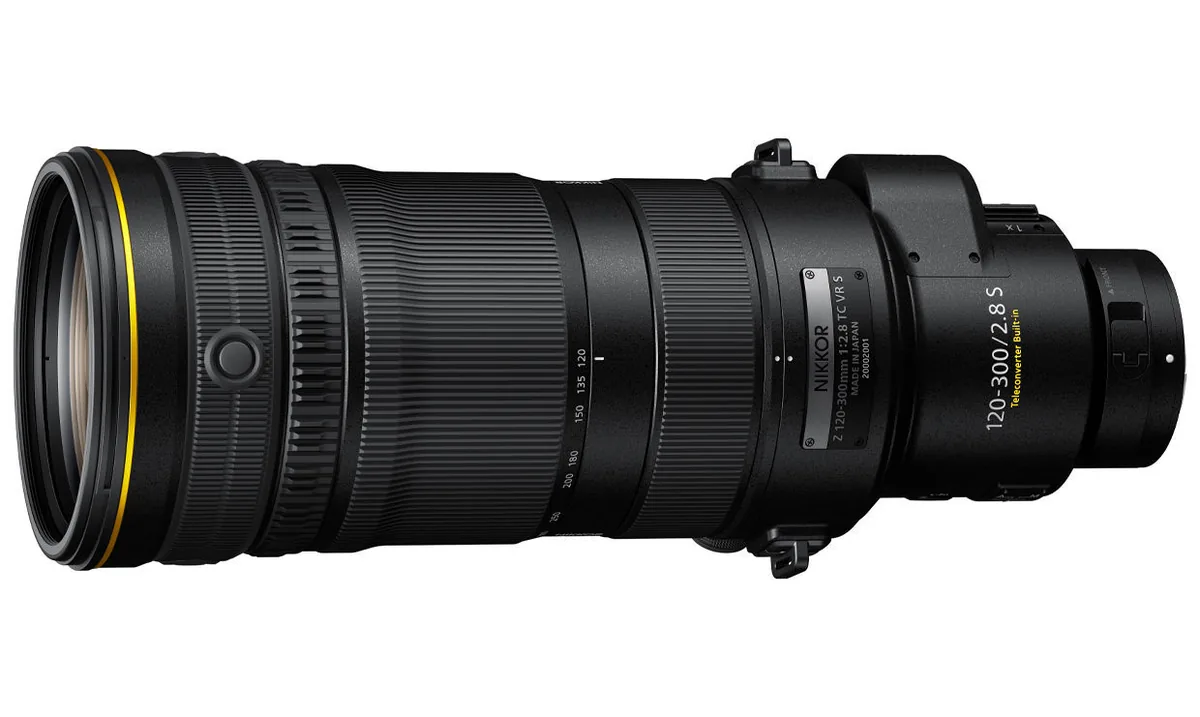
Nikon’s development announcement for the NIKKOR Z 120–300mm f/2.8 TC VR S points directly at professional sport, wildlife and live-event photographers. The range bridges the gap between a conventional 70–200mm and a large super-telephoto prime, while the constant f/2.8 aperture preserves subject separation and fast shutter speeds.
The teleconverter changes the assignment
The built-in 1.4× teleconverter extends the long end to 420mm without asking the photographer to remove the lens or expose the camera mount. That matters in rain, dust and fast-moving situations. With a lever movement, a photographer could frame a nearby player at 120mm and then reach across the field at 420mm.
What remains unknown
This is still a development announcement, not a full product launch. Nikon has not confirmed the final weight, optical construction, price or shipping date. Those details will determine whether the lens feels like a flexible replacement for multiple bodies or a highly specialized tool that only makes sense for agencies and rental departments.
The ergonomic question
A 120–300mm f/2.8 design is inevitably substantial. Balance, the placement of the teleconverter lever and the feel of the zoom ring will be as important as sharpness charts. Photographers often hold this class of lens for hours, and small handling decisions become large differences by the end of a match.
Read the announcement carefully
The most useful response right now is measured enthusiasm. The focal range and teleconverter are compelling, but buying decisions should wait for production specifications and independent field testing. Nikon’s S-Line designation sets a high expectation; the finished lens will have to deliver speed and consistency, not only an impressive concept.
How to plan before a price exists
Nikon has not announced a price, shipping date or final production specifications, so any dollar figure circulating now should be treated as speculation. The responsible way to plan is to compare the role of this lens with the cost of carrying a 70–200mm plus a separate super-telephoto—not to assume the development sample will arrive at a particular price. Agencies and independent professionals should also wait for confirmed weight, service terms, teleconverter image quality and compatibility notes. Nikon’s official development page will remain the most reliable reference until the company converts this announcement into a finished product launch.