A forty-year anniversary with two new directions
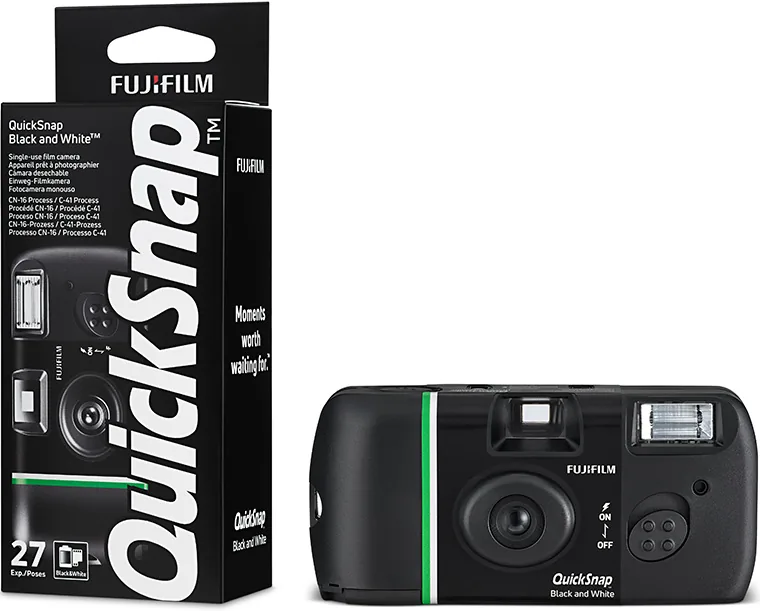
Fujifilm is marking the 40th anniversary of QuickSnap with two new single-use film cameras for the United States: QuickSnap Black and White and QuickSnap Active. The company announced both on June 30, 2026 and says they are expected to reach the market in fall 2026. The Black and White model carries a suggested price of $22.90, while the waterproof Active is listed at $24.75. Neither was described as available for immediate purchase in the announcement, so photographers should check Fujifilm’s regional pages or an authorized dealer before ordering. The important news is not merely nostalgic packaging. Each version gives the familiar 27-exposure format a distinct photographic job.
What the Black and White model contains
QuickSnap Black and White is loaded with ISO 400, 135-format black-and-white negative film and includes a built-in flash with a range of approximately 10 feet. Fujifilm says the film can be processed through the widely available C-41 color-negative process, which removes one of the practical barriers that often accompanies traditional black-and-white chemistry. The camera has 27 exposures and is intended for both daylight and flash photography. The published specifications do not turn it into a manual camera: exposure, focus and framing remain deliberately simple. Its value will depend on whether the tonal character, grain and latitude produce a convincing monochrome result after ordinary lab processing.
What makes QuickSnap Active different
QuickSnap Active is the outdoor model. Fujifilm lists ISO 800 color negative film, 27 exposures and C-41 processing inside a protective housing with a wrist strap. It has no flash and is rated waterproof to 35 feet, making it relevant for a pool, beach, boat or shallow-water trip where carrying a conventional camera would be inconvenient. ISO 800 is a sensible choice for the reduced light and faster shutter needs that can accompany water and action, but it does not guarantee a usable exposure in every condition. The company has not presented the Active as a dive camera for deep or technically demanding work, and the 35-foot limit should be treated as a real operating boundary.
The original QuickSnap changed the entry point to film
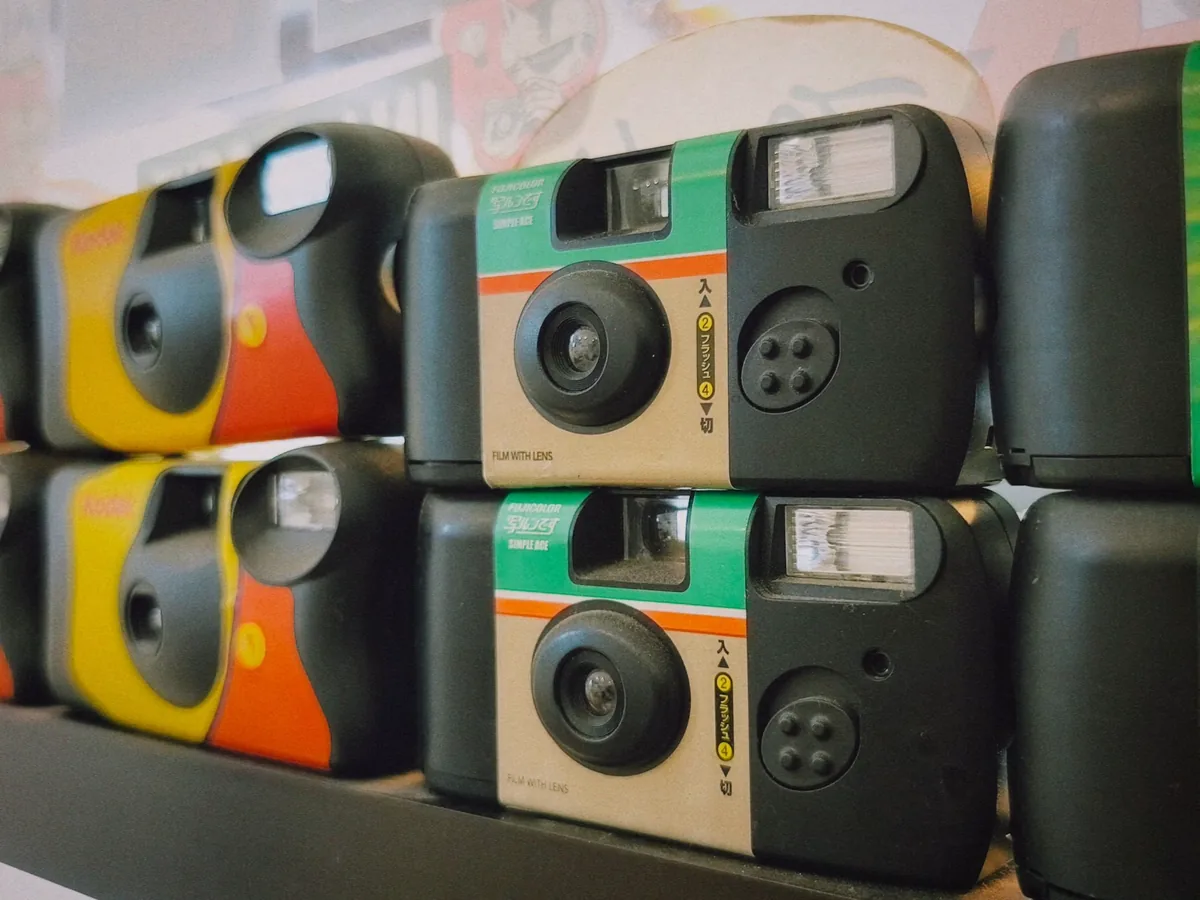
Fujifilm introduced the first QuickSnap in Japan in 1986 under the Utsurundesu name. According to the company’s anniversary history, that model used 110-format ISO 100 film. A second generation arrived in 1987 with 35mm ISO 400 film and helped establish the form most photographers recognize today. The design reduced photography to a few visible decisions: choose a moment, judge the light, frame through a small finder and press the shutter. That simplicity made cameras easier to place at parties, holidays and family events, but it also taught a lasting discipline. With only 27 frames, every exposure has a cost and no rear screen can rescue indecision.
Price and availability in the United States
Fujifilm’s announced U.S. manufacturer suggested retail prices are $22.90 for QuickSnap Black and White and $24.75 for QuickSnap Active. Both are expected in fall 2026. Those are launch figures rather than guarantees of a retailer’s final price, and processing, scanning and shipping remain separate costs. A buyer comparing single-use film with a reusable compact should calculate the complete cycle: camera, lab development, scans and any prints. The official QuickSnap site is the best source for current specifications, while Fujifilm’s U.S. announcement is the source of record for these prices and timing. Until stock appears, listings that promise an earlier date should be treated cautiously.
How to approach the first roll
The Black and White model will reward scenes with clear light, texture and separation rather than color doing all the compositional work. Use the flash at close indoor distances and remember that its published reach is about 10 feet; a distant subject in a dark room will not become properly lit because the flash fires. With the Active, keep the wrist strap secure, avoid opening or damaging the housing and look for sunlight passing through water rather than pointing automatically into glare. In both cameras, keep fingers away from the lens and flash, hold the body steady and wind fully before the next frame. Simple equipment makes careful habits more visible, not less necessary.
Processing is part of the product
Both new cameras use C-41 processing, but photographers should still confirm that a lab accepts the exact camera and can return useful scans. Ask whether the lab corrects exposure and color automatically, what resolution it supplies, and whether negatives are returned. Black-and-white files may arrive with a neutral conversion or with a lab-specific tone; retain the negative so a later scan can interpret it differently. The Active’s color film may need extra attention to blue-green casts in water. A cheap scan can make a capable negative look soft or compressed, so judge the camera only after inspecting the film and a sufficiently detailed scan.
The environmental question cannot be ignored
Single-use cameras create an obvious tension between accessibility and material waste. Fujifilm says its collection and recycling program can reuse or recycle up to 60 percent of the camera by weight when units are properly returned through participating channels. That claim makes the lab and disposal path part of the buying decision. Do not throw the exposed camera into household recycling or dismantle it casually; the flash circuit can retain charge. Choose a lab or retailer that participates in an appropriate recovery program, and ask what happens to the shell and internal components. A reusable camera remains the better long-term choice for frequent shooting, but a recovery route is still essential for every QuickSnap used.
The Camera Post view
The anniversary models are most interesting when treated as working tools rather than souvenirs. Black and White gives the format a coherent visual limitation, while Active solves a specific access problem around water and rough conditions. Their fixed exposure systems will not replace a compact film camera, and repeated use becomes expensive once processing is included. Yet a 27-frame assignment can be productive: one afternoon, one subject and no review screen. The new versions also make the lab relationship visible again, which is healthy in a culture that often treats capture as the end of photography. We will reserve judgment on image character until production cameras and properly scanned negatives are available.