What Fujifilm announced
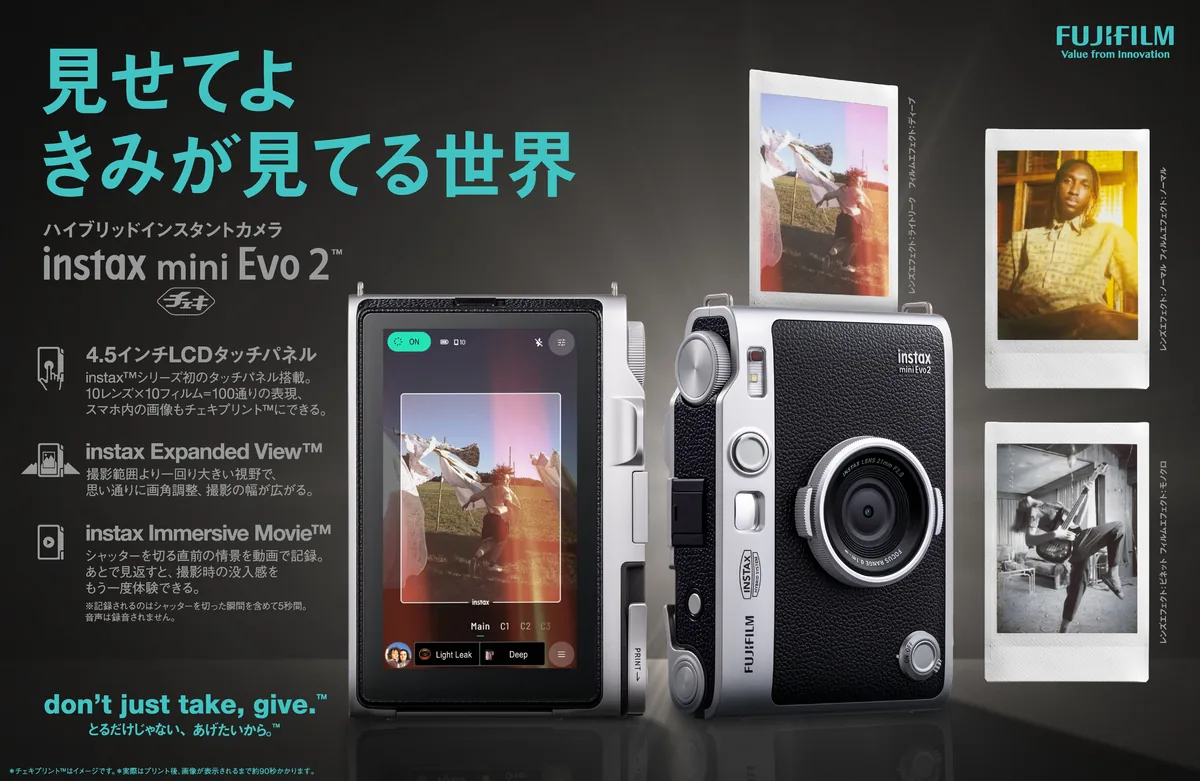
Fujifilm announced the instax mini Evo 2 on October 27 in Japan, with a US newsroom release dated October 26. US availability is expected at the end of November at $289.95; Japan lists November 27. Those are announced plans, not confirmation of stock. The hybrid combines digital capture, selective instant printing and smartphone printing. Film and a microSD card cost extra. This is an announcement analysis, not a hands-on review.
The screen changes the working surface
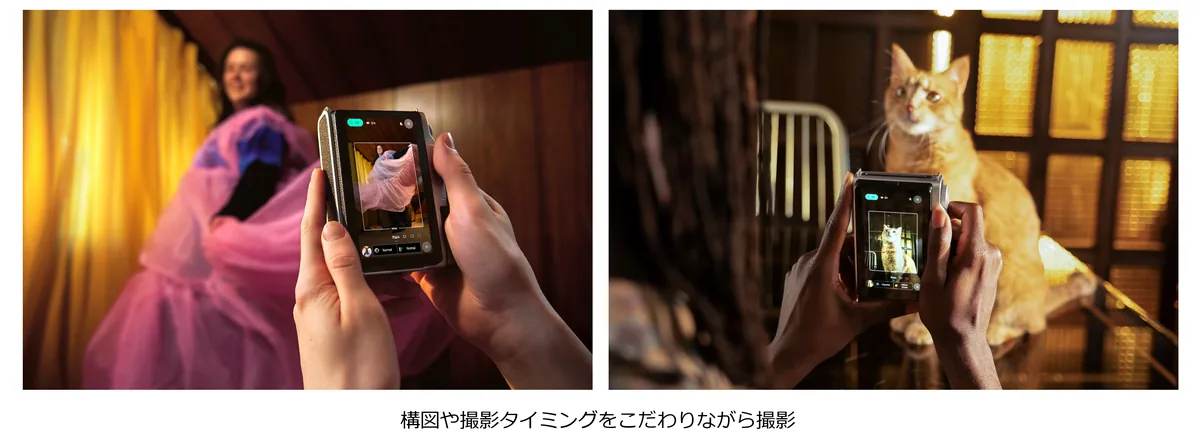
A 4.5-inch touchscreen replaces the original model’s smaller viewing area. Fujifilm describes it as the first touchscreen in the instax series. The practical question is whether composing, selecting a frame and changing a setting become easier while holding the camera naturally. At a shop demonstration, try all three rather than judging the screen only from a bright promotional image. Screen size alone does not establish daylight visibility, touch responsiveness or battery endurance; we have not measured those qualities.
Read the 13-megapixel qualification
Fujifilm’s maximum 13MP specification requires a microSD card and Expanded View switched off. It is not an unconditional specification for every shooting configuration. A higher pixel count also cannot by itself predict noise, dynamic range or the appearance of a small instant print. Buyers who want digital files as well as paper photographs should inspect exported originals at their intended viewing size. Ask to see a normal indoor portrait as well as a brightly lit scene, and compare usable detail rather than the dimensions reported by a file browser.
A frame inside a wider view
Expanded View displays surroundings outside the print boundary. That can help a photographer watch a person approaching the composition without confusing the whole screen with the eventual print. Treat the boundary as an editorial choice: decide what must remain inside it, and keep checking hands, faces and objects near its edges. A wider preview does not remove the need to anticipate movement. It is a tool for seeing what is about to enter, not a promise that the camera will capture the desired expression automatically.
Keep the movie descriptions in context
The US announcement describes recording the four seconds preceding a photograph; the Japanese release describes a five-second movie around the capture. We are retaining that regional wording rather than presenting two competing durations as a measured result. The US release says a microSD card is required. This short moving record should not be confused with a conventional long-form video camera. Before relying on it for an event, check the local manual, recording behavior and phone transfer workflow. A short memory clip and a fully planned video have different purposes.
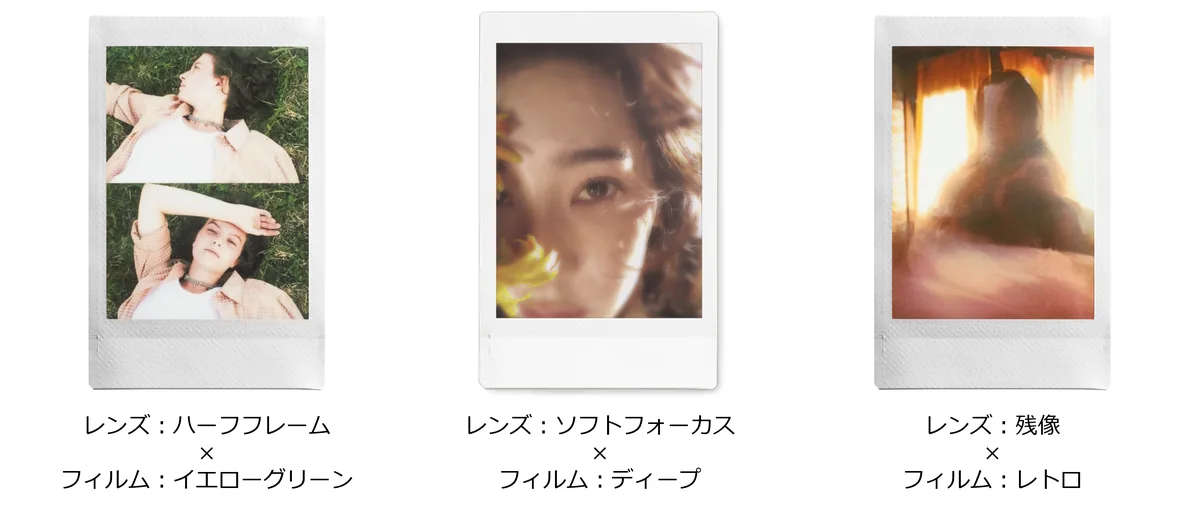
Effects are choices, not evidence of image quality
The ten lens effects and ten film effects provide 100 combinations. Fujifilm’s supplied examples show creative treatments; they are not our test files or controlled comparisons. For a useful first session, photograph one simple subject with a restrained treatment, then change only one effect at a time. Keep notes about which version communicates the scene rather than merely looking different. A preview that attracts attention on the rear display may feel too strong once printed. Evaluate the physical result in ordinary light before committing a whole set of photographs to the same treatment.
Budget for the complete routine
A camera price does not describe the cost of a printing habit. Add film, suitable storage and any genuinely necessary accessory to your budget, without assuming that every digital capture needs a print. Confirm the local return policy and delivery estimate with the seller. If an existing instant camera already makes photographs you enjoy, the most persuasive reason to change is a specific improvement in how you compose, choose or share—not simply a larger number on the specification sheet. The Evo 2’s new interface is worth examining, but a purchase decision should wait for the workflow you need to be demonstrated.