Start with a place, not a preset
Eugène Atget’s photographs are easy to recognize as old objects and harder to exhaust as pictures. The French photographer, who lived from 1857 to 1927, documented Paris and its surroundings, producing images that served artists and other customers as well as forming the body of work now studied in museums. Getty’s account emphasizes that documentary purpose and the breadth of his subjects. For this close reading, three views associated with Saint-Cloud offer a narrower exercise: examine how a photograph makes a place legible without needing a person to explain it.
The 1926 view holds two kinds of space together
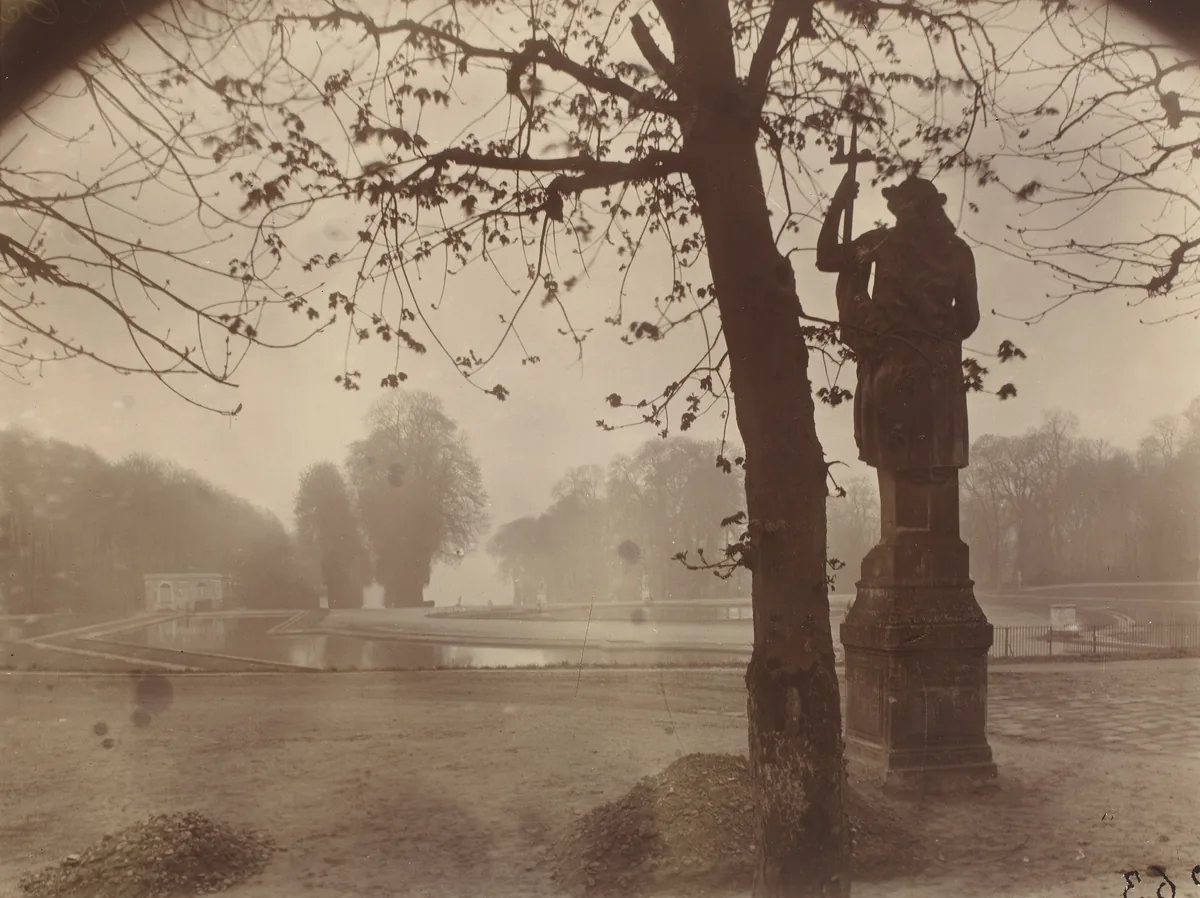
In the horizontal Saint-Cloud photograph reproduced above, a statue and dark tree occupy the right side while water and distant trees open out across the rest of the frame. Fine branches extend over the lighter distance. The foreground does not simply decorate an otherwise empty view: its weight gives the open area something to push against. Follow the boundary between the statue and the space beyond it, then the interruptions made by the branches. This is our reading of visible relationships, not evidence that Atget described his intentions in those terms.
Look at what the nearest trunk does
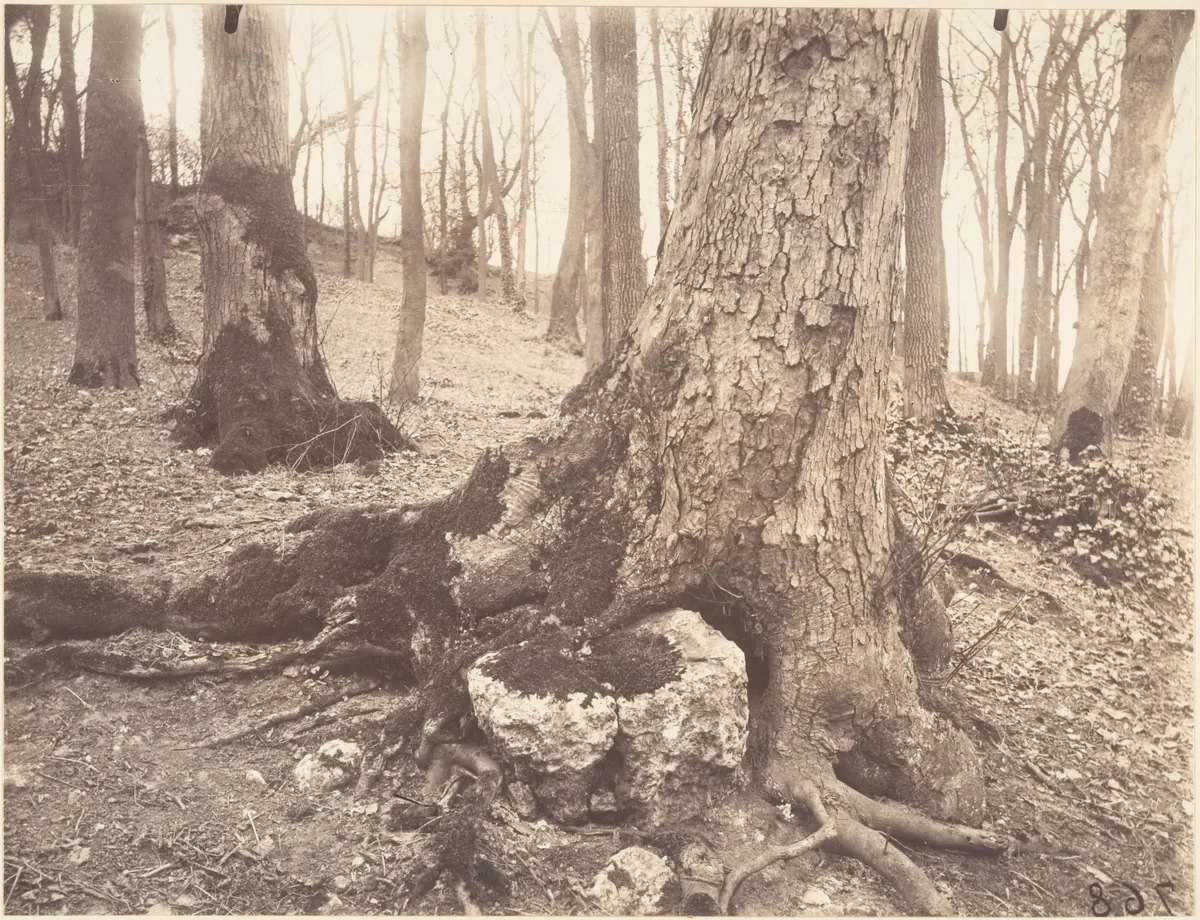
The image titled Parc de Saint-Cloud, Paris, dated 1915–20 in its source record, places a substantial trunk and exposed roots close to the viewer. Other trunks recede behind it. The near tree is neither a tiny scale marker nor an evenly centered specimen. It makes the distance feel discovered around an obstruction. Cover that foreground mentally and the picture becomes a much less specific account of a wooded space. The exercise is not to declare that every landscape needs a large foreground object, but to notice how strongly one object can change the route through a frame.
Stone steps make another route
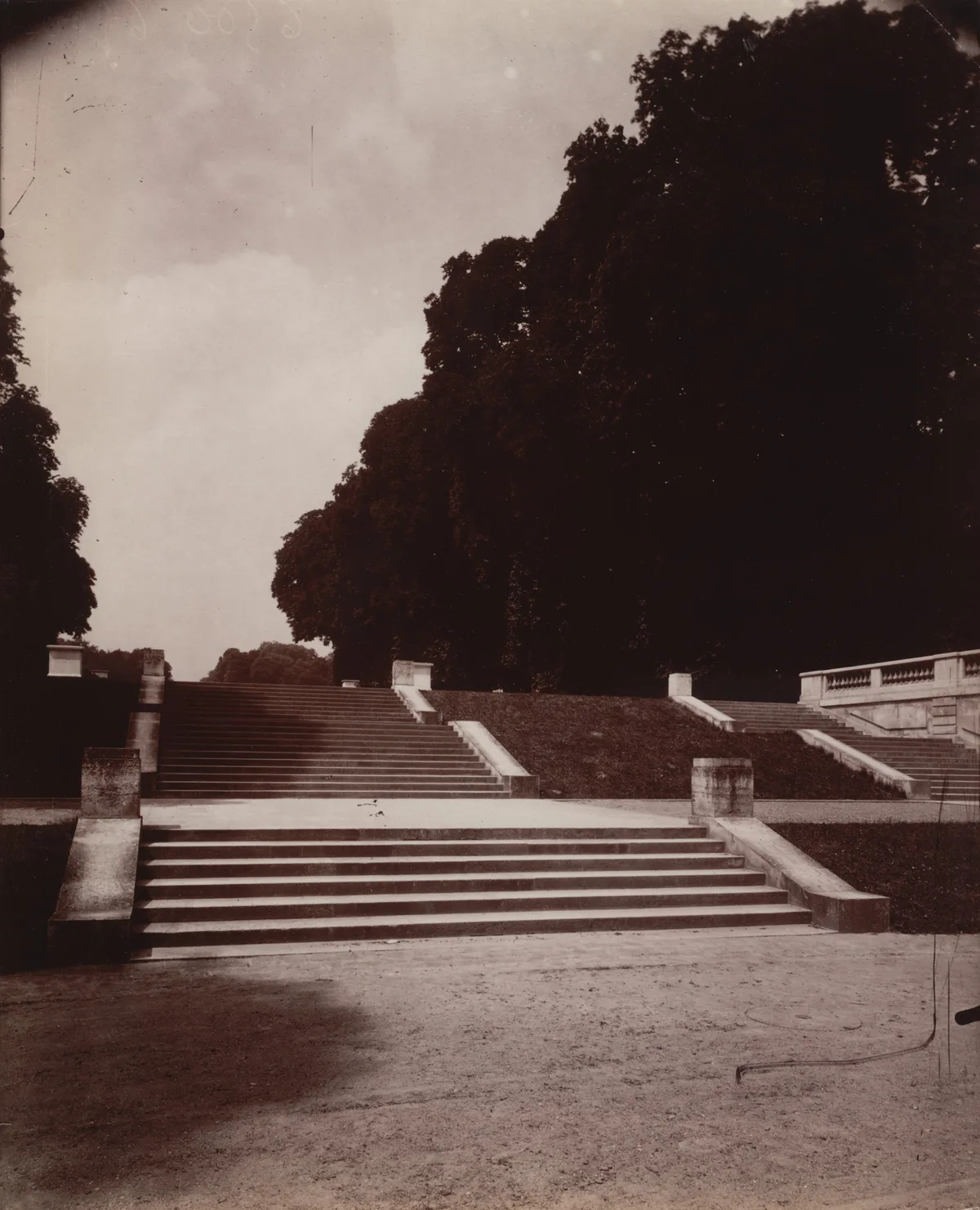
In the 1904 Saint-Cloud view, steps and balustrades provide a constructed path into the scene, while foliage shapes the brighter opening above. The upright frame changes the balance: instead of moving broadly across water, the eye can climb through the picture. Compare the repeated stone divisions with the less regular edges of the trees. Neither needs to be isolated as the sole subject. Their difference supplies the structure. Keeping the complete image visible, rather than trimming it to a convenient screen ratio, helps preserve that relationship.
Repetition is not the same as making the same picture
These three photographs do not establish a continuous sequence of identical viewpoints or document every change in the park. Their dates span years, and the source records should remain attached to them. What they do offer together is a recurring set of materials: trees, built features and spaces between. A small group lets a viewer compare decisions that a single famous image can hide. Ask which near edge carries the most weight, where a lighter passage opens, and whether the picture encourages a sideways or upward movement. The answers are different even when the place name repeats.
Do not mistake reproduction color for the whole method
The warm tones in these reproductions belong to the particular objects and digital files being shown. Copying that color with a preset would not reproduce the position, spacing or patient attention visible in the photographs. Nor can a web image establish the exact experience of seeing an original print. The useful study is structural before it is stylistic. Compare dark and light masses, the distance between important forms and the amount of room left around them. Those questions remain available when your own subject is an ordinary modern park rather than historic Paris.
Take one observation into a new walk
Choose a public place where photography is permitted and make a small set about the relationship between a near object and an opening beyond it. Work from accessible paths without disturbing the site. Make one horizontal and one vertical composition, then explain what changed without appealing to a rule about which format is better. On returning, select a few images that offer genuinely different observations. This is an exercise prompted by looking at Atget, not an attempt to impersonate his authorship. His pictures reward that distinction: study their decisions closely, then make a specific account of the place in front of you.