A more precise language for provenance
The Coalition for Content Provenance and Authenticity has published new guidance for using Content Credentials to identify synthetic and non-synthetic content. The document is consequential because it addresses a weakness in many public discussions of provenance: a file can be labeled “AI” without explaining whether a model generated the whole image, changed one region, or assisted a later edit. C2PA’s guidance proposes a more detailed record inside a tamper-evident, cryptographically signed manifest. It is not a camera announcement and it does not make an image truthful by itself. It gives creators, publishers and platforms a shared vocabulary for describing how a file came to exist.
What is confirmed
C2PA says its new paper covers machine-readable classifications, a dedicated AI Disclosure assertion, regional descriptions of modifications, generation inputs and a standardized vocabulary for actions. The coalition published the guidance on July 31, 2026, and describes it as part of a continuing effort to make the open standard more robust and easier to implement. The accompanying deployment guidance is aimed at businesses, agencies, publishers and governments rather than only engineers. C2PA also says more than 500 members and over 6,000 affiliates support the standard. Those are the coalition’s figures, not an independent audit of every live implementation.
The signal inside digitalSourceType
The central machine-readable signal is the `digitalSourceType` field drawn from the IPTC vocabulary. C2PA’s examples distinguish content generated entirely by a model from content enhanced by AI, captured by a device or edited by a human. That distinction matters to photographers because “edited” can describe ordinary post-production while “generated” describes a fundamentally different origin. A visible reader-facing label may remain short, but the underlying assertion can preserve a more exact category for software, search systems and editorial archives to inspect. The field does not decide whether a disclosure is honest; it records the claim made by the credential holder.
A disclosure can carry more than a yes-or-no answer
The proposed `c2pa.ai-disclosure` assertion is intended to capture model provenance, the scientific domain involved and the degree of human oversight. In practical terms, that could help separate an entirely synthetic scene from a documentary photograph whose background was expanded, or from an image whose noise reduction used a machine-learning tool. C2PA’s description does not promise that every application will expose each field in the same interface. Adoption will depend on authoring tools, validators and platforms preserving the assertion instead of flattening it during export. The useful change is the schema’s ability to carry nuance, not a new icon alone.
Regional edits can be located
C2PA’s guidance also describes Regions of Interest, which can identify where an AI operation affected an asset. For a still image, that might be a sky replacement or a removed object; for video, it could describe a defined segment; for a document, it could identify specific paragraphs. A regional record is more informative than attaching one label to an entire file, but it raises a practical question for publishers: the interface must make the affected area understandable to a reader. A signed assertion can preserve coordinates and history, yet a user still needs a clear visual explanation of what changed and what did not.
The generation recipe becomes part of the record
The `inputTo` and ingredient assertions can document prompts, reference images, seed values and other parameters behind a generation. This is useful for repeatability and accountability, especially when a newsroom commissions synthetic illustrations or a production team creates an effect across many frames. It can also expose sensitive material, proprietary prompts or personal data, so organizations will need retention and redaction rules. C2PA’s guidance establishes what can be represented; it does not settle what a publisher should reveal publicly. Editorial policy must decide which ingredients belong in a public credential and which remain in a controlled internal record.
Actions preserve the chain of changes
The Actions assertion gives a credential a vocabulary for steps such as `c2pa.created`, `c2pa.opened` and `c2pa.edited`. C2PA says an AI-use indicator can be applied to an individual action, allowing one file to distinguish a human-created original from a later AI-assisted edit. That chronology is particularly relevant to photojournalists and video editors who deliver multiple versions. It can show that a camera-originated file was subsequently resized, marked up or altered, but it still cannot verify the caption, consent, location or circumstances of the scene. Provenance strengthens a chain of custody; it does not replace reporting.
Why this matters to camera and video workflows
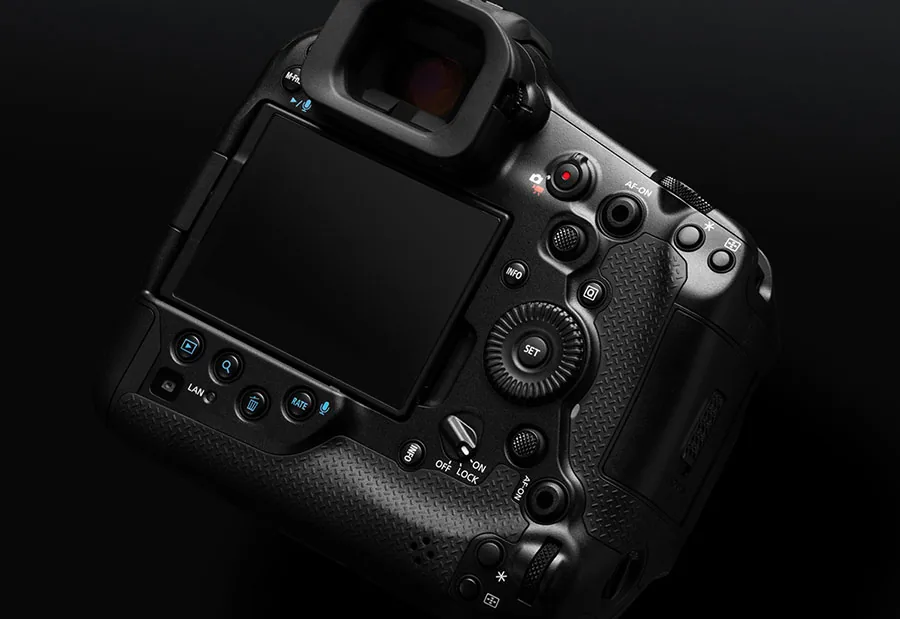
The guidance arrives alongside a growing camera and newsroom ecosystem. Canon’s Authenticity Imaging System, previously covered by The Camera Post in its initial rollout, illustrates the capture-side question: how should a camera-originated credential survive editing and delivery? C2PA’s framework addresses the broader interoperability problem across stills, live video, documents and platforms. The standard is open and no product price has been announced because this is a specification and implementation guide, not a retail feature. Organizations should evaluate supported firmware, signing certificates, editing exports, validation tools and the reader experience before treating a badge as a complete workflow.
What remains unknown
The guide cannot guarantee universal adoption, durable metadata or truthful disclosure. A file may lose its manifest during an unsupported export, a platform may fail to display it clearly, and a creator may make a false claim inside a validly signed credential. C2PA’s own framing is about provenance and authenticity signals, not a verdict on the underlying event. The next meaningful test will be whether camera makers, editing applications, social platforms and publishers preserve the same assertions end to end. Until then, readers should treat Content Credentials as evidence to examine alongside captions, original files, reporting notes and independent corroboration.