A new long prime for X-mount
Fujifilm announced the Fujinon XF400mmF4.5 R LM OIS WR on September 4, 2026, adding a second modern super-telephoto prime above the XF200mmF2 in the X Series lineup. On Fujifilm’s APS-C cameras, its 400mm focal length frames like approximately 609mm on full frame. That is a natural range for birds, field sports, aviation and distant landscape details. The official U.S. price is $3,199.95, with availability expected in mid-September. This is a confirmed launch rather than a development notice, although retail stock and exact arrival dates may still vary by dealer.
The real headline is the weight
The lens weighs about 1,245 grams, or 2.74 pounds. That is still substantial equipment, but it changes how a 600mm-equivalent setup can be carried and supported. Fujifilm says the optical layout moves the center of gravity closer to the camera body, reducing the nose-heavy feeling common to long lenses. The practical advantage is not that every photographer can handhold indefinitely. It is that tracking a bird, changing position on a sideline or traveling between locations should require less support hardware and less recovery time than a heavier super-telephoto system.

Twenty-one elements control the long view
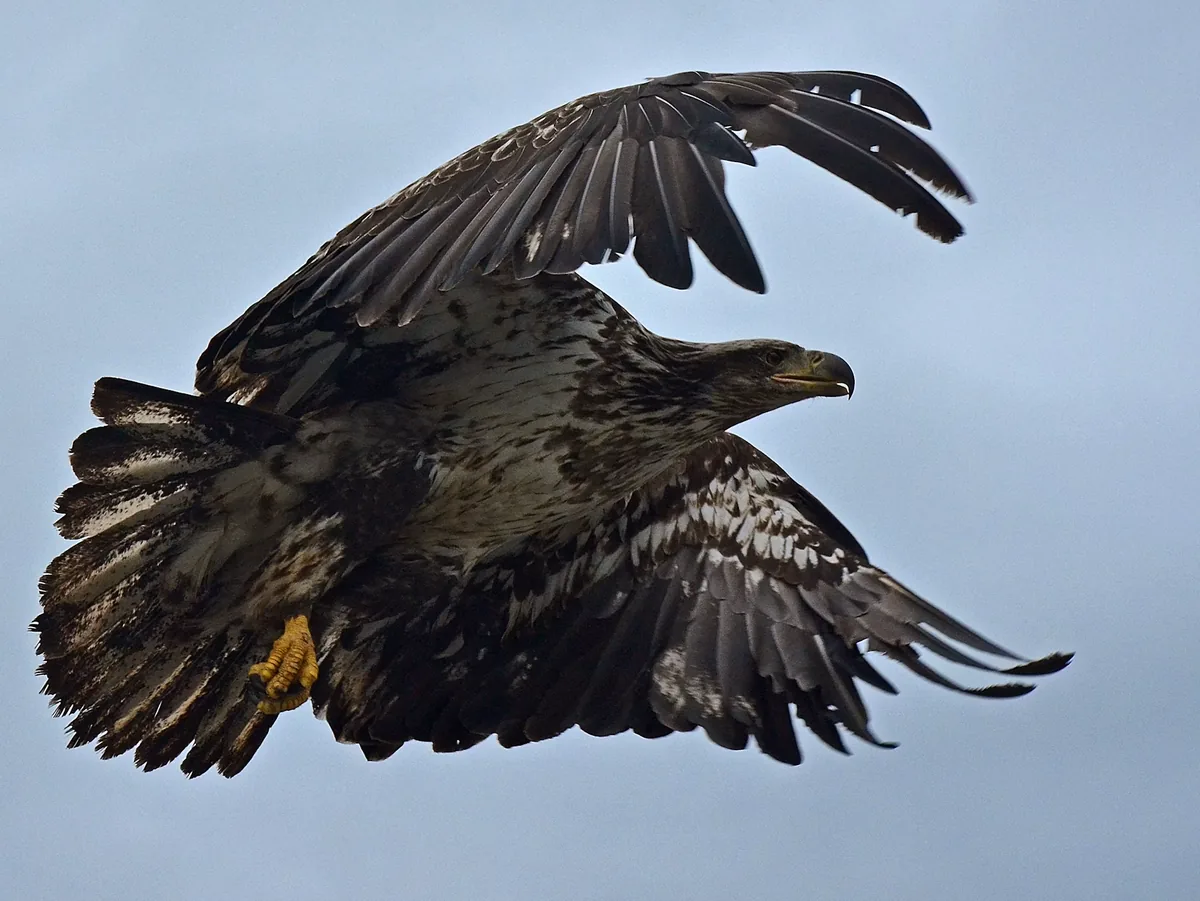
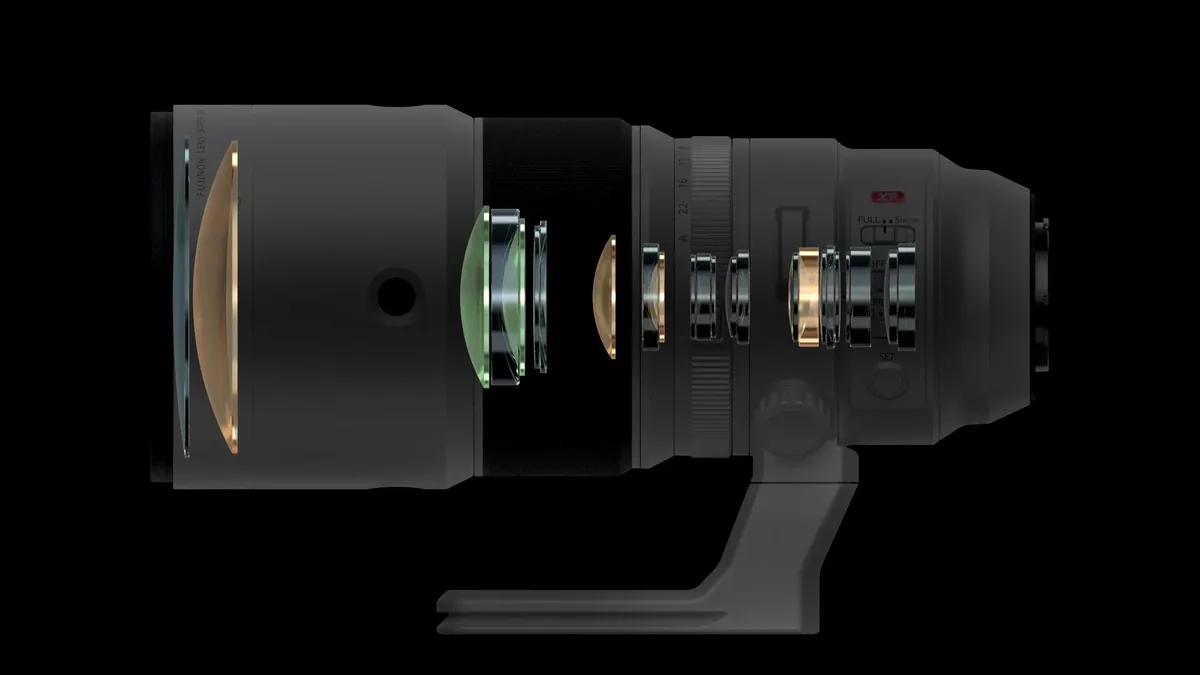
Inside are 21 elements arranged in 14 groups, including four ED and two Super ED elements. Fujifilm says that combination suppresses longitudinal and lateral chromatic aberration, problems that become especially visible as colored edges around distant high-contrast subjects. The sample photographs supplied by the company show the kind of fine feather detail and compressed backgrounds expected from the lens, but they remain manufacturer-selected examples. Independent testing will need to establish corner performance, flare behavior, focus breathing and consistency across working distances before the optical claim can be treated as a full verdict.
Stabilization helps framing as much as sharpness
The optical stabilization system is rated for up to 5.5 stops under Fujifilm’s CIPA-based pitch and yaw test. At 609mm equivalent, stabilization matters before the shutter is released: a calmer viewfinder makes it easier to keep a small subject inside the focus area and to place the frame precisely. It cannot freeze a bird’s wings or compensate for subject motion, so action photographers will still need fast shutter speeds. The useful division of labor is simple: stabilization controls camera movement, while shutter speed controls how movement within the scene is recorded.
Autofocus is built around fast changes
An internal focusing group is driven by a linear motor, and Fujifilm describes the operation as fast and nearly silent. The barrel adds a focus preset, a front control button and a limiter for subjects beyond five meters. Those controls are especially relevant when a predictable perch, goal line or section of track provides a known focus distance. The limiter can reduce the distance the autofocus system must search, while the preset gives the photographer an immediate return point. Performance will still depend on the camera body, firmware, subject-detection settings and the contrast and size of the subject in the frame.

Teleconverters extend it to 1,219mm equivalent
Fujifilm confirms compatibility with both current XF teleconverters. The XF1.4X TC WR produces a 560mm focal length, approximately 853mm equivalent, while the XF2X TC WR reaches 800mm, approximately 1,219mm equivalent. Teleconverters also reduce the effective maximum aperture, so the extra reach comes with less light for autofocus and exposure. They are most persuasive in bright conditions or when the subject cannot be approached. Photographers should compare a converted file with a carefully cropped native file before assuming the longest configuration automatically produces more usable detail.
A field-ready barrel, with one notable footnote
Fujifilm lists 20 sealed points, operation down to 14°F or -10°C and a fluorine coating on the front element to resist moisture and fingerprints. Those specifications support long sessions in dust, spray and cold, but weather resistance is not the same as waterproofing. One unusual note in the U.S. announcement says the stated weight excludes the lens cap and hood. Buyers should judge the complete working kit, including the hood, tripod foot, camera, battery grip and any teleconverter, because those pieces determine how the system actually balances over a full day.
Price, release date and who should consider it
At $3,199.95, the XF400mmF4.5 sits in professional territory but below many large-aperture full-frame super-telephoto primes. Its strongest case is for an X Series photographer who repeatedly needs a 600mm-equivalent view and values a fixed focal length, manageable weight and dedicated field controls. A zoom remains more flexible when subjects change distance rapidly or when access is unpredictable. The lens is scheduled for mid-September 2026 availability in the United States; Fujifilm’s official product page and store should be checked for current stock, regional pricing and compatibility before purchase.